Beware of anachronisms

When I’m reading, one thing that’ll jolt me out like nothing else is anachronisms. Please do your research and make sure that nothing is out of place/time.

Time itself is a prime example of anachronisms in stories set in the past or in fantasy settings inspired by the past. In a medieval setting (which is also still very popular in fantasy), even though there are clocks in church towers or secular public buildings, people are unlikely to carry a time piece around with them and say “We’ll meet again in 30 minutes” or even “Wait a minute”. (Unless otherwise specified in your fantasy world building, of course.)

Another example of an anachronism is the mention of electricity passing between the protagonist and the love interest in a book set in Ancient Rome. It jolted me so much out of the story that I haven’t read any of the other books by the author, even though I’m a huge fan of Ancient Rome stories.

You don’t want that to happen with your readers, do you?

Share this:

Letter from Paris with a catch

Even if you’re only a little bit familiar with the French language, you’re bound to have noticed the slanting dashes the French put above certain vowels. At the very least you’ll know the one from café, right? There are three kinds, called “accents”, and you’ll see them mostly above the letter e but also sometimes with certain other vowels. However, do you know the catch (or hook) beneath the letter c?

This kind of c is called “c cédille” and like the accents above, it serves to indicate how the letter is pronounced. In French, the letter c can be pronounced “hard” like the C in Canada or “soft” like the C in Caesar (who is spelled César in French).

Normally, you pronounce a c the hard way when it is followed by the vowels a, o, or u or a consonant, and the soft way when it is followed by the vowels e or i or the letter y.
However, sometimes you have a soft c before an a, o, or u, and in that case you add the catch to indicate the exceptional pronunciation.
A very common example is the word ça (it/that), used all the time in the French equivalent of “How are you?”, namely “Ça va?” (the common answer to which is “Ça va”). It is also the French title of Stephen King’s novel “It”.

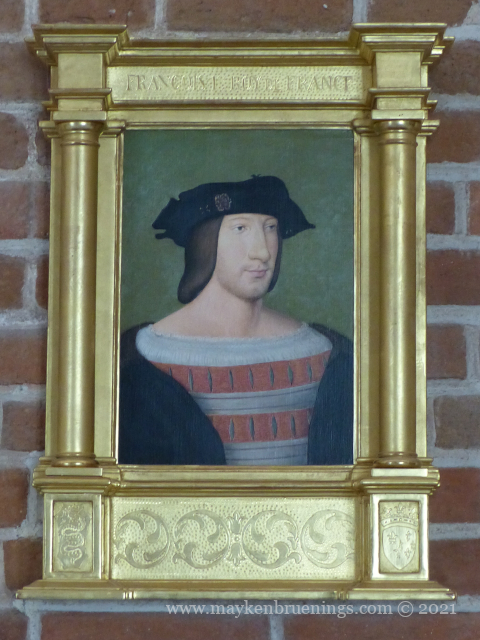
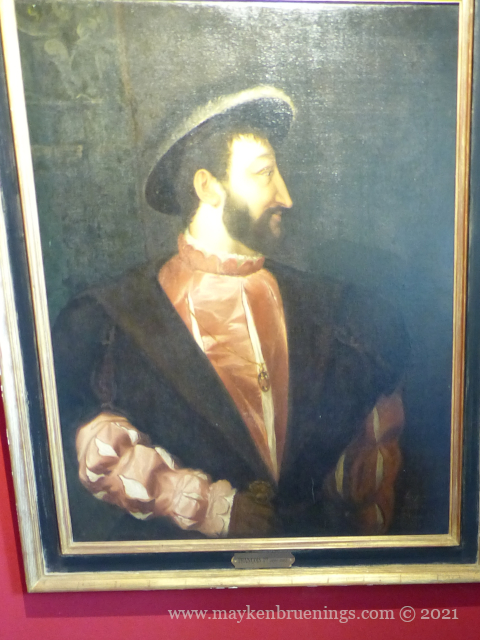
Another common occurrence is in the given name François, derived from “France”, also the French version of the current pope’s chosen name. France had two kings bearing that name in the 16th century. François II was the grandson of François 1er, with whom you might be familiar if you’ve been following me on Twitter, as he is an important character in my historic/time travel story.

Now that you know how to pronounce the name of two French kings and a French casual greeting, be advised that you might encounter the letter ç in other languages as well, where the pronunciation rule might be similar or different, for example in Turkish.

A final word: If you want to type the Ç or the ç on your non-French keyboard, hold down the ALT key and type on the number pad 128 for the upper-case and 135 for the lower-case “c cédille”.

Share this:

The Paris Cat Café

Hidden away in a small street of the 11th arrondissement, but actually only a stone’s throw from Bastille, you can find the one and only Cat Café of Paris.

In this cozy place, where comfy armchairs sit alongside regular chairs, and homemade food is served, you might find your seat occupied by one of the four-legged residents if you leave it vacant. You can also see the cats balance on their overhead walkways or twisted like a pretzel in an old suitcase.

Signs remind you the cats have priority here, including on the piano.

Along with the menu, you can consult a notice bearing the profile of each cat.

If they consent, you can pet them. If you’re lucky, they take up residence in your lap. I’ve seen cats squatting seats, inspecting your food (they’re not supposed to taste it!), sitting in the window…

Please respect the rules for humans, and I’m sure you’ll have a lovely experience.

Info and opening hours on Le Café des Chats website.

Café des Chats, 9 rue Sedaine, 75011 Paris – Métro Bréguet-Sabin (line 5)
Share this:

A comprehensive guide to world building (not by me)

I am not going to expound on world building because I can’t claim to be an expert. However, I would like to present the four-part article “The Challenge of Creating A Believable World” by writer Dina von Lowencraft (author of the YA fantasy DRAGON FIRE), as it is the most comprehensive I have come across so far. The article includes several lists of questions to guide your own world building:

Part One “The Physical World” goes over the basic building blocks of world building.

Part Two “The Inhabitants of Your World” takes a closer look at society and how it shapes its inhabitants.

Part Three “The Inherent Conflicts/Issues in Your World” explores different kinds of conflicts linked directly or indirectly to world building.

Part Four “Showing Your World” looks at different ways to show your world building in your story.

Please check out Dina’s book DRAGON FIRE on GoodReads

Share this:

In Memory of the Spire

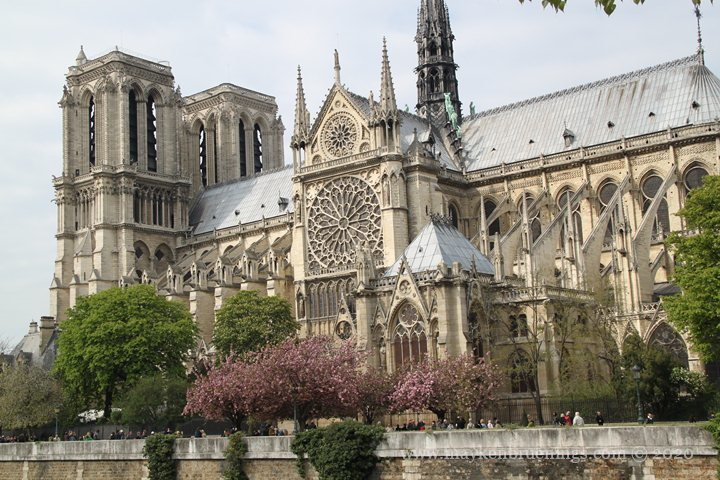
The construction of Notre Dame started in 1163 and concluded in 1345.

Do you remember where you were when you heard that Notre Dame was on fire? I do. It was a Monday night, I came home from swim practice, and when I opened the door, my husband greeted me with the words “Notre Dame is burning”. I stared at him, unable to process his words, so he switched on the TV, and sure enough, Notre Dame was burning.
It was April 15, 2019.
The moment that was probably most often shown in replay was when the spire over the crossing came crashing down into the roof.
I took this photo a few years before the fire, while visiting the bell towers with out-of-town friends.

The first spire was built in that spot in the middle of the 13th century but, distorted by the winds over the centuries, eventually collapsed and was removed in 1786. The cathedral remained spireless until the restoration led by famous architect Viollet-le-Duc in the mid-19th century. The new spire was guarded by 16 statues, which were taken down for restoration on April 11, 2019 – four days before the fire.

After a few months’ interruption due to the strict lockdown, works on Notre Dame have picked up again. It is doubtful whether the whole rebuilding process will be concluded within five years, as the French president promised on the “morning after”. Given how long the initial construction of the cathedral took, what is a year or two more? At least, after some discussion, it was decided to rebuild the destroyed spire as it was before the fire.

Carpentry journeymen demonstrate the reconstruction of the nave
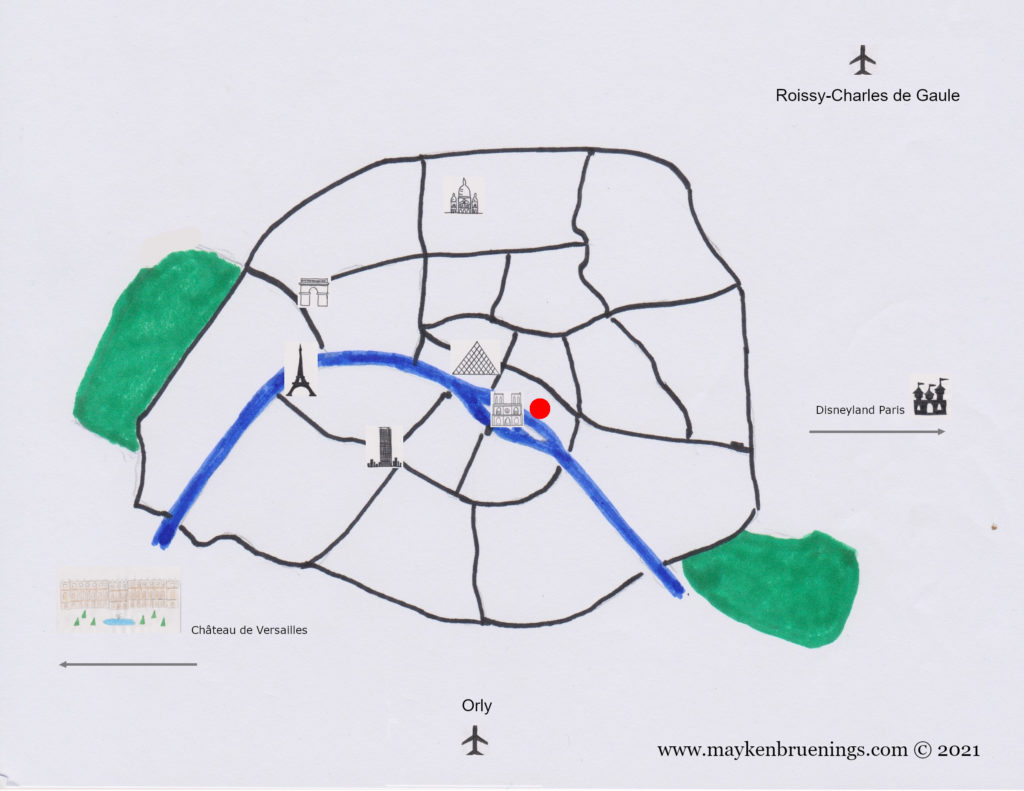
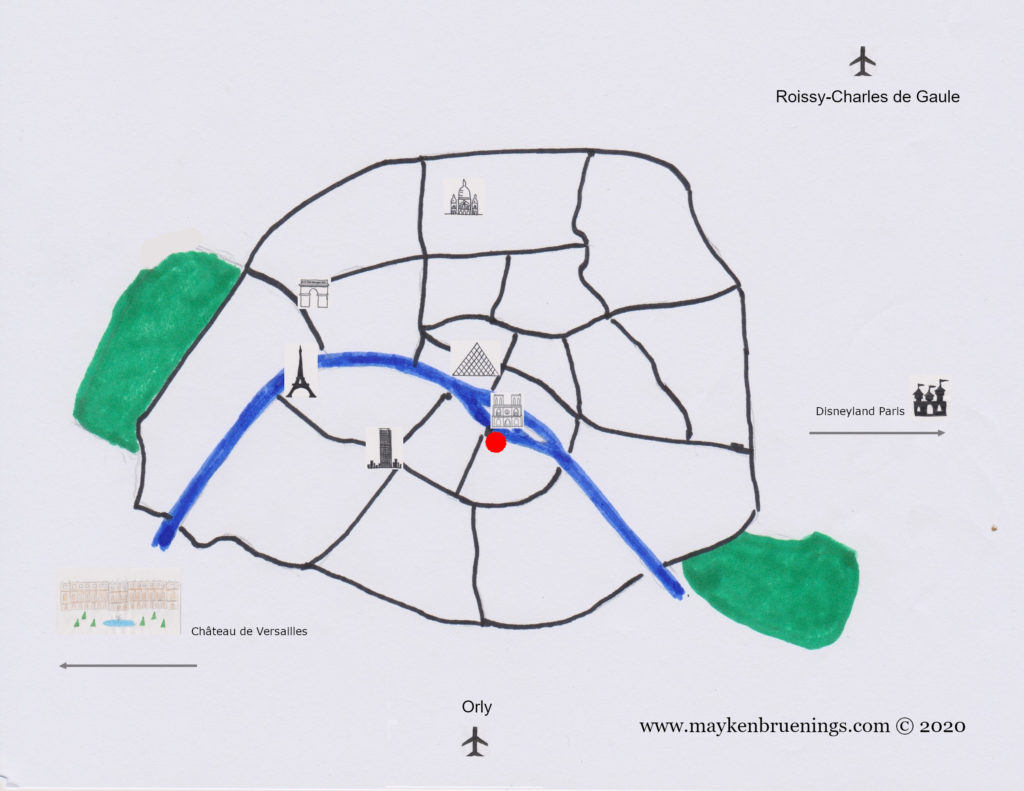
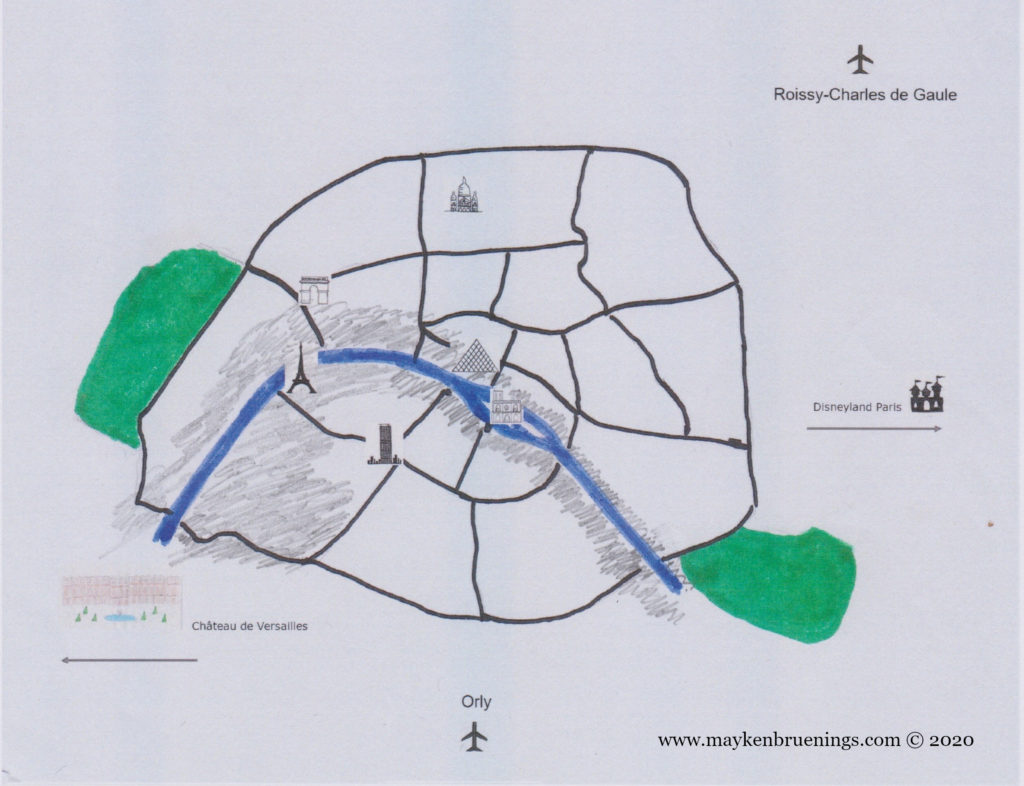
Location of Notre Dame on a map of Paris

Share this:

Where do you find inspiration?

Sometimes my inspiration takes off and gallops full speed ahead without me doing anything, and this in the most ordinary situations. It makes for seemingly bizarre ideas, but once you build a story around them, the bizarreness fades into the background.

I sat at the back of a bus when the driver stopped, cut off the engine, and got off. A bit later, a new driver got on and drove the bus off. My transport-obsessed husband would explain how this stop was the point where drivers regularly switch duty. My writer mind however wondered what if that new driver wasn’t a RATP bus driver but [take your pick] a hijacker, a wizard, a time traveler wanting to try and drive a motorized vehicle?


A few years ago, there were still a few phone boxes around here, including in my street. One day that phone box was removed. I’ve heard people say, “No one but Superman will miss them”, but maybe someone does. What else besides a changing cabin for superheroes (or the visitor entrance to the Ministry for Magic) could a phone box be used for?

At my day job, I’ve been sitting on the health and safety committee for a few years now. One thing I learned during the training course was that employers have to pay employees for work-related injuries. Then I read pirate codes have similar provisions – pirates get payment for loss of a limb.
If there are such parallels between our modern working world and the centuries-ago pirate world, what kind of parallels could there be in a fantasy or sci-fi world?

A post a made on Twitter and its reply:

https://twitter.com/coach_SarahMac/status/1235975767491739648

I was visiting the Centre Block of the Canadian Parliament in Ottawa. In the lower chamber, where the MPs sit, the guide explained that the front benches are just a little more than 2 word-lengths apart, dating back to the days when men wore swords, to avoid that a debate in Parliament got too heated.

I read about a German law that requires that seals born in captivity may not be returned to the wild. How would that apply to humans in a dystopian setting?

As you see, inspiration can be found (pretty much) anywhere.

Share this:

Water fountains everywhere

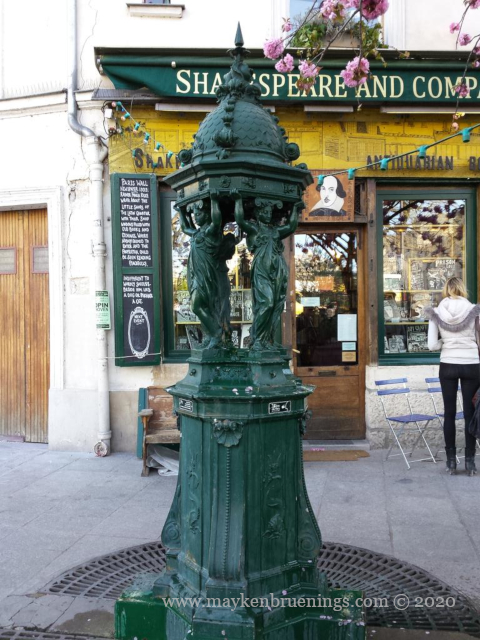
Tourists in Paris might be suspicious when they come across these historic water fountains. Can you really drink the water trickling down between those four statues?

Yes, you can. The water is perfectly safe. Just hold your water bottle underneath the trickle, and all you need a little patience because the flow isn’t very strong.

Update in spring 2026:
These water fountains now have push buttons.

The water doesn’t flow constantly any longer!


But why have these old-fashioned fountains instead of modern ones which are more easily accessible and allow for a stronger flow?
Oh, but we have those too.

These old-fashioned fountains have a long history behind them. Let me tell you.

Once upon a time, there was a rich Englishman with French roots, who saw the difficulty of supplying water to Paris following the 1870 siege of the capital. He offered to provide 50 drinking water fountains and asked the mayor to accept this donation.
The name of this philanthropist was Sir Richard Wallace. His heritage is still visible in the urban landscape of Paris today, and the fountains are called Wallace fountains in his memory.

There are four different types of water fountains, and all four can still be found around town. They supply potable water from 15 March to 15 November but are turned off in the winter to prevent freezing and bursting pipes.
The model you will see most is quite large, which was meant to help people spot it. On a pedestal stand four caryatids with their backs to each other, holding up a pointed dome. The water trickles down in the center non-stop day and night.

This model was inspired by the Fontaine des Innocents.

There used to be two tin-planted iron goblets on small chains but they were removed for hygiene reasons in 1952.

The second of Sir Wallace’s models was a wall-mounted fountain where the trickle of water falls from the mouth of a naiad into a basin. These were cheap to install and should have been mounted in large numbers on the walls of buildings such as hospitals. It didn’t happen, though, and today there remains only one of these, rue Geoffroy Saint-Hilaire near the Jardin des Plantes entrance.

There are also two small versions. One is very common in public parks, a simple push-button fountain, well-known to parents and nannies who bring their kids to play.

The last model is a small version of the caryatid fountain, with slender columns replacing the statues to reduce the production cost.

The fountains are all painted the same colour, a strong green, required by the city of Paris to match their other street furniture. Today, some of the fountains have been painted in different colours, but the majority is still green.

Many homeless people drink from the fountains even today, as they are one of the rare free points of access to water. So the legacy of Sir Richard Wallace lives on, 130 years after his death.
Official map of drinking fountains in Paris (Eau de Paris website)

Share this:

Some quick thoughts on names

Chances are, unless you’re writing historical fiction (and maybe even then), you’ll need to name lots of characters. Let me share some tips:
If you are writing real-world fiction, consider what realistic names are/were in your chosen time and place. Even if you give your protagonist a “special” name, unless it’s a main feature of your story, most named characters shouldn’t have “special” names. For research, try “baby names popular in year X” (with X being the year of your story minus the age of the character you’re naming, obviously).

For foreign settings, try to find someone from that country/area to confirm your choices (I assure you there are not as many Pierre Dupont in France as you might think, or Hans Meier in Germany). That is especially true with names from cultures where naming rules are different from what you are used to (Chinese names are a prime example).

For stories set in certain time periods or communities, learn about naming customs. Ancient Rome had rather straightforward naming rules that can easily be reproduced and applied to fictional characters. Closer to home, in my grandma’s region of Eastern Frisia, children would receive the same names over and over again from generation to generation, and if in those big families a child died, the next one born would get that child’s name. (Much to genealogists’ despair, I’m sure.)

In a fantasy or sci-fi world, it is you who make the rules, and this includes naming. However, even there it is a good idea to remember to keep your names pronounceable. When I was reading the Never-Ending Story for the first time as a kid (when it was first released and before any movie adaptation), I struggled with the pronunciation of all the names of people and places, it annoyed me to no end. As editor Heather Alexander said at a writers’ conference I attended a few years ago, “you want your readers to be able to talk about your book”!

Don’t use too similar names for different characters (unless it serves a plot purpose). You don’t want your reader to mix them up and get confused.

In real life, people do have unusual names. And there isn’t always a (big) story behind it. But when characters in your story have unusual names (whether the protagonist, the antagonist or a secondary character), readers assume there is a reason (and it better be a good one), that you did it on purpose. Unusual names stand out, so if you give a character an unusual name, you better know why.

Once you’ve come up with a name, check the Internet. You don’t want your protagonist to unintentionally share the name of a criminal, a person well known in another English-speaking country, or an important character from someone else’s books. (Don’t use names that are too similar to well-known characters either.)

Oh, one last tip: Don’t name your protagonist after your kid – or your kid after your protagonist!

Share this:

Haussmann Buildings

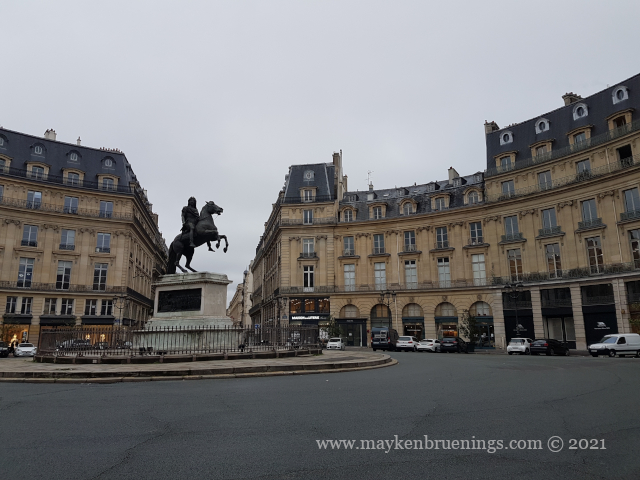
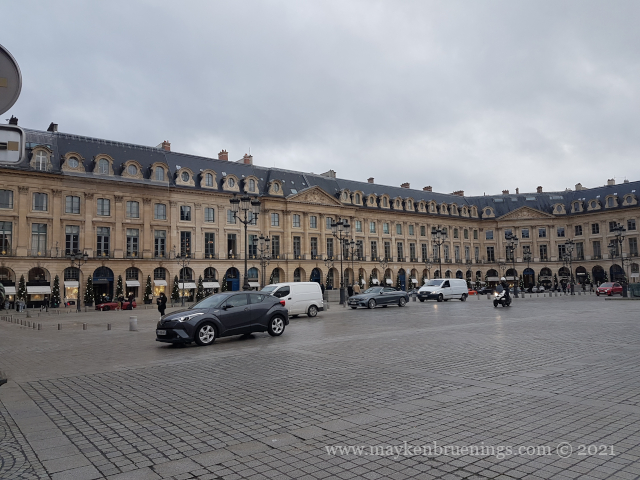
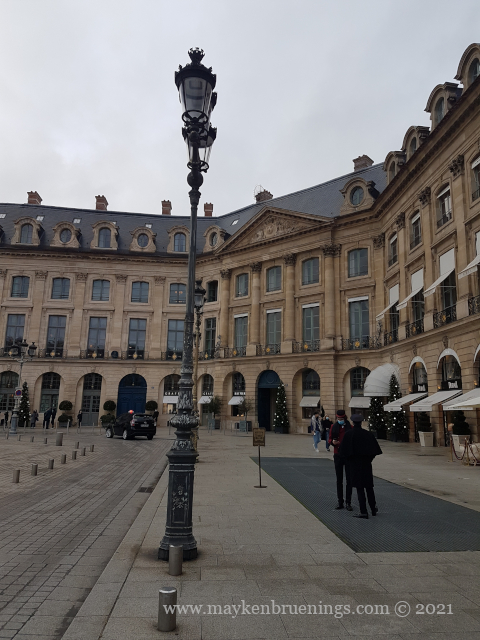
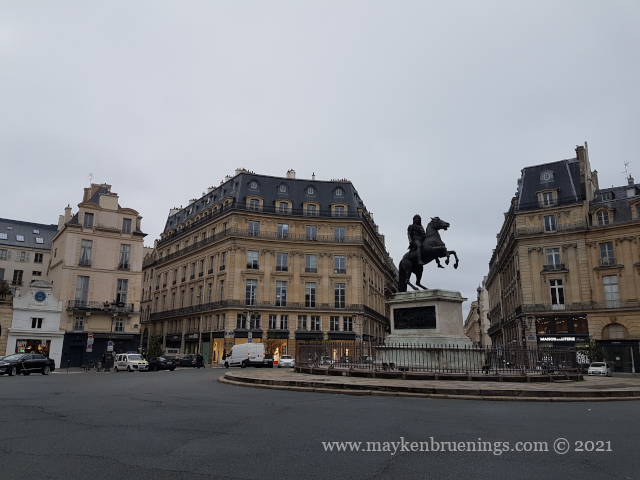
When you walk on Paris streets, you’re bound to notice the uniformity of the building facades. Almost everywhere you look, buildings will be the same height and in a similar style, with cream-colored stone facades.

These facades are called “Haussmann-style facades”. As I explained before, in the mid-1800s, Baron Haussmann, on orders from Emperor Napoléon III, transformed the city of Paris.

As part of the city’s transformation, the old houses were torn down, and new ones were built. The Immeuble de Rapport (Revenue House) and the Hôtel Particulier (Townhouse) became the reference for these buildings. They were meant to resemble each other, the esthetics of the rational.
Now let’s have a closer look at these Haussmann buildings.

As you can see in the photo, then as now, the ground floor housed the shops opening onto the street. You’ll notice as well that the first floor just above the shops has a comparatively low ceiling. The rooms on this level were part of the shops or housed their back shops, workshops, or storage area.
The second floor was the noble floor, with high ceilings and high windows that let in a lot of light. Wrought-iron balcony rails run along the façade.
Can you see how the windows are smaller from one floor to the next as you go up? That’s because with each level you go up, the ceiling comes down. Accordingly, these levels were less expensive and people with slightly lower income than the rich second-floor people lived there. The wrought-iron rails running around the façade on the fifth floor mainly serve esthetic purposes.

The rooms under the roof were tiny and cramped servants’ rooms. Service staircases run down from their level directly to the kitchens of the second floor, so the servants could easily and discreetly access their workplaces.
Today, many of these servants’ rooms have been reconfigured, often regrouped to form small apartments that are often rented to students. The second-floor apartments are still as they were in the old days, enormous rooms with high ceilings, stucco, giant fireplaces and big windows.

Share this:

How Baron Haussmann Transformed Paris

One thing that will strike you when you look at a map or a satellite view of Paris are those wide streets, called avenues and boulevards, that run through the city. They look like someone had drawn them with a ruler, which is somewhat unusual for an old European city.
But they were drawn with a ruler, so to speak, by Baron George Eugène Haussmann. Let me tell you how and why he transformed Paris in the mid-1800s.

It was the time of the Second Empire, the reign of Napoléon III, nephew of Napoléon Bonaparte (who reigned during the First Empire).
Napoléon III had lived in exile in London, and he had been impressed by the city that was rebuilt after the big fire of 1666, becoming a model for hygiene and modern urbanism.
Made Prefect of the département Seine (Paris), Baron Haussmann was given the task by Napoléon III to transform Paris.
The city was composed of crowded neighborhoods with narrow streets, dirt abounded, clean water and clean air were scarce.

Haussmann wanted to improve the flux of people, goods, air and water for the city. The name of his campaign was Paris embellie, Paris agrandie, Paris assainie – A more beautiful, bigger, and cleaner Paris.
Another aim of his campaign was to prevent possible popular unrest, which was quite frequent in Paris: Following the 1789 French Revolution, there had been revolts notably in 1830 and 1848. (The 1830 uprising inspired the barricades in Victor Hugo’s Les Misérables).
By demolishing the old center of Paris, Haussmann deconstructed the centers of unrest and scattered the working-class population throughout the new neighborhoods.
The old crowded neighborhoods were destroyed, narrow streets made way for large avenues and boulevards. The new train stations are served by some of them, to facilitate the transport of goods arriving by train.
In order to improve hygiene through better air quality, new parks were created (Parc Montsouris in the south of the city, Parc des Buttes Chaumont in the northeast) and existing ones improved (Bois de Vincennes, Bois de Boulogne).
A square (small park) was set up in each of the 80 neighborhoods. (Four neighborhoods constitute one arrondissement.)
Haussmann also transformed the Place Saint Michel and its fountain which had marked him in his student times by its dirtiness.

Saint Michel fountain at Place Saint Michel today

In order to showcase monuments both new and old, Haussmann organized vast perspectives by creating avenues (such as the Avenue de l’Opéra for the Opéra Garnier) or squares, such as the one in front of Notre Dame.

In parallel, working with engineer Eugène Belgrand, Haussmann created a water conveyance network as well as a modern sewer network, and launched the construction of theaters (Théâtre de la Ville and Théâtre du Châtelet) and two train stations (Gare de Lyon and Gare de l’Est).

It is estimated that the works of Baron Haussmann modified 60% of the city of Paris.
The new buildings lining all those new avenues and boulevards are a story in themselves.

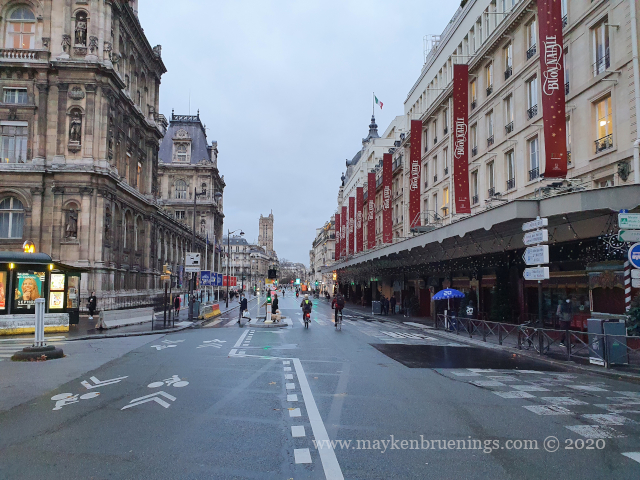
Rue de Rivoli

Share this: