Horses in Paris

Have you been in the area between the Place de la Bastille and the Seine and happened to cross riders on horseback?
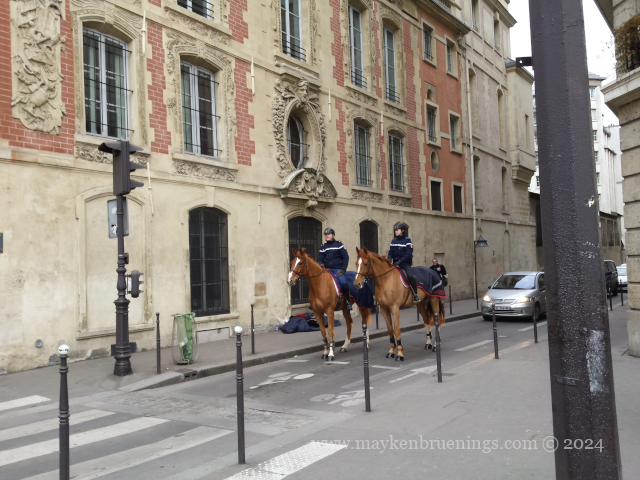
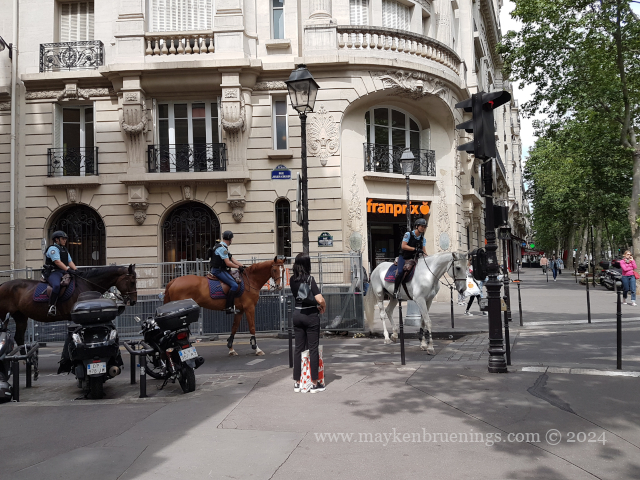
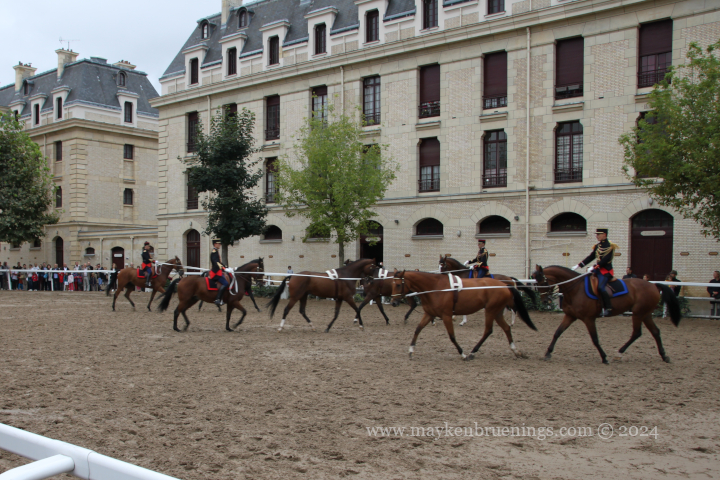
Chances are you met members of the Garde Républicaine, the Republican Guard, on patrol. Yes, those same ones you see parade on July 14 on the Champs Élysées.
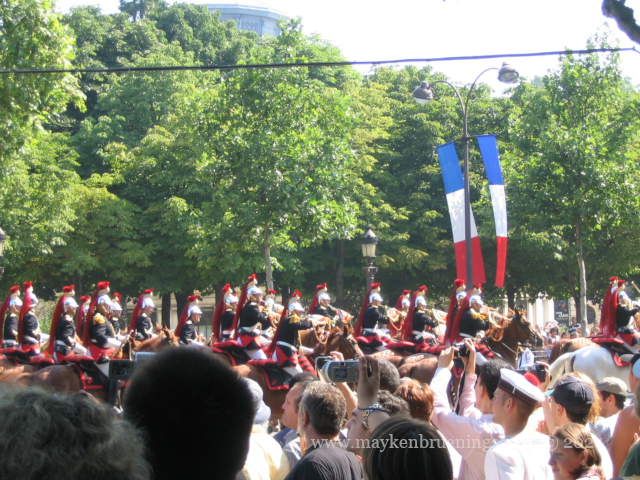
Note the traditional helmets which date back to 1876, inherited from the dragoons and cuirassiers of the First Empire.

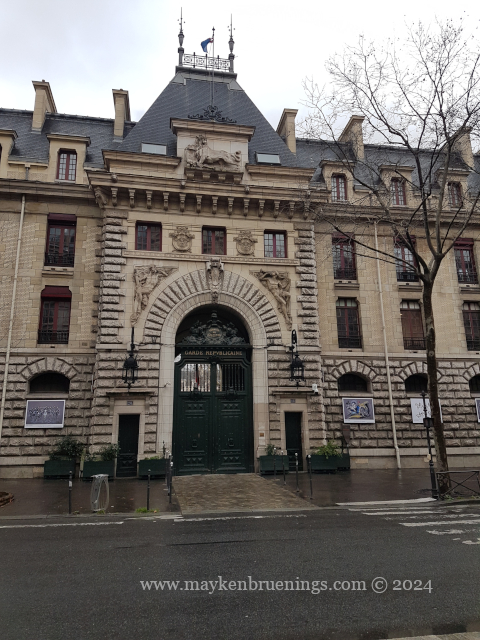
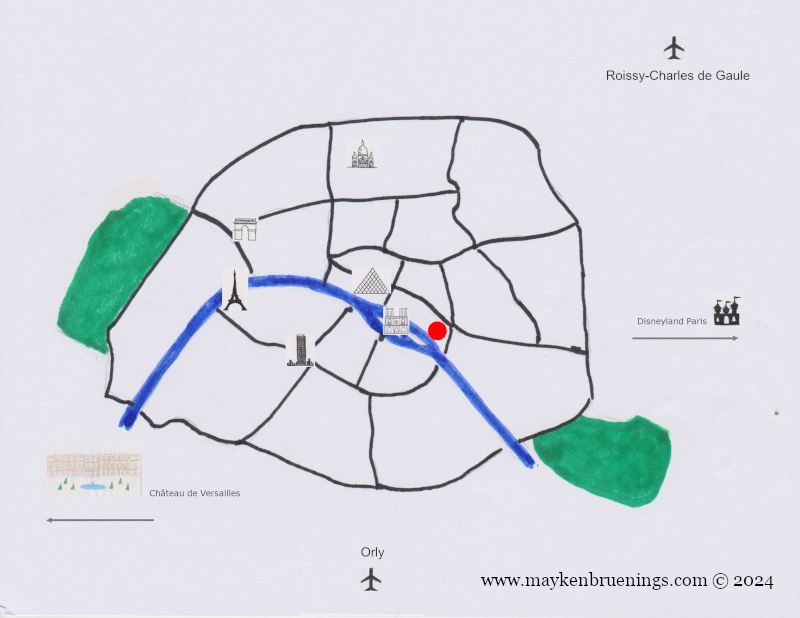
The cavalry of the Republican Guard is housed in the Célestins Quarter with its main entrance on boulevard Henri IV.
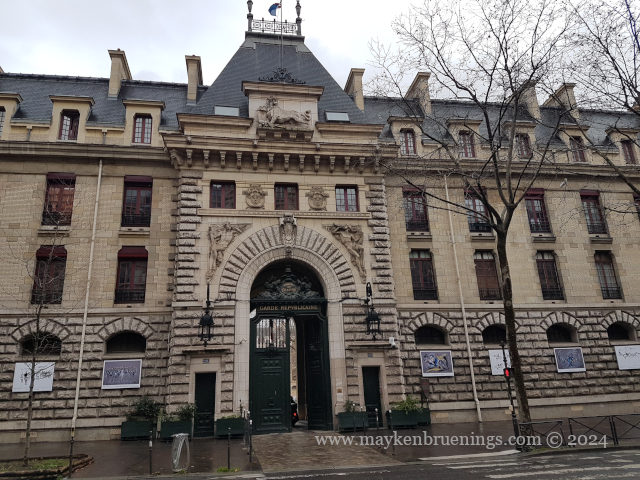
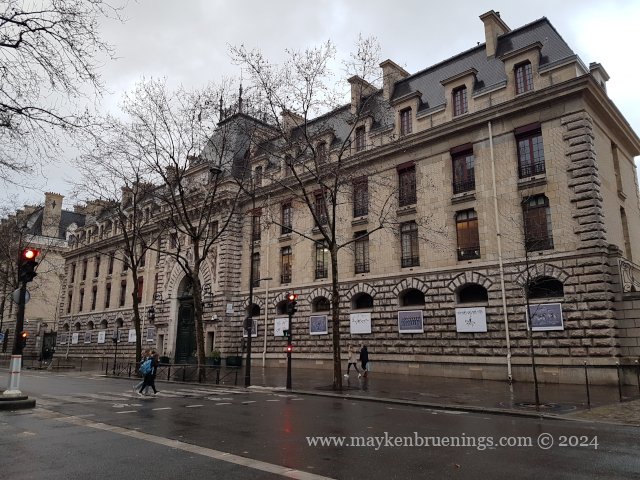
Its most visible role is in the honor missions (escorts, also carried out by the motorcycle squadron) although those represent only about 20% of the total. The majority consists of security missions such as patrols in Paris, the Bois de Boulogne and the Bois de Vincennes, but also in the forest of Chambord royal palace and other royal forests.
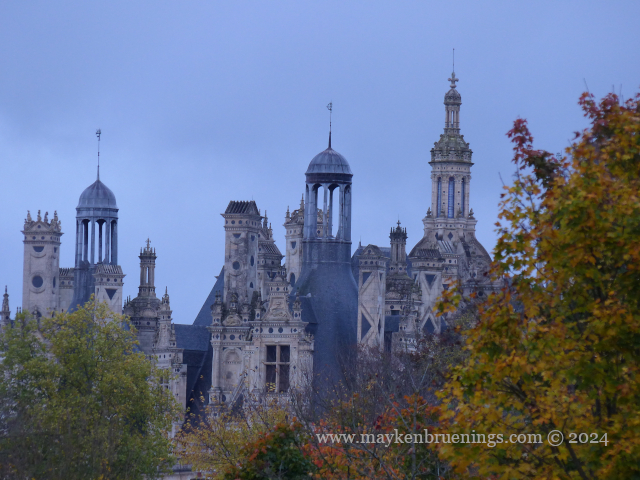
Chambord Palace

They also carry out surveillance of the sites at summit meetings for certain sports events and in areas with difficult access, for example a missing person search in the woods, and also surveillance of tourist areas.

Napoléon Ier

The origins of the Republican Guard go back to Napoléon Ier, who created the Municipal Guard of Paris in 1802. After many back and forth over the turbulent period of the early 19th century, it was integrated into the Gendarmerie in 1849 by Napoléon III.

Contrary to other cavalry units, the Republican Guard did not participate in WWI as its mission was to maintain order in Paris and oversee the city’s defense. That is how it survived as the last mounted regiment.
During WWII, the Republican Guard was demobilized and attached to the Police Prefecture under the name of Paris Guard. Part of the troops secretly joined Charles de Gaulle, and the Guard participated with the French Forces of the Interior in the combats for the liberation of Paris.
The Guard also participated in the Indochina War from 1947 to 1954, and in 1978 it changed its name back to Republican Guard.
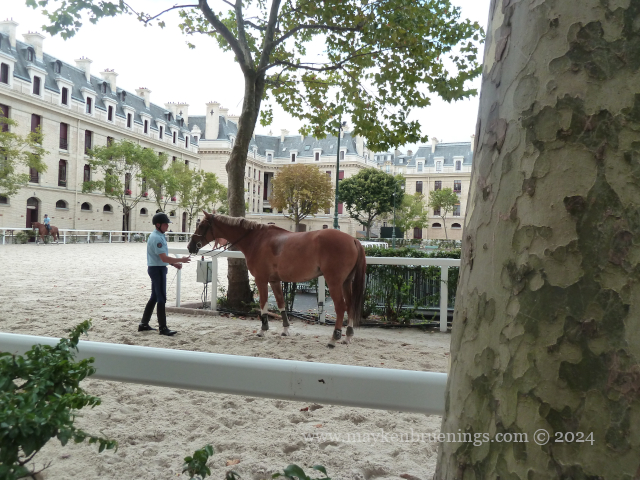
President Emmanuel Macron initiated a “horse diplomacy” by giving a Republican Guard horse to the Chinese president in 2018. He gifted another Republican Guard horse to Queen Elizabeth II for her Platinum Jubilee in 2022.

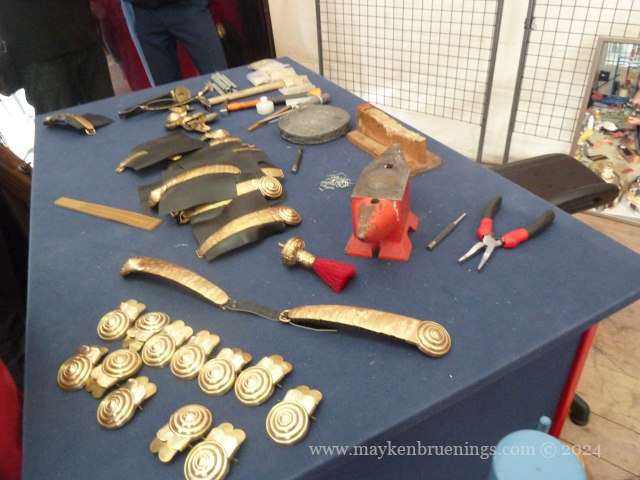
On Heritage Days in September, the Republican Guard will open the doors of the Célestins Quarter where you can see riding demonstrations, visit the horses in their stables and see the blacksmith at work.
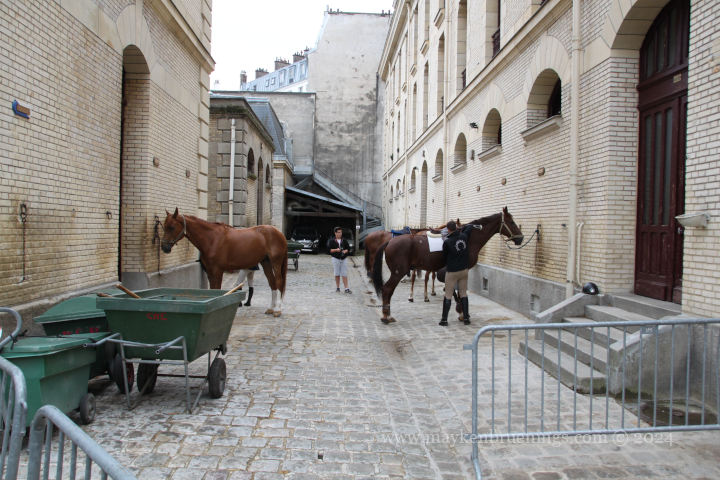
Did you know the horseshoe sizes range from 28 to 50, with the smallest fitting inside the largest?
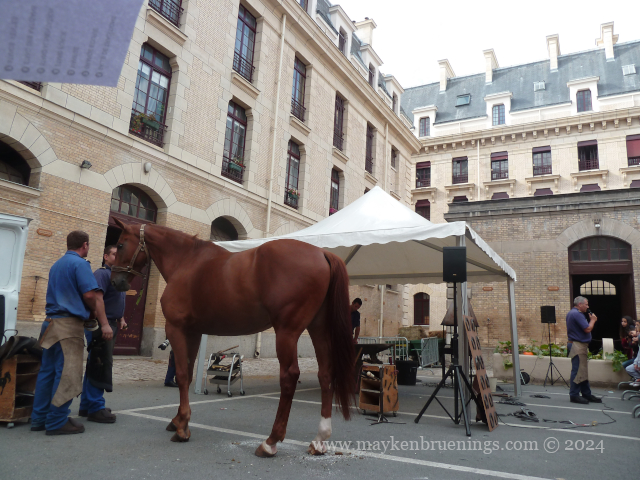

Republican Guard at Célestins Quarter

At the Paris International Agricultural Fair 2024, the Republican Guard, including their fanfare or orchestra, put on an impressive show. A few highlights below.


Share this:

A few words on concepts that don’t exist in the real world

When you build a fantasy world, chances are there’ll be concepts that don’t exist in the real world and that you’ll have to name. A concept that comes up frequently in fantasy worlds, is one that characters with magic have a means of transporting themselves from one place to another. Here are a few examples:

  • In the Harry Potter books, wizards and witches apparate (and disapparate).
  • In Shawna Reppert’s urban fantasy Ravensblood series, mages can teleport.
  • Dina von Lowenkraft chose shift for her book Dragon Fire.
  • In my manuscript Mage Girl, characters relocate.

How you name this power is up to you—you can use an acknowledged term (teleport), you can invent your own term (apparate), or you can change the meaning of an existing word (relocate).

The basic concept is the same, but each author defines their own set of rules governing the use of this power. For example, you have to know the place where you are going or use a person who is in that place as an “anchor” (Ravensblood), you have to practice and pass an exam (Harry Potter), if you’re exhausted it can go wrong or not work at all, only certain people (mostly mages/wizards) can do it…

Books mentioned in this post:

Share this:

Meridians and Paris Time

Did you know that for a while, official Paris time was 9 minutes and 21 seconds ahead of Greenwich Mean Time (GMT)? Let me tell you how that happened.

First of all, I assume you know a meridian is a line that runs from the North Pole to the South Pole. It is used to indicate the longitude of a location.

The Royal Observatory, Greenwich

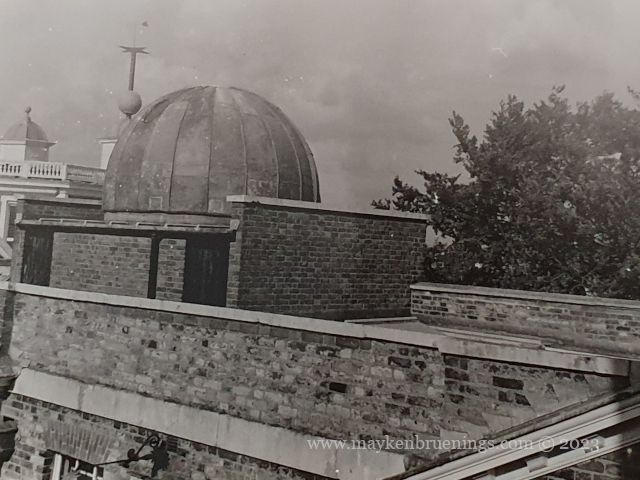
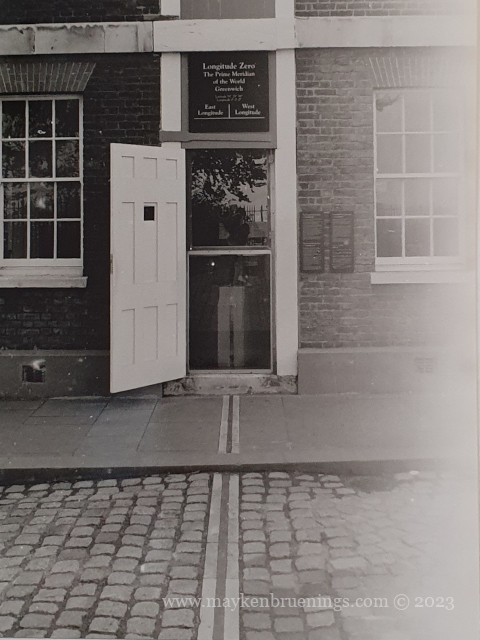
The Royal Observatory, Greenwich (a town just outside London), is the reference point for both the Prime Meridian, putting Greenwich at 0° longitude, and Greenwich Mean Time. Both these references were progressively adopted around the world over the second half of the 19th century, some international conferences helping the process along.

The Prime Meridian at the Royal Observatory, Greenwich

Paris is in the GMT+1 time zone and at a longitude of ~2°20’E. New York is in the GMT-5 time zone and at ~74’W.

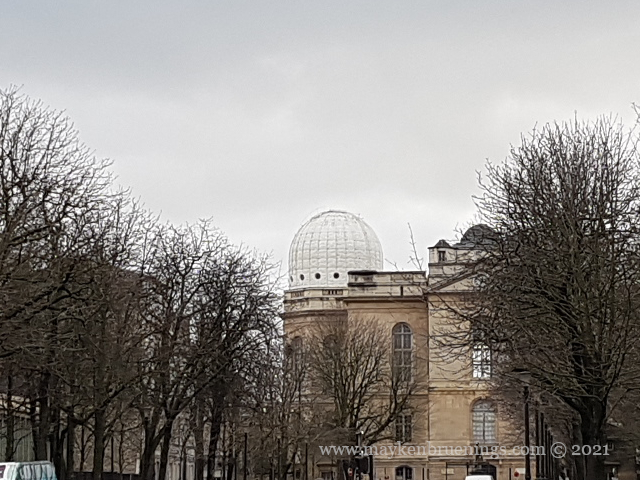
Back in the 17th century, Sun King Louis XIV authorized the building of the royal observatory of Paris (today the Paris Observatory). On Midsummer’s Day 1667, scientists traced the outline of the building in such a way that the Paris Meridian bisected the site from north to south. Meridians were really important in that time as scientists attempted to determine the size and the figure of the earth.

The Paris Observatory

So we now have the Paris Meridian. What about Paris time?

Once upon a time and ironically long before the Sun King came along, people told time by the sun. Later, church bells calling to prayer marked time during the day. Each village, each town lived by the time of their local clocks.

It was only with the arrival of the train that France started to feel the need to unify time across its territory. In order to assure a regular train service, the train companies used Paris time. Progressively, over the second half of the 19th century, French towns adopted double display, local time and Paris time, and in 1891, Paris time was enforced by law across the country.

However, in the meantime, the Greenwich Meridian and GMT had been widely adopted around the world, first by navies, then by train companies and then (nearly) everyone else.

Finally, with the law of March 9, 1911, France adopted the time of the Greenwich Meridian and the division of the day into 24 hours instead of two times 12 hours. However, the text of the law never mentioned Greenwich. Indeed, the reference time remained “Paris time” which is 9 minutes and 21 seconds ahead of GMT. This corresponds to the distance between the Paris Meridian and the Greenwich Meridian.

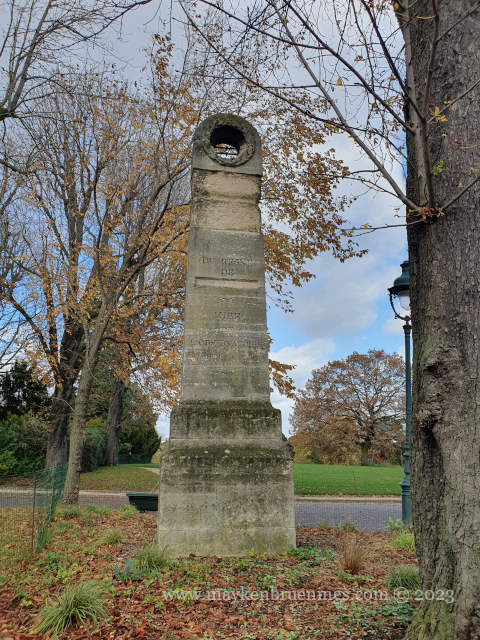
La Mire du Sud – a sight that originally stood on the Paris Meridian in the gardens of the Paris Observatory, allowing to focus on the Meridian (today it can be found in the public Parc Montsouris)
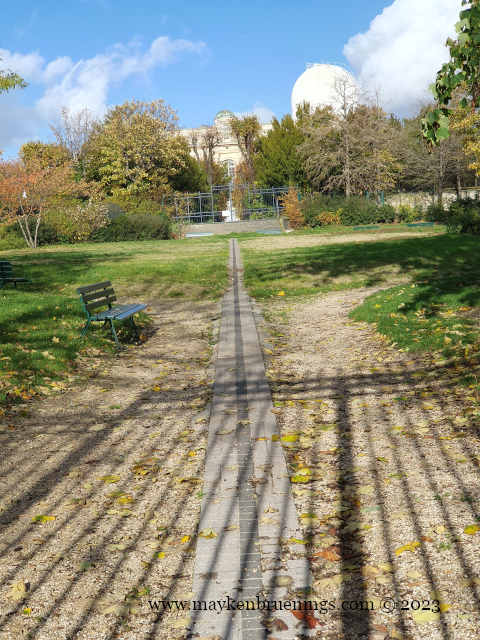
Paris Observatory and Paris Meridian

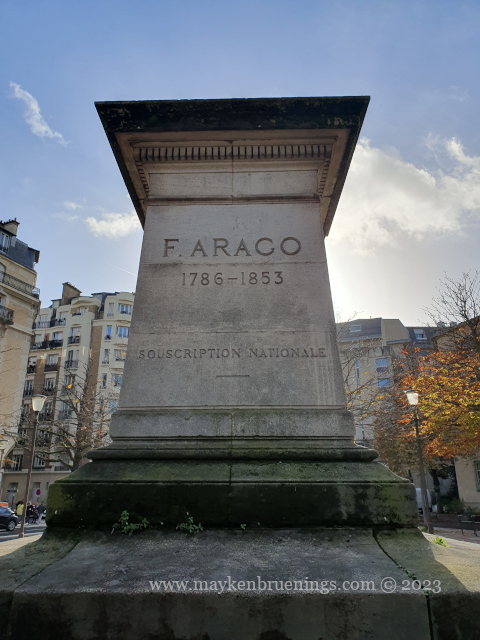
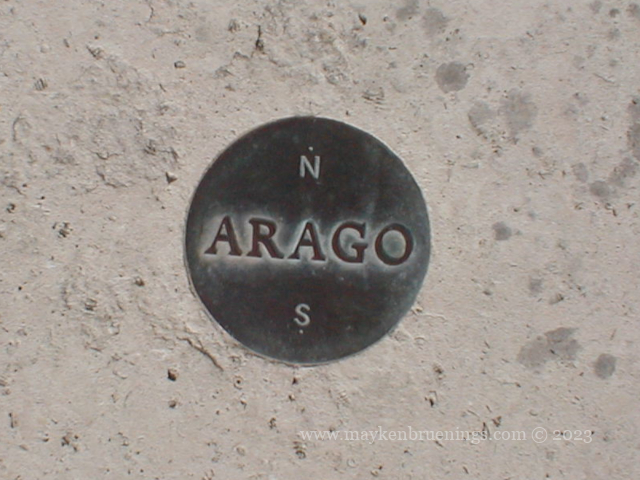
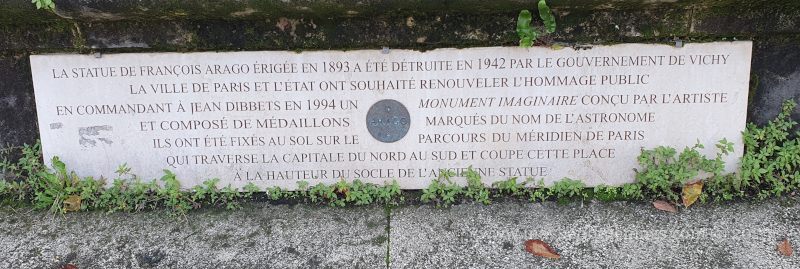
In Paris, the Meridian is materialized both inside and outside the Observatory, as well as across town by the Arago medallions, named for Astronomer François Arago (1786-1853) whose statue near the observatory was destroyed by the Vichy Regime in 1942.

Many of the Arago medallions have gone missing since their installation in 1994, not least due to the Da Vinci Code, which has their location all wrong, so don’t go looking for one at the Louvre Pyramid! (Please don’t take any of the remaining medallions. Eiffel Tower key chains only cost 0.50€.)

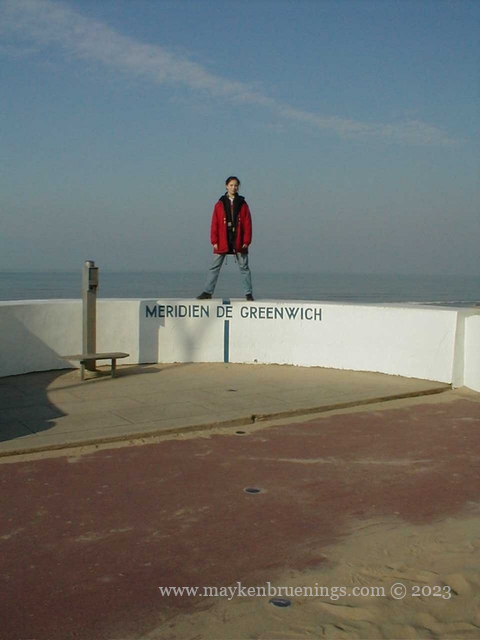
And if you go to Villers-sur-Mer  in Normandy, you will find a marker materializing the Greenwich Meridian on the beach wall. That’s how much 2°20’ are in distance!

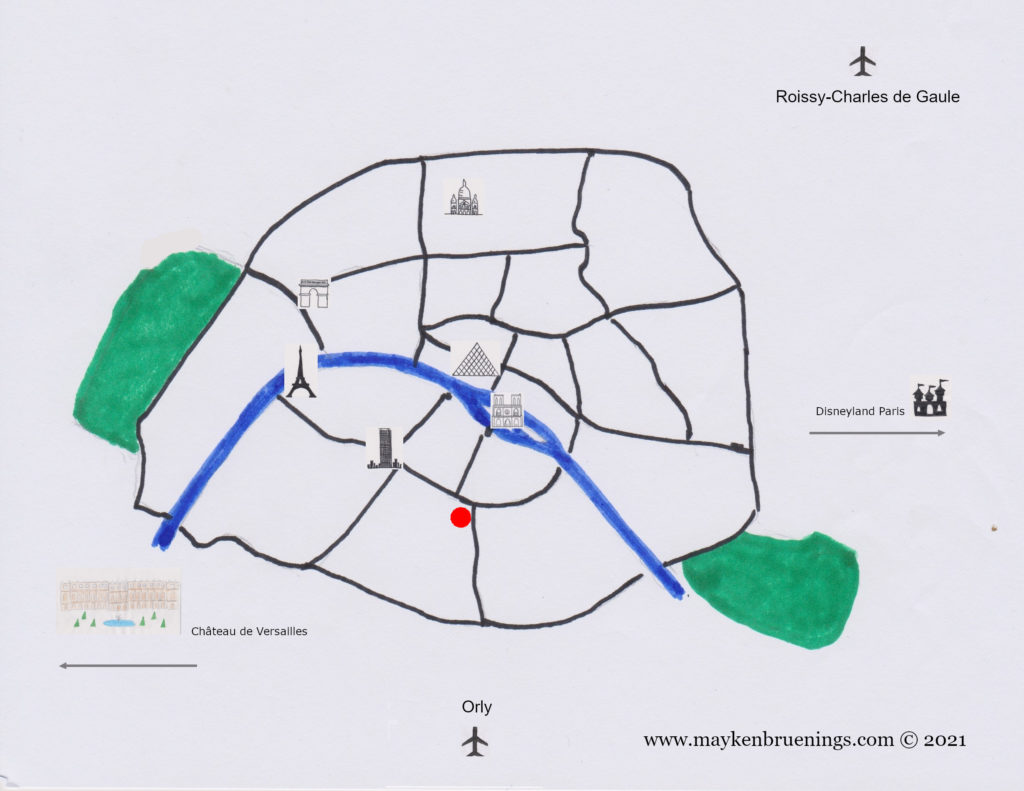
Location of the Paris Observatory on a map of Paris
Share this:

Métro 4 – from north to south

Line 4 is one of the oldest métro lines in Paris. Its construction began in 1905. In 1908, the first section was opened, running from Porte de Clignancourt (which is still its northern terminus today) in the 18th arrondissement to Châtelet in the center of Paris (1st and 4th arrondissement). A year and a half later, a second section was opened on the south bank, running from Raspail in the 14th arrondissement to Porte d’Orleans on the southern city limits.
In 1910, the line 4 became the first métro line to cross the river via a tunnel when the section linking Châtelet and Raspail was opened.

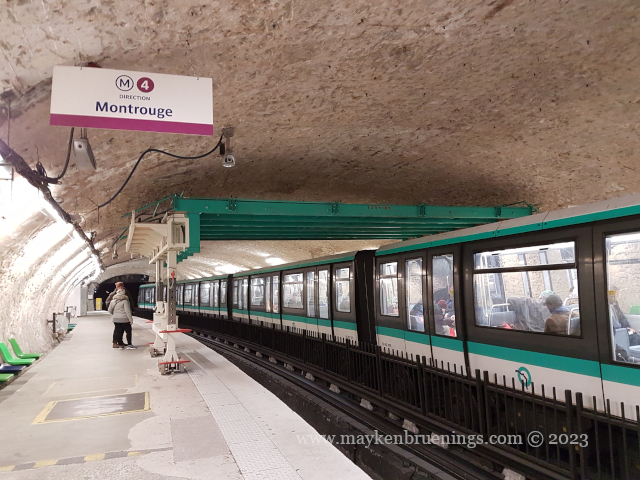
For over a century, the line 4 did not pass the city limits. Only in 2013 was it extended to the southern suburbs with the opening of the new terminus Mairie de Montrouge.

Métro 4 at Châtelet before full automation (the platforms are still open and the terminus is still Montrouge)

This station didn’t remain the terminus for long however, as in 2022 two more stations were opened to reach the current terminus Bagneux – Lucie Aubrac. (Both Montrouge and Bagneux are located in the département 92 Hauts-de-Seine.)

new terminus: Bagneux

The line is frequently used by tourists as it calls at Saint Michel-Notre Dame as well as three of the six Paris train stations: Gare du Nord, Gare de l’Est and Gare Montparnasse.

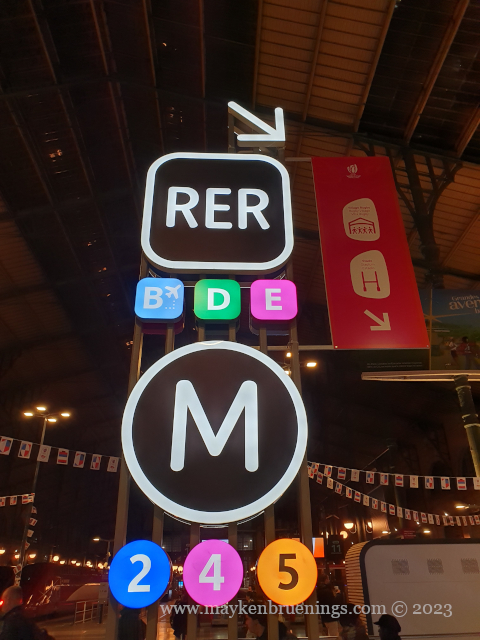
Métro 4 and some other lines at Gare du Nord station

Here are some fun facts about the line 4:

  • It’s the only line with correspondence to all other métro lines (except the very short 3bis and 7bis).
  • It’s the only métro line that has two stops at Châtelet-Les Halles, one of the largest underground stations in the world: At Châtelet, you can change to 1. 7, 11, and 14, at Les Halles to the RER A, B, and D.
  • It’s the second-most frequented lien after line 1.
  • It is one of currently 3 fully automated métro lines, after line 14 (which was automated from the start) and line 1.
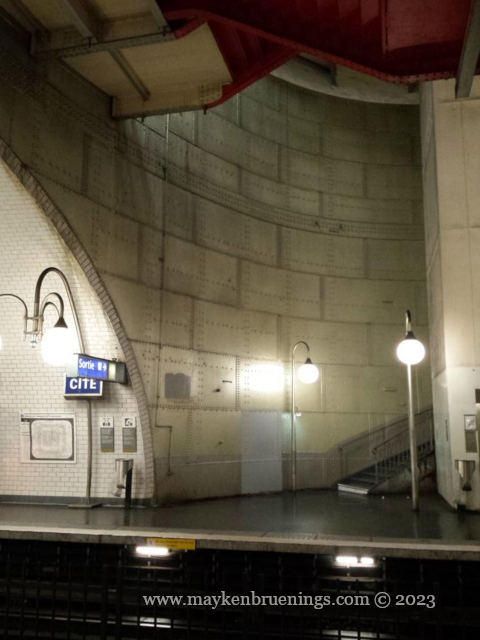
  • It is the only métro line with a stop on one of the Seine islands, Cité, a stone’s throw from Notre Dame cathedral.
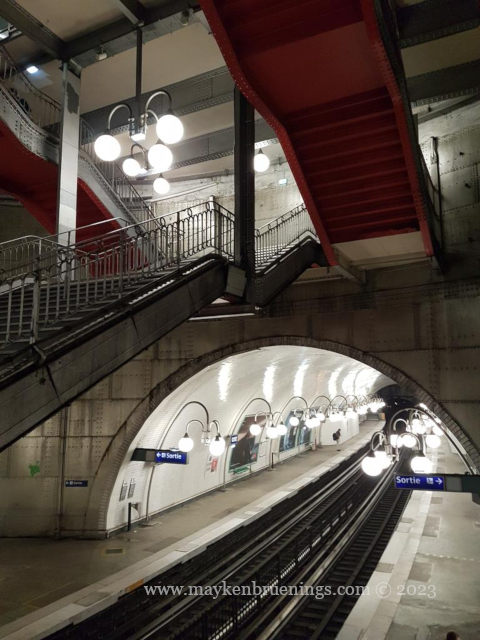
  • The stations Cité (on Cité Island) and Saint-Michel Notre Dame (right next to the river) were built in caissons assembled on the surface and then lowered into the ground.
  • Due to its proximity to the river, the middle section of the line is temporarily closed again shortly after its opening when the Great Flood of Paris leads to leaks inside the tunnel and stations.
  • As a fully automatic métro, is it much appreciated by commuters during transport strikes.

Come along for a ride from Mairie de Montrouge to the former terminus station Porte d’Orléans:

Share this:

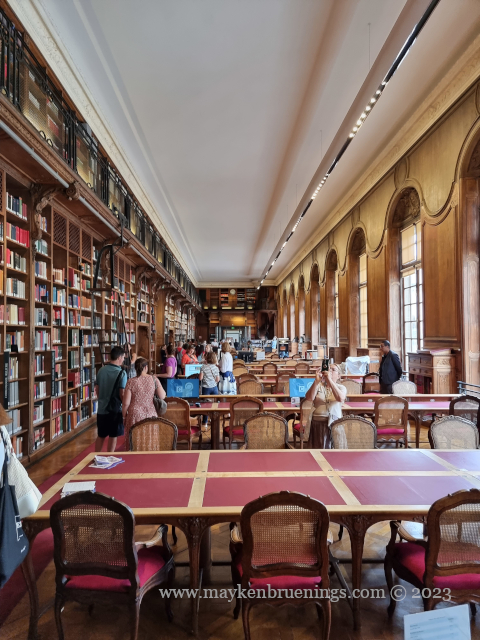
Reading with Kings in Paris

In 1537, King François 1er issued the Ordonnance de Montpellier, by which one copy of each published book had to be deposited in the king’s library.

Today, the French National Library (Bibliothèque Nationale de France – BnF) consists of seven sites, and receives 70,000 books, 250,000 magazines and thousands of specialized documents every year.

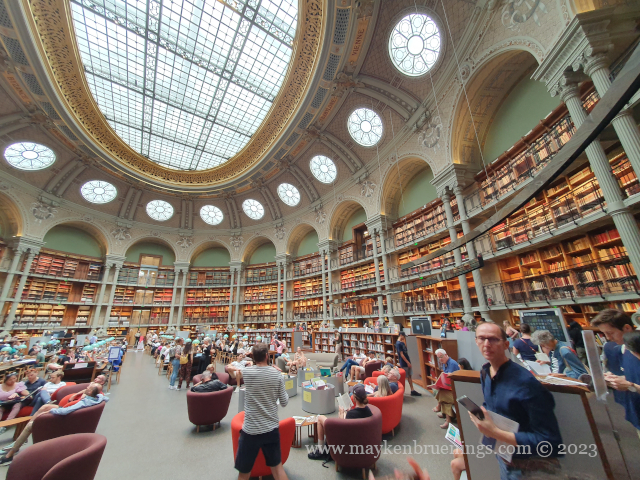
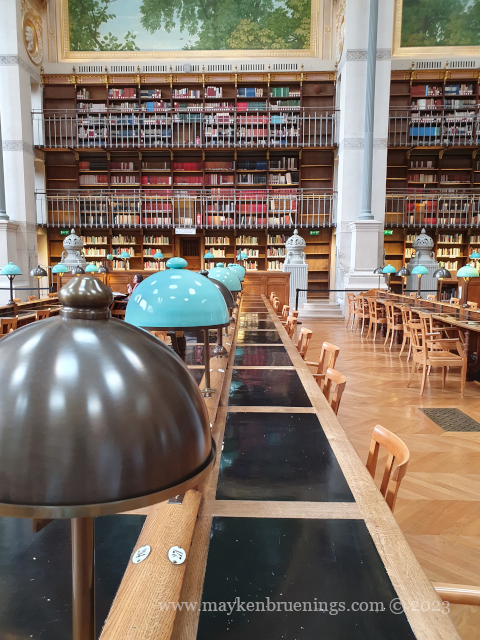
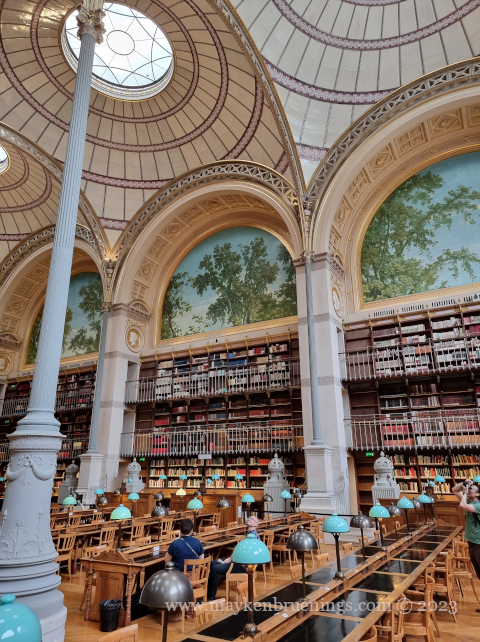
The oldest site of the BnF is the Richelieu site. It was home to the king’s library since 1721. Located in the heart of the 2nd arrondissement, the former palace of Cardinal Mazarin (not to be confused with Mazarin’s library La Mazarine) was built in the 17th century and subsequently enlarged up until the 20th century.

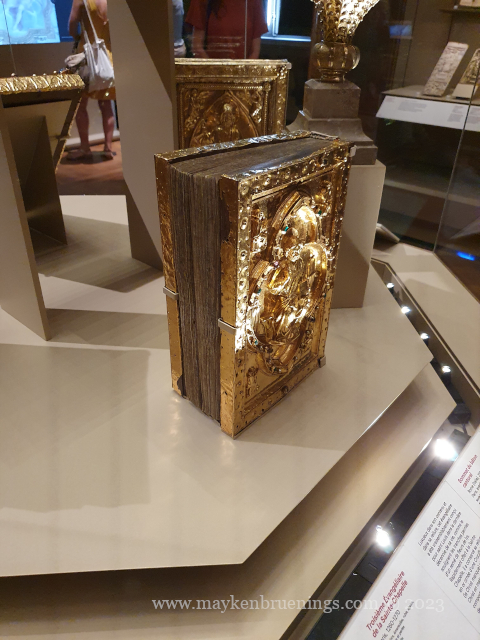
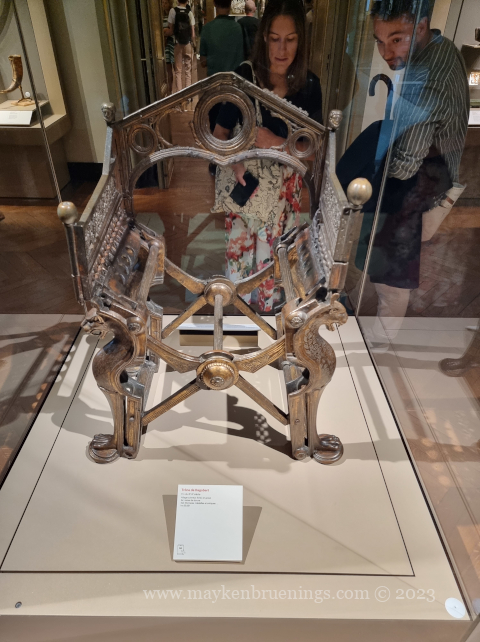
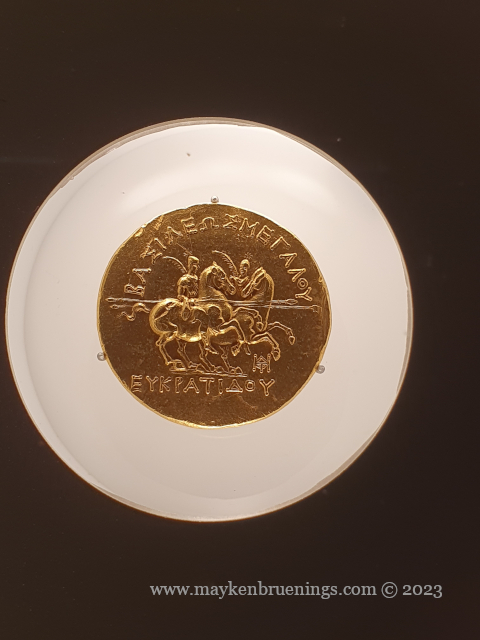
The new BnF museum on the Richelieu site showcases exceptional objects from the BnF collections, among them the throne of King Dagobert (King of the Franks in the 7th century), Charlemagne’s chessboard or the largest gold piece ever found.

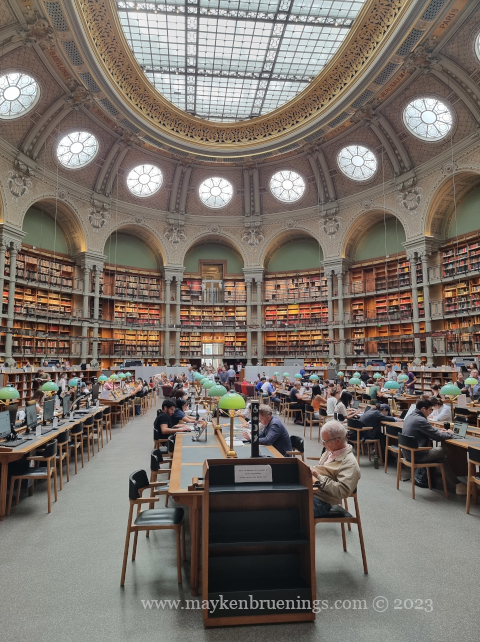
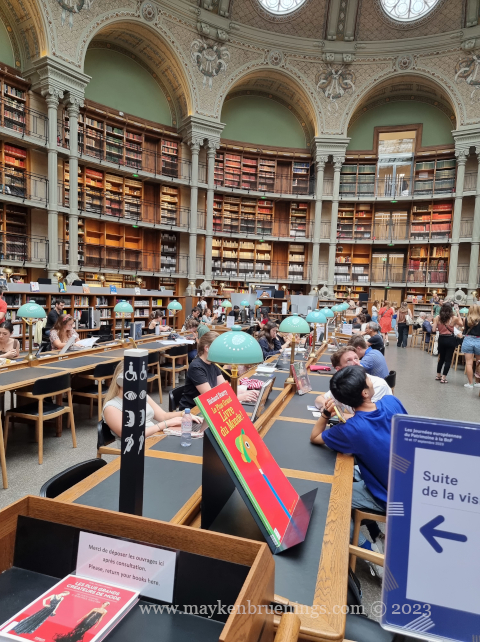
The Richelieu site of the Bnf is open to the public. The salle Ovale reading room has free access, for the museum you need to purchase a ticket. Guided tours are available. For access to the research libraries (of which Richelieu is only one site), you need to sign up advance.

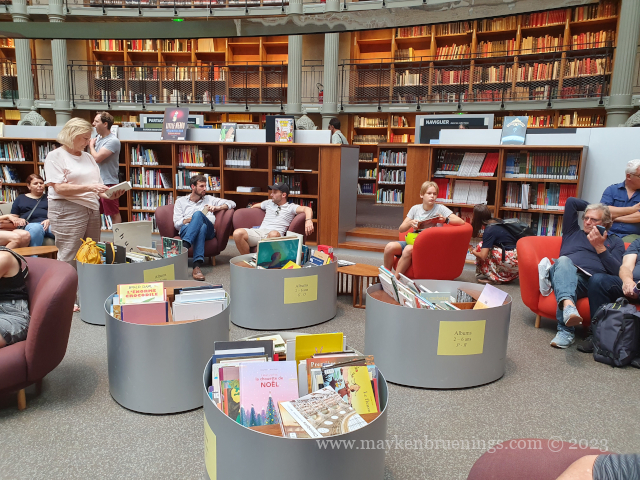
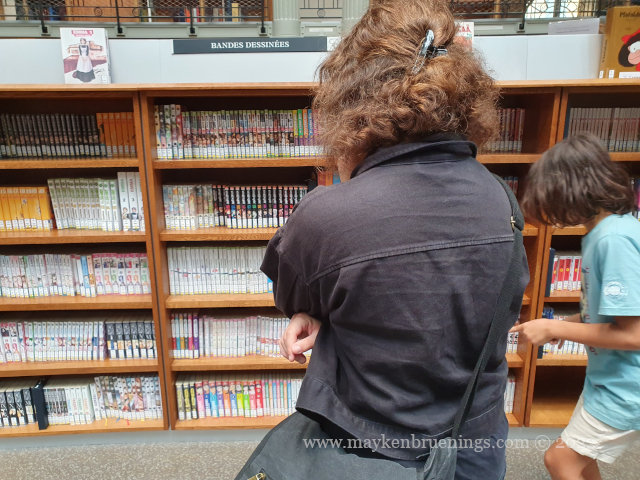
The Salle Ovale is a reading room with over 20,000 volumes for reference, among which 9,000 comic books and mangas.

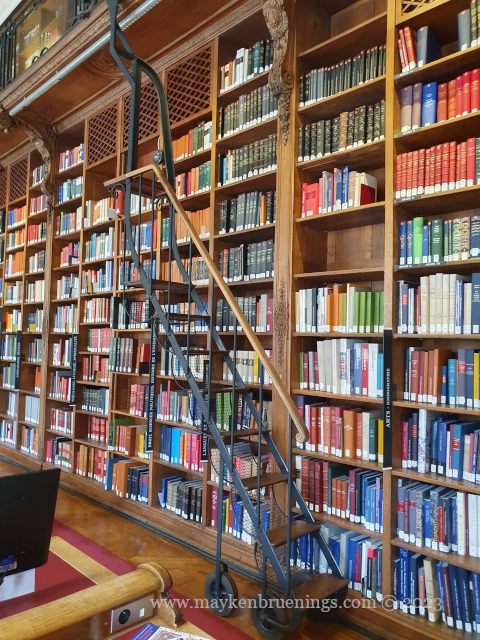
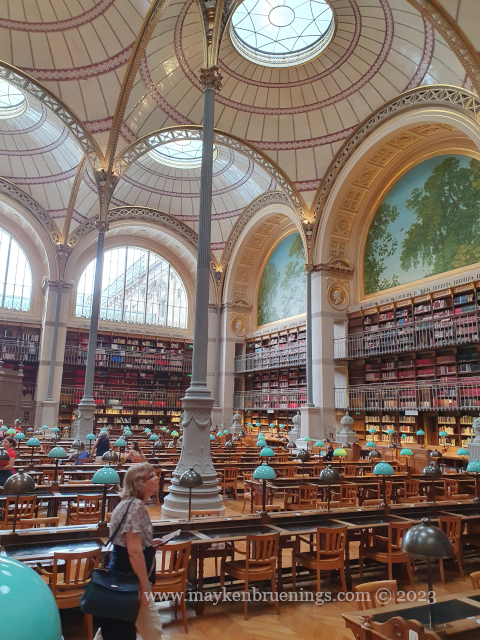
The Labrouste reading room was created for the Imperial Library. Today it hosts the library of the national institute for art history.

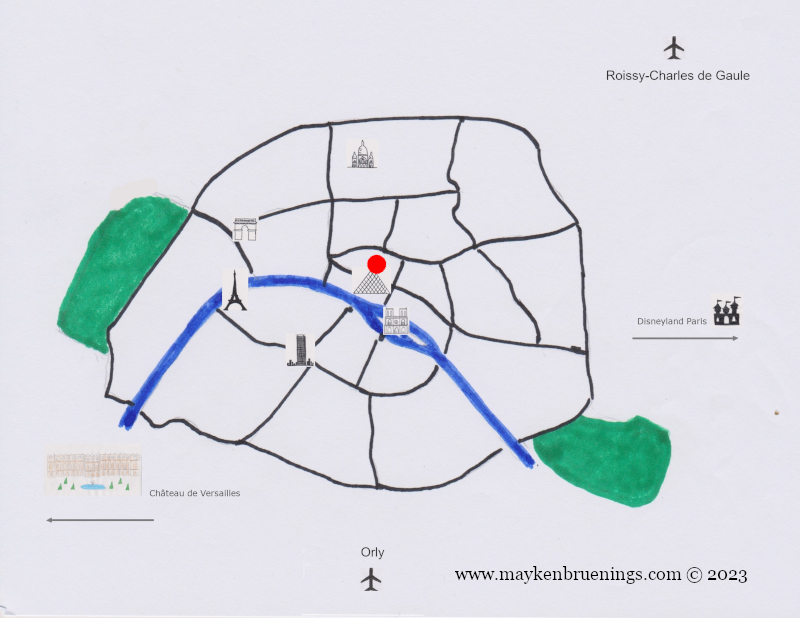
The location of the BnF-Richelieu on a map of Paris
Share this:

Where am I calling?

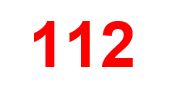
French phone numbers are composed of ten digits, except for the emergency numbers—as a visitor, all you need to remember is 112, it’s a centralized number for all emergencies, you can call it from a mobile phone, and they will be able to help you even if you don’t speak French.

But back to regular French phone numbers. In France, there are no regional area codes any longer, they were ditched during the great phone number reform in 1996. So how do you know where in France you’re calling?

Easy-peasy. Just look at the first two digits of the number. Landline numbers start with 01, 02, 03, 04, or 05. We’ll get to that in a minute.

a restaurant with a landline number

If you’re calling a number in 06 or 07, it’s a cell phone, and then your guess is as good as mine as to where you’re calling.
A number starting with 08 is a value-added service number which might be free (“Do you have any comments about our product? Let us know!”) or cost up to 3 € per call or 0.80 € per minute. So check the source of your number which should indicate the fee.
Number starting with 09 are new, VoIP numbers that can be anywhere in France.

And when you dial a number starting with 00, you’re calling abroad. (The next few digits will indicate the country you’re calling.)

So lots of numbers where we can’t tell where you’re calling, and since the recent opening of landline portability, thing swill slowly get even more confusing. But while people still have their landline numbers (this is decreasing too), here’s what you need to know.
If your French ten-digit number starts with 01, you’re calling somewhere in the Paris area. Let’s say you want to reserve a table at Fouquet’s, for example, you dial 01 40 69 60 50.
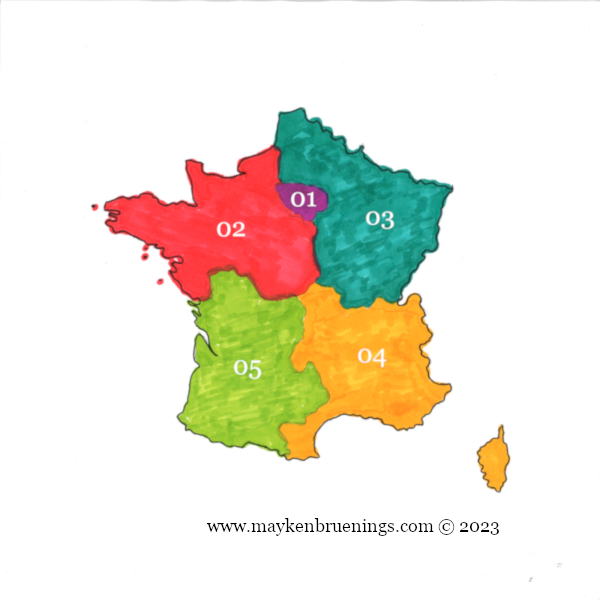
If your number starts with 02, you’re calling the northwest of France, such as Brittany and Normandy, but also the overseas departments La Réunion and Mayotte in the Indian Ocean.

an excellent crêperie in Brittany, to book a table call 02 97 52 35 50

Should your number begin with 03, you’re calling the northeast, think along the Belgian, German, and Swiss borders.

If you dial 04, you’re in the southeast, such as Marseille and Nice, but also the island of Corsica.

Finally, with the 05, you’ll reach the southwest, as well as the Atlantic Ocean départements, régions and collectivités, that is Saint-Pierre-et-Miquelon, French Guyana, Martinique, Guadeloupe, and the other French Caribbean islands.

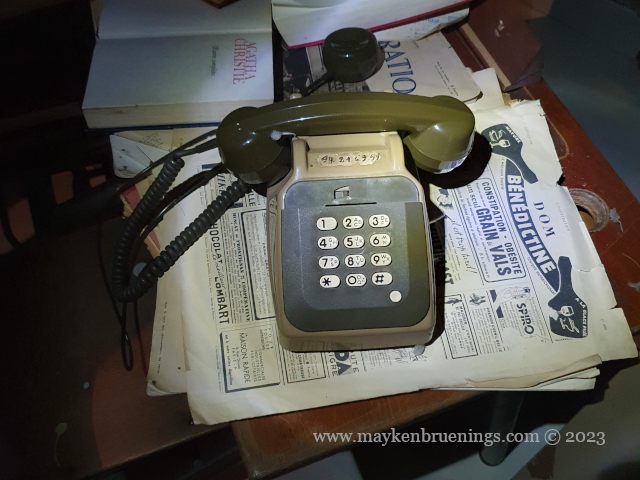
Sometimes, you still find old phone numbers:

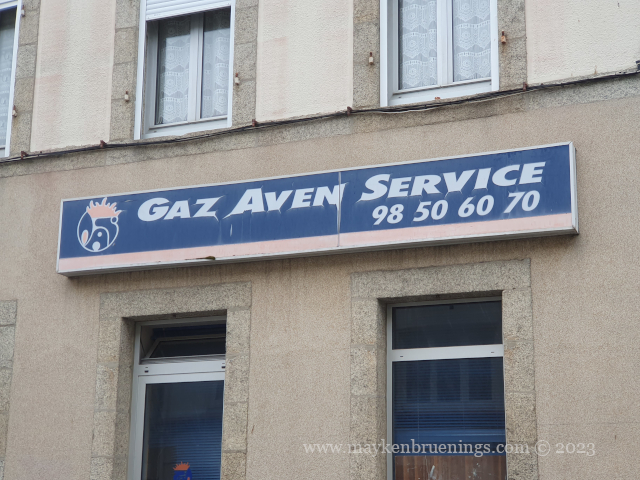
This place still shows the 8-digit number pre-1996 reform
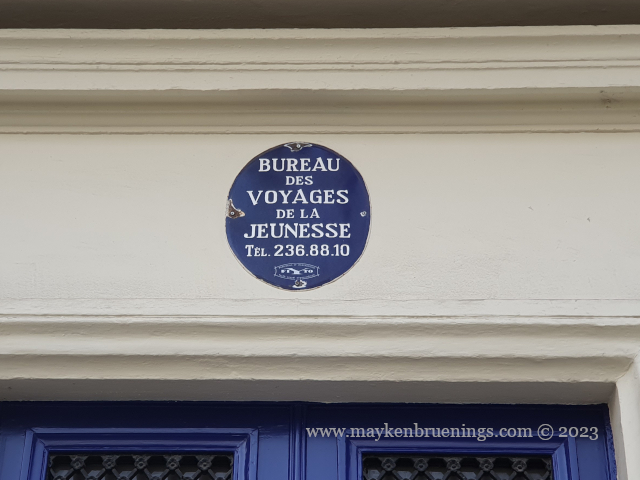
The sign on this youth hostel must be from before 1985, when the 7 digits gave way to the 8 digits

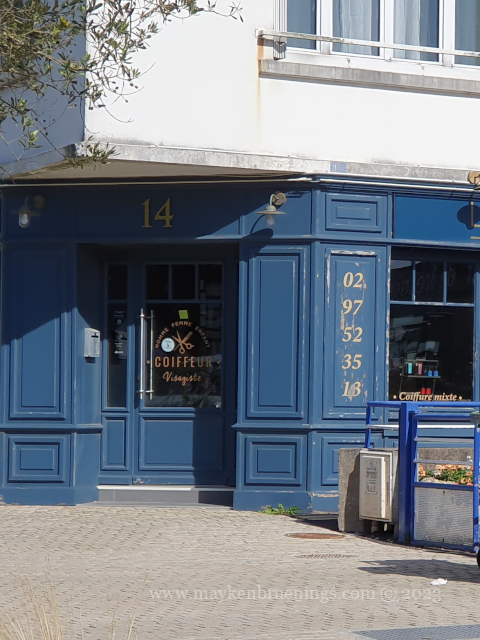
So now you can easily tell where in France (hint: it’s on the mainland) I found this hairdresser.

Questions? Call me!

Share this:

On the Road with Smart Bison

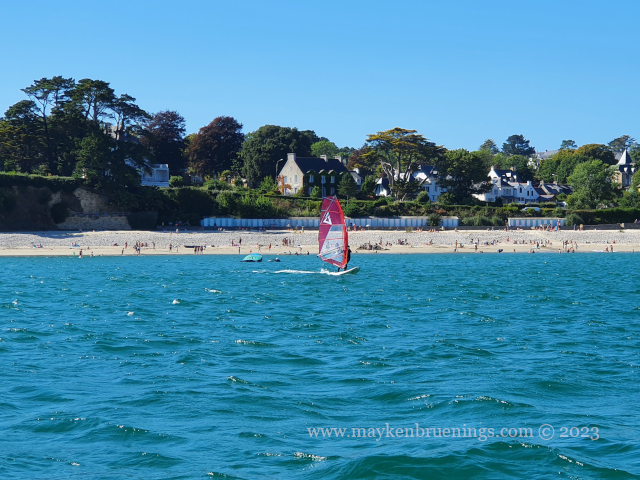
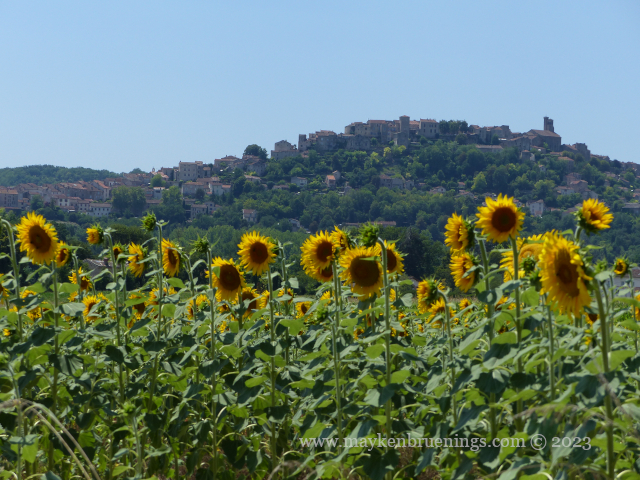
The French love going on holidays in their own country. Annual leave stands at five weeks and school holidays in the summer at two months, so there’s plenty of time to choose from and many lovely places to go to. Mer ou montagne? (Sea or mountains?) you will hear, or Mer ou campagne? (Sea or countryside?) In the end, lots and lots of French holiday-makers will head for the Mediterranean or the Atlantic coast in July or August. As holiday rentals start and end on Saturdays in high season, I’ll let you guess on which day traffic volume is highest.

Queuing for cheap gas at the start of summer holidays

Back when autoroutes were built and expanded and more and more people got cars, a traffic information system slowly developed. It got a big boost after tragedy struck during an August Saturday in 1975 when a combination of heat wave and traffic accidents killed almost 150 people.

Authorities realized they needed to work on three main points:

  • Spreading the traffic over a larger time period
  • Reinforcing alternative itineraries
  • Communicating with the travelers
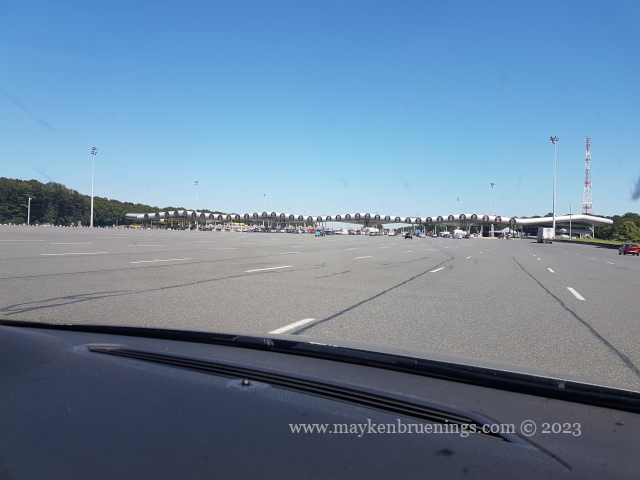
The Saint Arnoult toll station, with 39 toll gates one of the biggest in Europe, a dreaded congestion point on holiday weekends

It was in this context that Bison Futé (Smart Bison) was created, a character who’d tell people the smart time to travel to avoid traffic congestion, and the alternative routes to take.
You’ll have guessed given the time (1970s) and the name, what this character was. Fortunately, French authorities have gone with the times, and the present logo of Smart Bison is the outline of a bison head made to look like an itinerary. The Smart Bison has become an icon that couldn’t simply be removed.

The Smart Bison website is run by the Transport Ministry, and both website and the Smart Bison Twitter feed will also warn of adverse weather conditions, like heavy thunderstorms.
But its main focus is traffic. Smart Bison will tell you if it’s a green, orange, red, or black day for departures and for returns.

  • Green means normal traffic (including rush hour traffic in urban areas)
  • Orange means heavy traffic with difficult driving conditions locally or generally
  • Red means very heavy traffic with very difficult driving conditions locally or generally
  • Black means traffic is extremely heavy and driving conditions are extremely difficult on the entire road network

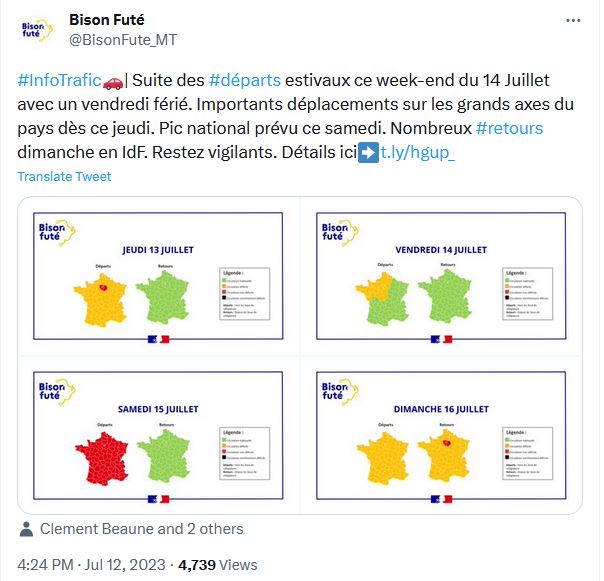
For example, on July 12, 2023,  a Wednesday preceding the weekend with the national holiday July 14 falling on the Friday, and school holidays having started the previous weekend, Smart Bison predicted the following traffic conditions for the weekend:

Thursday
Departures
Orange everywhere but red in the greater Paris area
Returns
Green everywhere

Friday (national holiday)
Departures
Orange in the north and northwest, including the greater Paris area
Green for the rest of the country
Returns
Green everywhere

Saturday
Departures
Red for the entire country
Returns
Green for the entire country

Sunday
Departures
Orange for the entire country
Returns
Orange for the entire country
Red for the greater Paris area

The pattern here is easy to spot:
It clearly was a weekend of departures, not returns, with a peak on Saturday (remember those holiday rentals?). The Red for the greater Paris area and Thursday for departures and Sunday for returns indicates many Parisians going away for the long weekend.

Not all that hard to read, is it? So next time you plan to drive in France, consult Smart Bison!

Share this:

School’s out

Summer is here, and that means school’s out in France. Summer holidays (les vacances d’été) start around the beginning of July (or earlier, when younger students are sent home while older students take exams in the school building), and last until the end of August. La rentrée (back to school) is at the beginning of September.

But French students have several shorter breaks (les petites vacances) over the year:

  • All Saints holidays (les vacances de la Toussaint) around All Saints Day (November 1st)
  • Christmas holidays (les vacances de Noël) at, well, Christmas
  • Winter holidays (les vacances d’hiver) in February
  • Spring holidays (les vacances de printemps) around or at least sometime near Easter

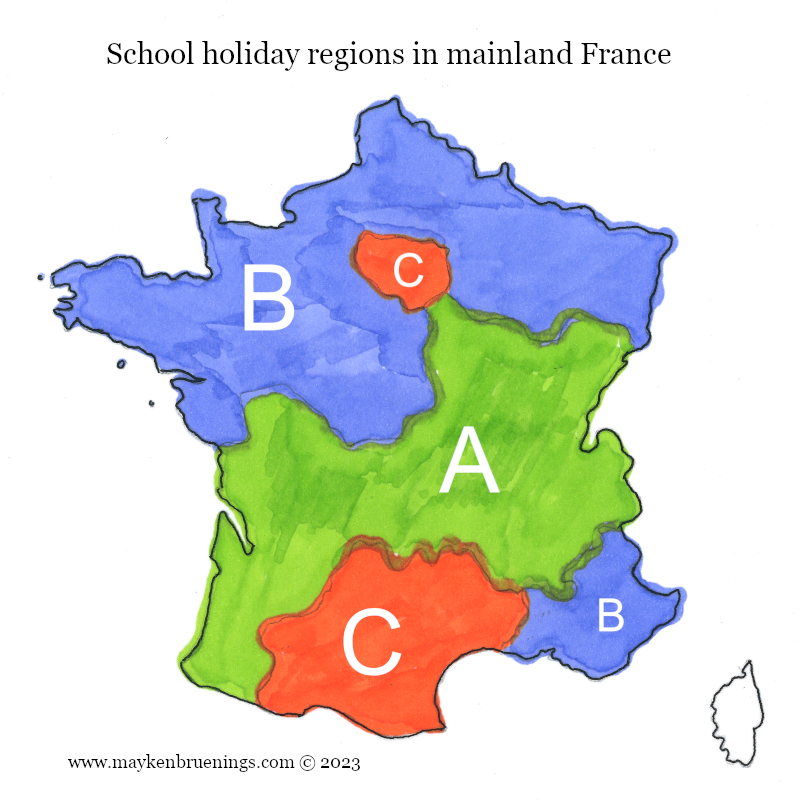
Each of these is two weeks long, and though the first two are usually at the same time for everyone, the winter and spring breaks are staggered by region (“zone”) as shown in the map below:

For example, in the upcoming school year 2023-24, the first region to start winter break is Region C, which includes the Paris area. After one week, it is joined by region A. And when Parisians and other Region C residents go back to school, those in Region B start their holidays.
Spring holidays have the same order so that all students have the same amount of weeks between the breaks.
Let’s go one year back: in the school year 2022-23, the first region to start into winter break was Region A, followed by Region B with Region C going last.
There is a regular rotation to ensure all three regions are treated equally, because it can be a long stretch between Christmas break and winter break if you’re in the last group, and a long stretch between spring break and summer holidays if you’re in the first group.

This information might be helpful if you’re visiting France and trying to figure out opening hours of places that say “pendant les vacances de la zone A”.

Enjoy your holidays!

Share this:

Don’t be alarmed at noon

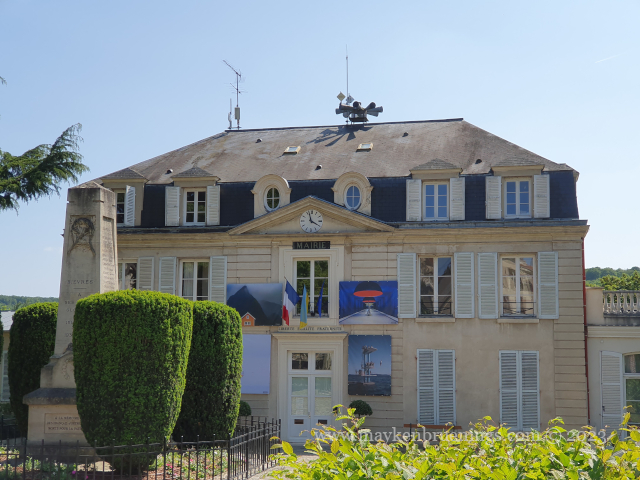
If you happen to be in France on the first Wednesday of the month, any month, a word of warning: Don’t be alarmed when the alarm sounds.

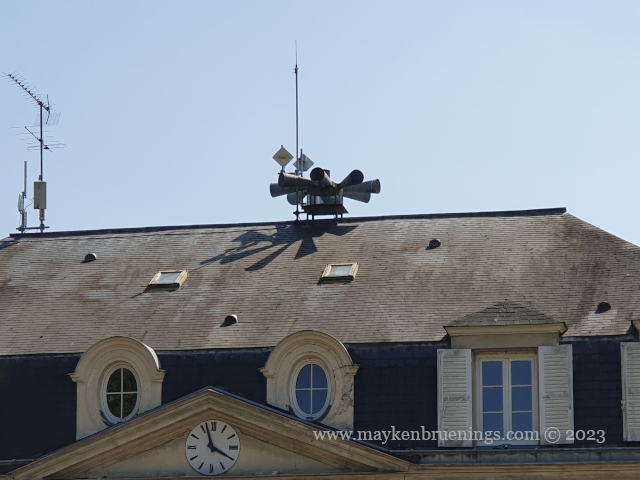
Depending on the region, at 11.45, noon sharp or 12.15, the wail of the sirens will cut through city noise as part of the SAIP (système d’alerte et d’information des populations), to make sure the sirens are working properly and people recognize the signal.

sirens on the roof of a townhall

The origins go back to the Middle Ages, when the tocsin, or alarm bell, rang to alert the population to a danger. After World War II, church bells have been replaced by the sirens sitting proudly atop the fire stations or town halls. As recently as 2019, they alerted the population of the Normandy city of Rouen and the surrounding area as a chemical products plant caught fire.

Even more recently, in 2022, these alert measures were completed by an alarm system called “cell broadcast” that will send alert messages to the cellphones in an area affected by a threat.

So don’t be alarmed by the alarm, as long as it’s sirens and not your cellphone wailing.

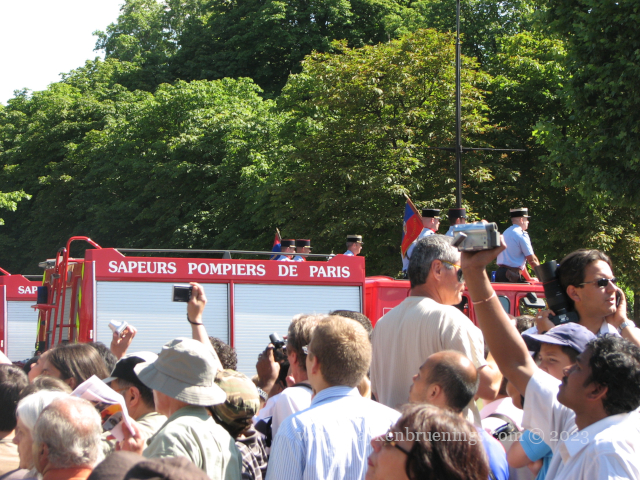
Paris firefighters at the Bastille Day parade

Postscript: While we’re on the subject of alarms, firefighters and emergencies, do you know what number to dial for an emergency in France? There’s a bunch of two-digit numbers to call depending on what your emergency is, but thanks to the European Union, all you need to remember is one three-digit number that will work no matter in which EU country you are, and even in many other European countries, and get you an operator speaking English:

Share this:

Places des Vosges

The Place des Vosges is one of the five Royal Squares in Paris. Inaugurated in 1612, it was initially named Place Royale after kings Henri IV and Louis XIII. Its name was changed to Place des Vosges in 1792 for the département Vosges in eastern France which was the first to pay its taxes under the French Revolution.

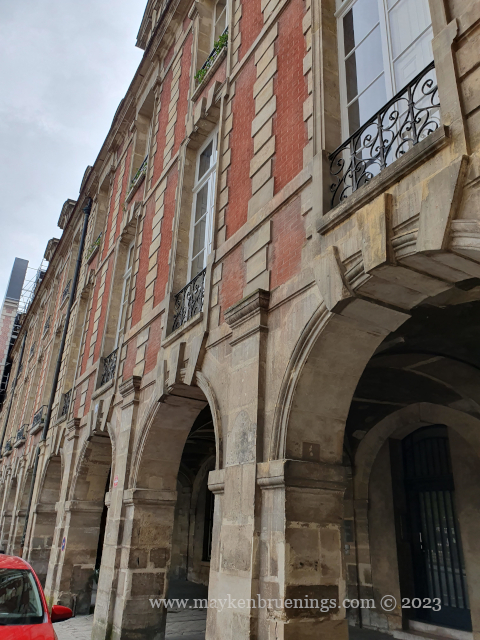
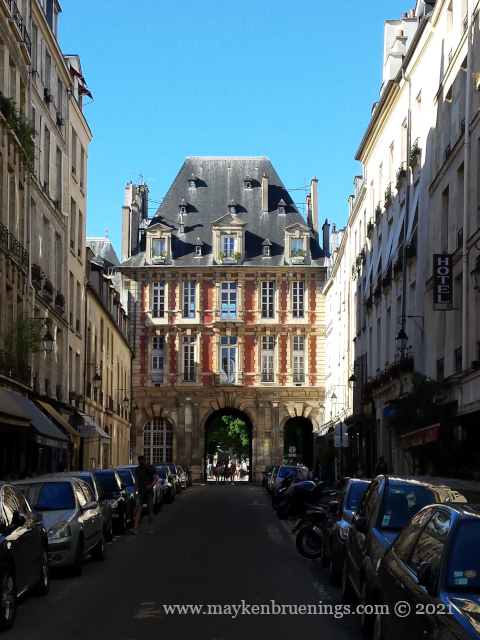
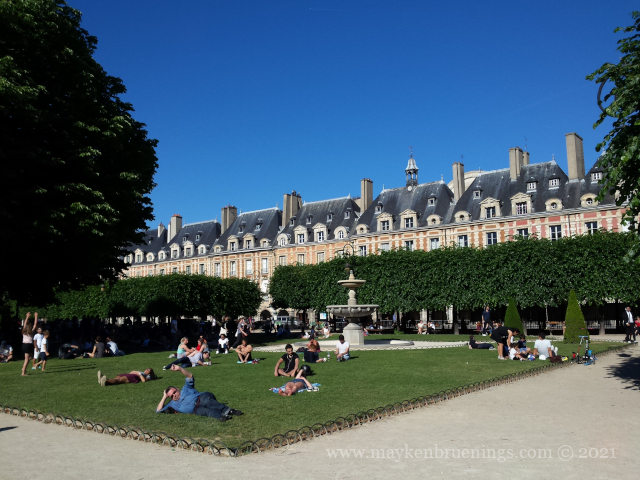
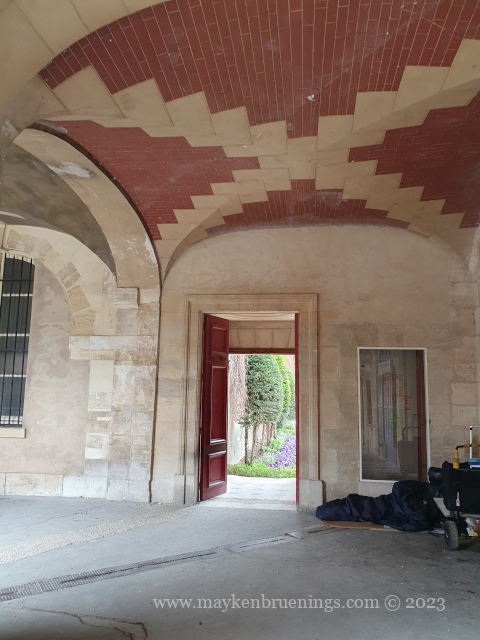
This royal square for once is a square, 140m to each side, with identical façades all along, two stories high, built of red bricks with strips of stone quoins. On the ground level, vaulted arcades allow pedestrians to go around the entire square shielded from the elements.

Only at the center of the north and south sides, the pavilions of the Queen and the King rise above the regular roofline. Despite all those names, the only royal who ever lived on the Place des Vosges was Anne of Austria, and even her residence in the Pavillon de la Reine was short-lived.


At the center of the square stands the equestrian statue of Louis XIII. The original statue, built in 1639 was destroyed during the revolution.
Up until the revolution, the square served as a meeting place for the nobility. Today, when the weather is fine, it becomes a meeting place for families, friends, students, and kids’ birthday parties.

Over time, the square has seen many famous residents come and go. The most well-known is probably Victor Hugo who lived at number 6, house which is now the Victor Hugo museum. Other writers who lived on the square include Colette, Alphonse Daudet and Georges Simenon. It was also home to contemporary French politicians like Jack Lang and Dominique Strauss-Kahn. It is said that even Cardinal Richelieu lived at number 21 for a while.

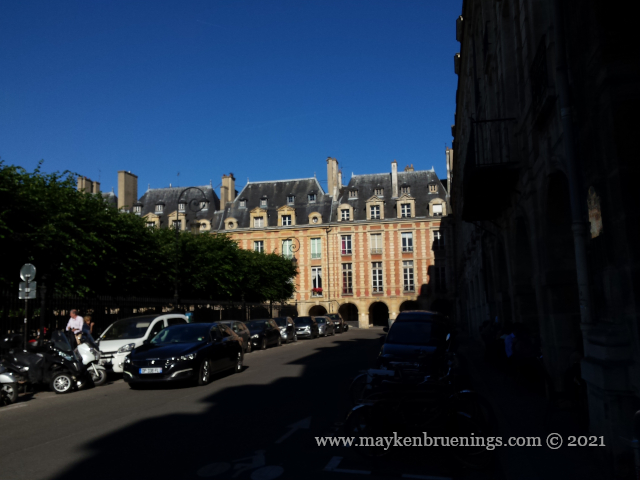
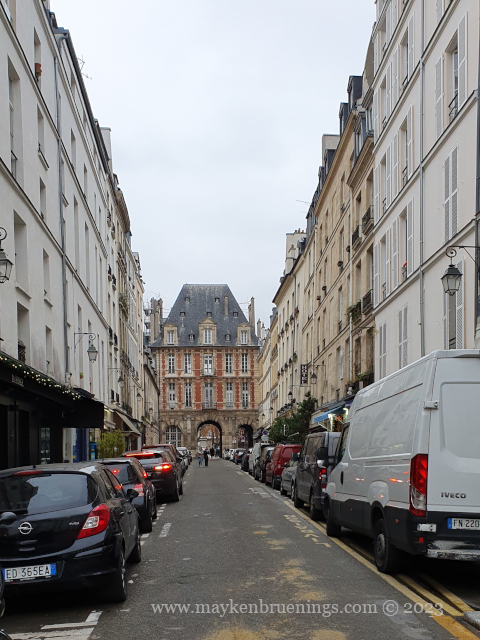
The numbering begins at the rue de Birague at the south side of the square with the Pavillon du Roi being number 1. From there, it’s rising even numbers to the right-hand side and rising uneven numbers to the left-hand side, making the Place des Vosges an exception to the systematic street numbering in Paris.

rue de Birague and the Pavillon du Roi

The square can be accessed via the rue de Birague on the south side, which connects the Place des Vosges to the rue Saint Antoine, the rue des Francs Bourgeois from the Marais on the northwest corner, the rue du Pas de la Mule at the northeast corner from the boulevard Beaumarchais, and through a door in the southwest corner leading into the gardens of the Hôtel de Sully.

exit from the Place des Vosges in the southwest corner

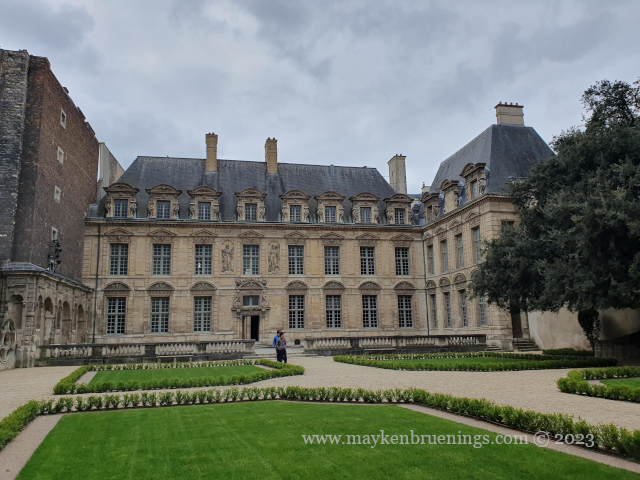
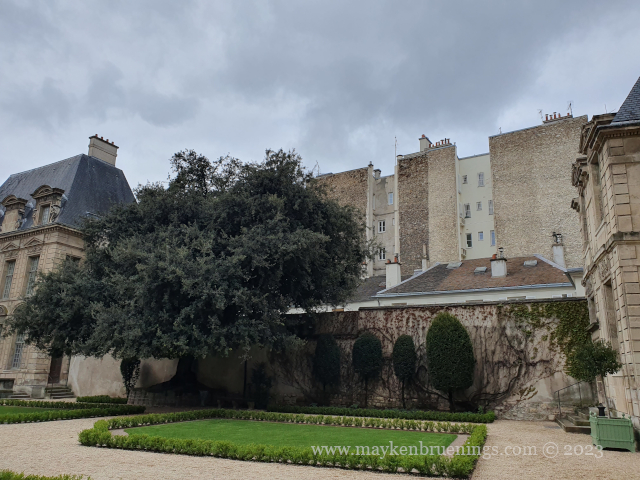
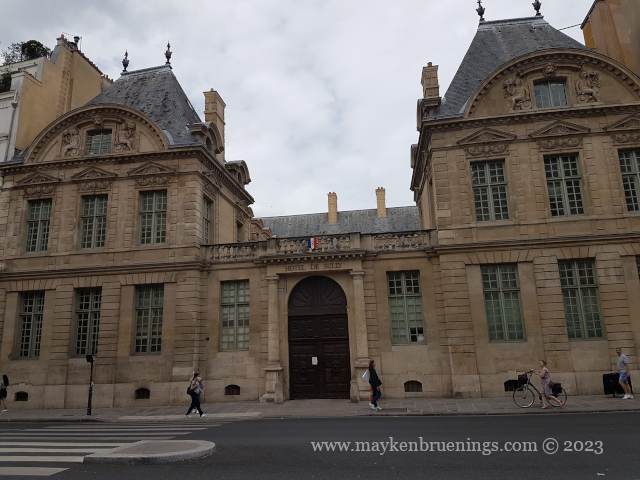
If you leave the Place des Vosges this way, you can cross the courtyard of the Hôtel de Sully and emerge onto the busy rue Saint Antoine which a little further becomes the rue de Rivoli, a main east-west axis of the city.

Hôtel de Sully on the rue Saint Antoine
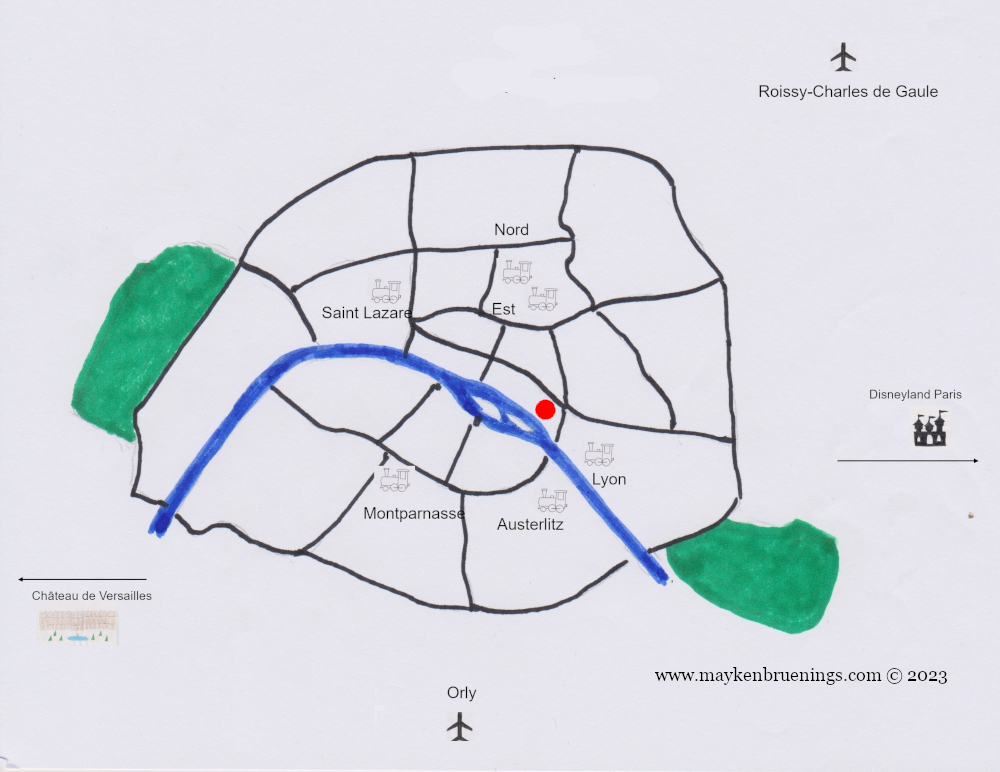
The location of the Place des Vosges on a map of Paris
Share this: