The Paris Games, Part Eight: The Cauldron

Remember the cauldron of Paris 2024? A golden hot-air balloon in the middle of the city?
Of course we had to go see it!
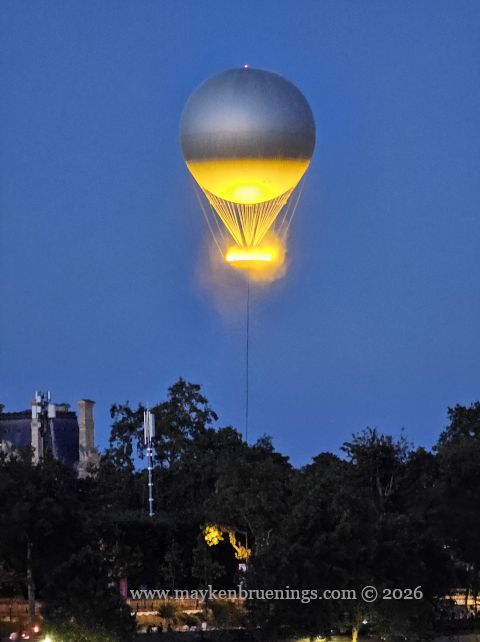
Free viewing tickets were impossible to get (like all tickets for these Games) but hey, the balloon was in the air, right? So on Sunday after the opening ceremony, we hopped on the métro and went into town. It was a lovely warm summer evening, and we walked from Invalides over to the Tuileries where the cauldron (la Vasque) was, staying on the opposite bank at first.
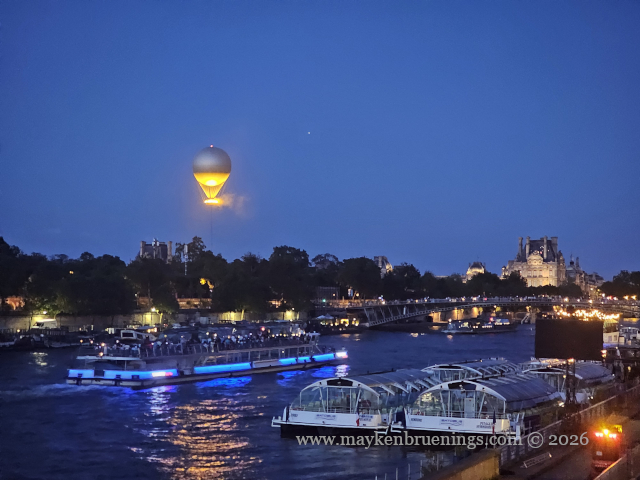
Then we crossed and realized we could get pretty close without any tickets whatsoever.
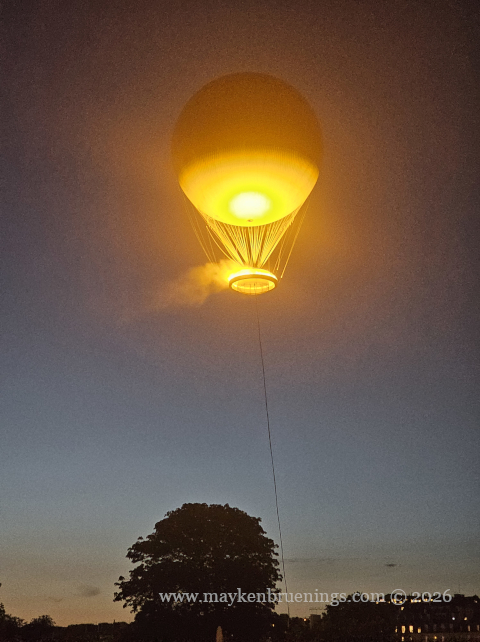
Did you know the Cauldron had no real flame? It was a LED lighting system plus a cloud of mist generated by a lot of water jets. We got to see it up close.
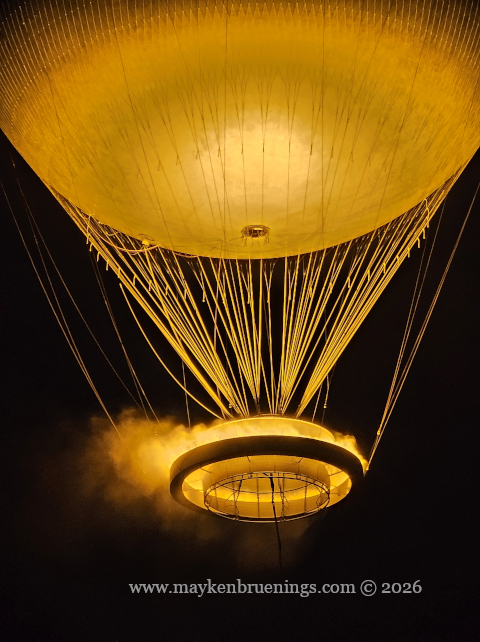
No real flame – it’s LED lights and a cloud of mist – awesome, right?

We finished off with some great shots from the Arc de Triomphe du Carroussel, the small triumphal arch just across from the Louvre. There were lots of people everywhere, and ten times more different languages than what you usually hear in the tourist areas of Paris. It felt very special to be a part of this.
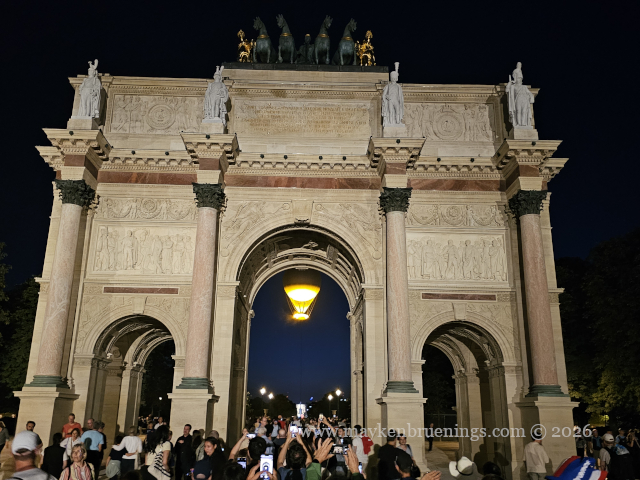
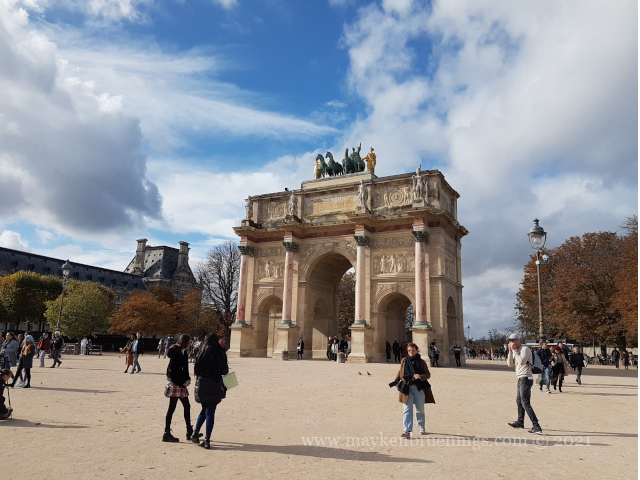
The Vasque seen through the Arc de Triomphe du Carroussel
Share this:

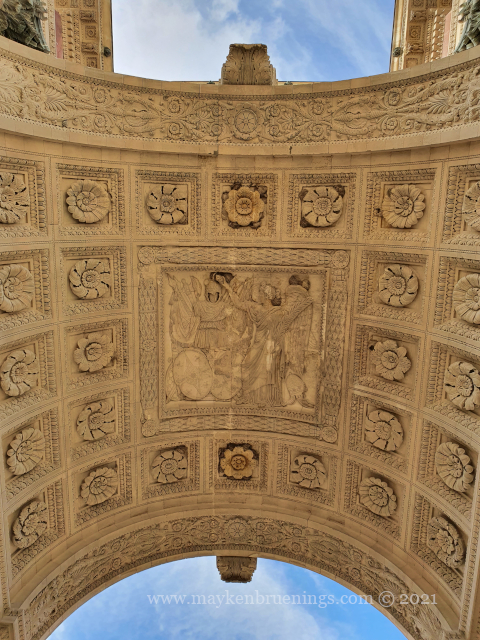
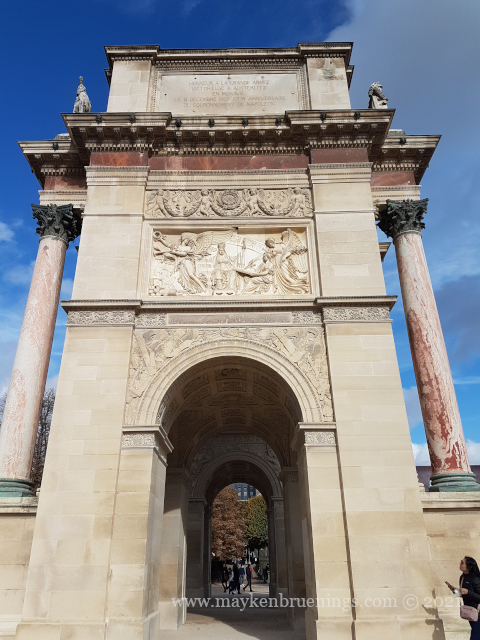
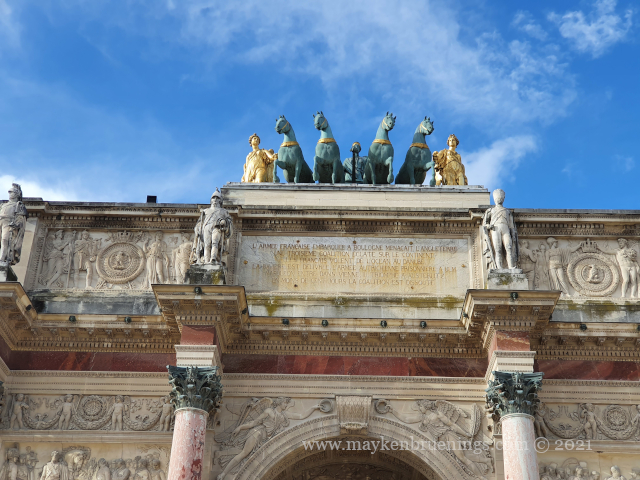
The Arc de Triomphe du Carrousel

An Arc de Triomphe is a Triumphal Arch, a concept dating back to Roman times. This particular arch was built by Napoléon Ier in the style of the Arch of Septimius Severus on the Forum Romanum.
In the same way at that Roman arch, it commemorates an army and, obviously, a triumph, namely that of the Grande Armée in the years prior to its construction which began in 1806.

But what is a carrousel? In this case, the term refers to a type of military dressage. The Place du Carrousel where the arch is located takes its name from the Grand Carrousel, which took place there on June 5-6, 1662, on the orders of Louis XIV to celebrate the birth of his firstborn son Louis (who despite being the Dauphin, did not become king after his father).

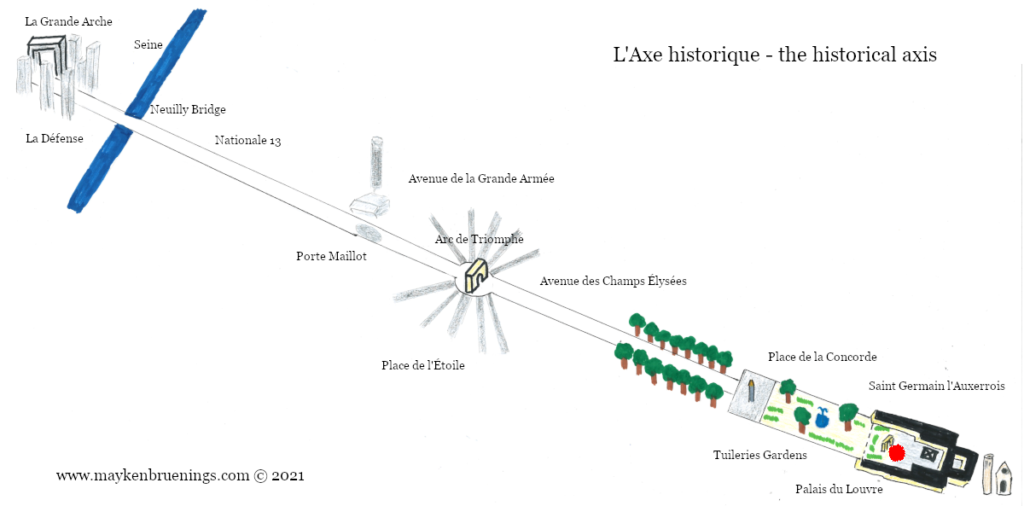
The arch was not yet part of a special axis, even though planning and construction of the Arc de Triomphe de l’Étoile began the same year. In fact, it was built right in front of the Tuileries Palace that closed off the Louvre on its western end and became its gate of honor.

Instead of the destroyed Tuileries Palace, you see elements of the axe historique
Share this: