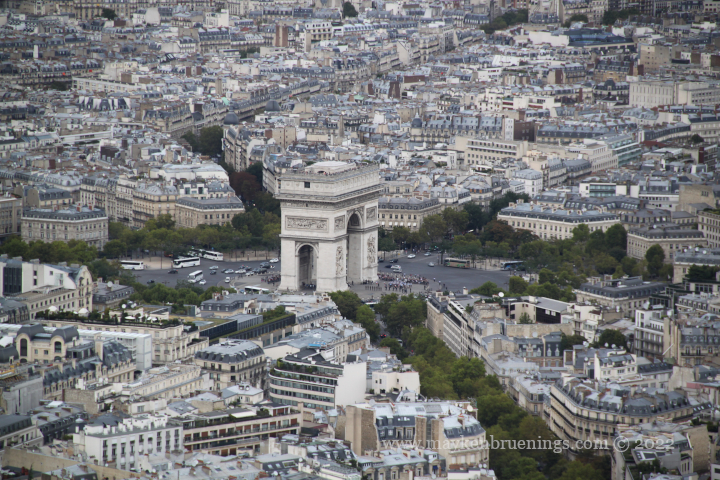
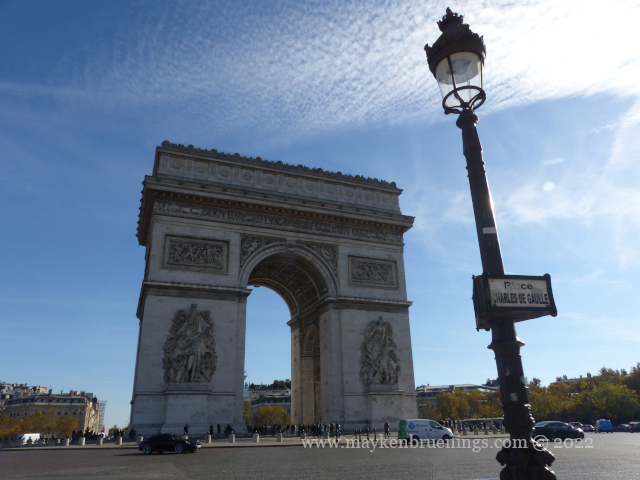
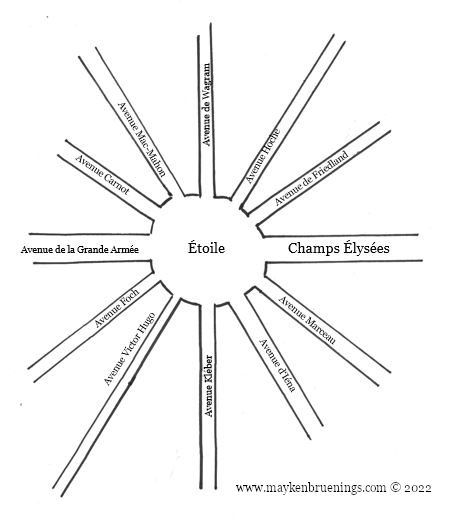
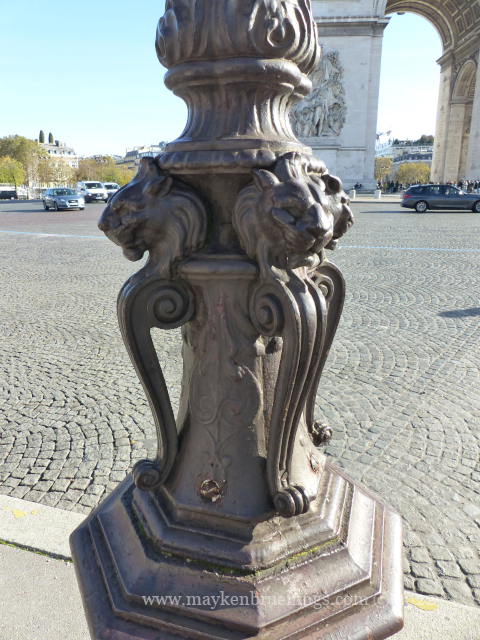
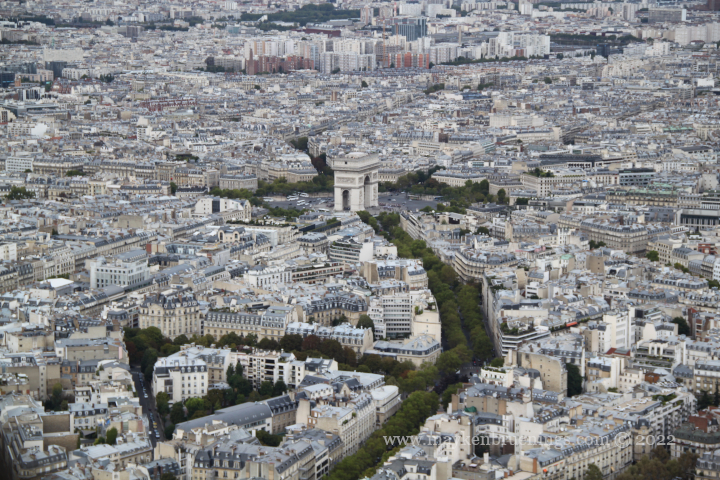
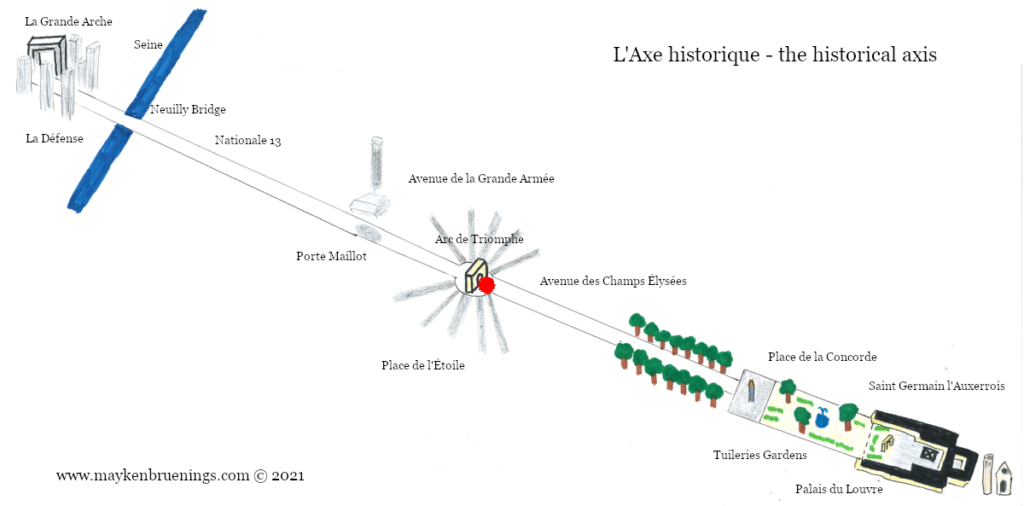
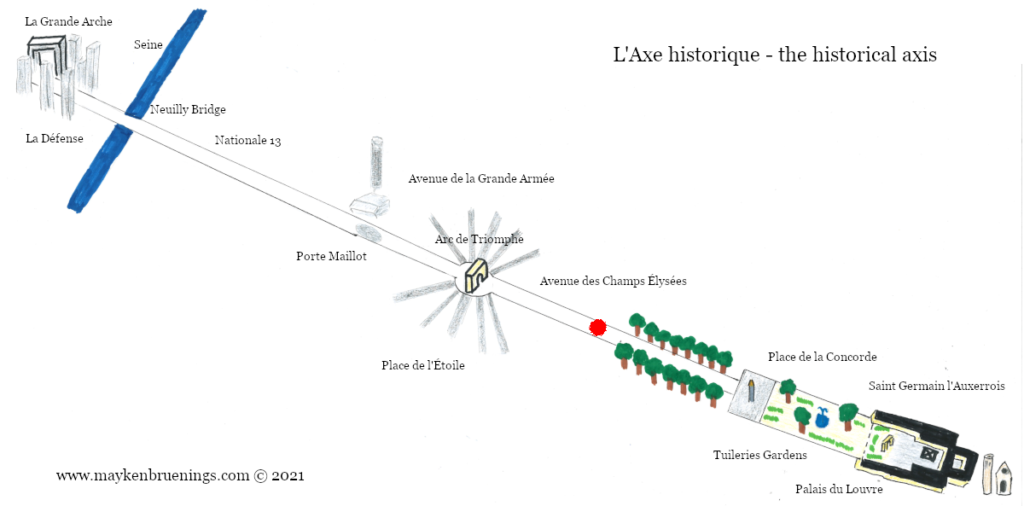
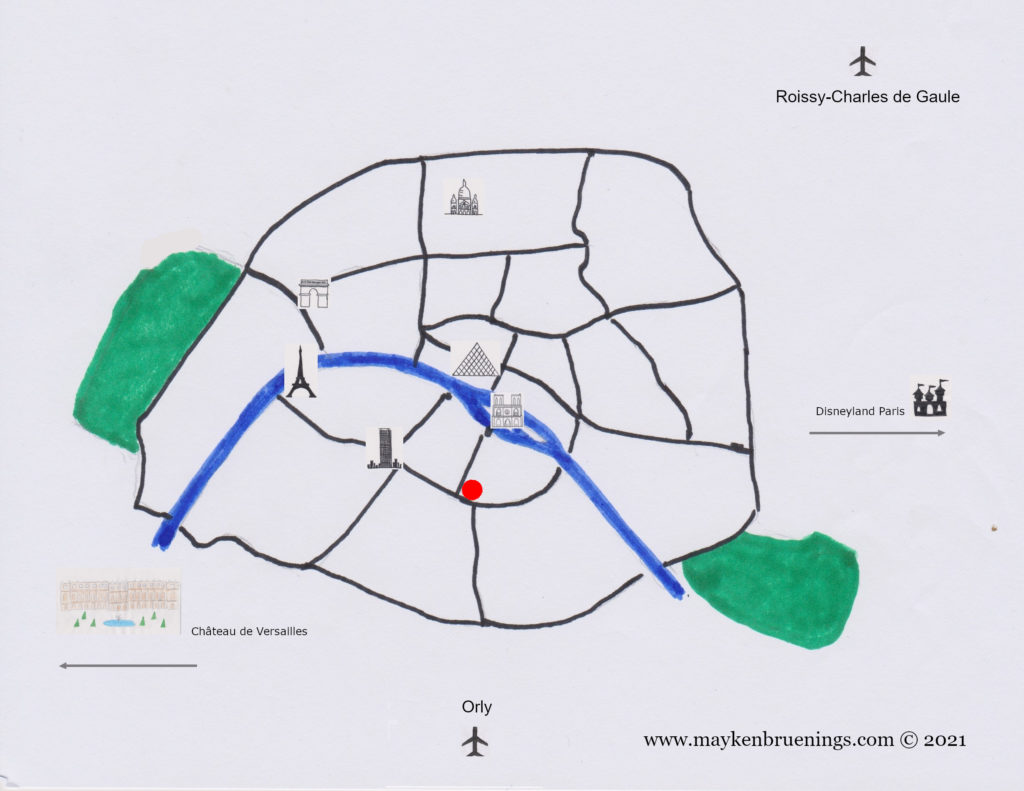
This giant roundabout where twelve avenues meet, called Place de l’Étoile, Square of the Star, exists since around 1670. It received the Star name some sixty years later, as even then roads and paths crossed on this hill, giving the intersection the shape of a star.
When the General Farmers city wall was built in 1787, passing to the east of the square, the barrière de l’Étoile city gate was set up in the vicinity.
The Arc de Triomphe was built in its center on Napoléon Ier’s orders. It construction began in 1806 and took 30 years. From 1845 to 1855, visitors to the Arc de Triomphe could look down onto a racetrack.
In November 1970, the square was renamed Place Charles de Gaulle following the death of the general. It is still frequently referred to as Place de l’Étoile, and the métro and RER station below bears the name Charles de Gaulle-Étoile (which helps avoid confusion with the airport destination of the same name).
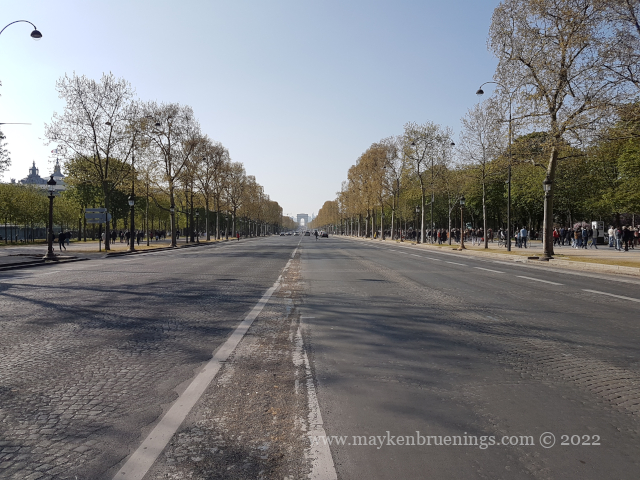
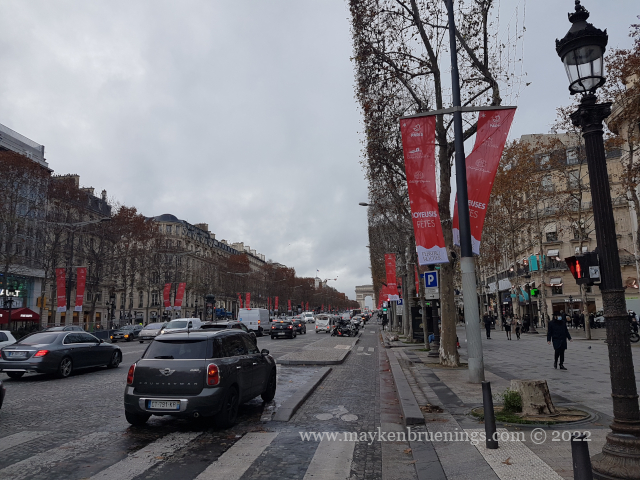
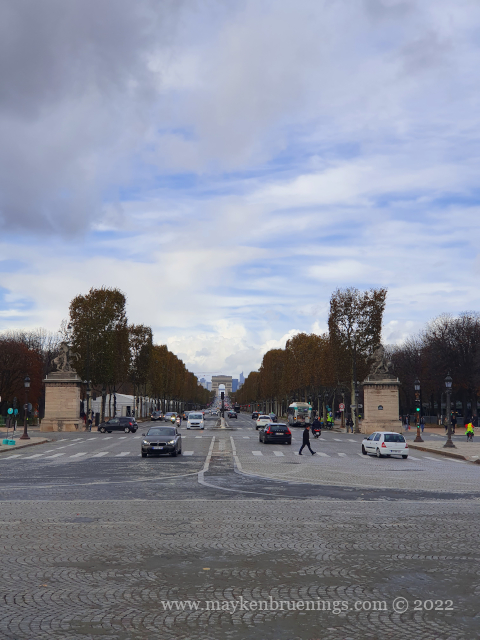
The Champs Élysées is not only called la plus belle avenue du monde, the most beautiful avenue in the world, it is also a central and large space and thus perfect for special events and occasions. People will assemble spontaneously on “Les Champs” for certain occasions, such as New Year’s Eve, or after the French national soccer team’s World Cup victories in 1998 and 2018.
Some planned events that transformed the avenue temporarily were:
La Grande Moisson (the Great Harvest) on 24 June 1990 transformed the Champs into a giant wheat field with harvesting machines.
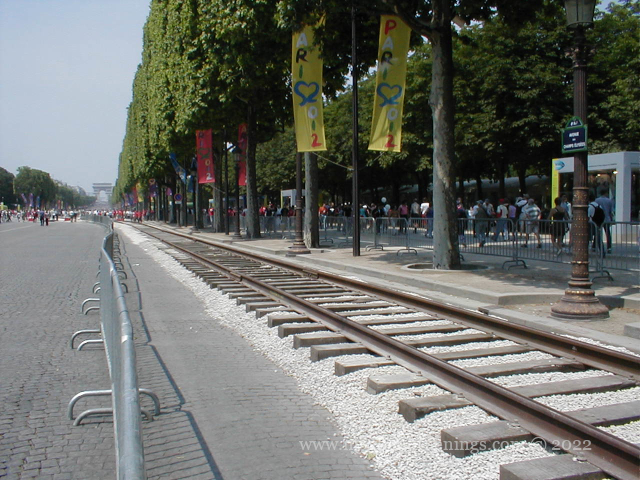
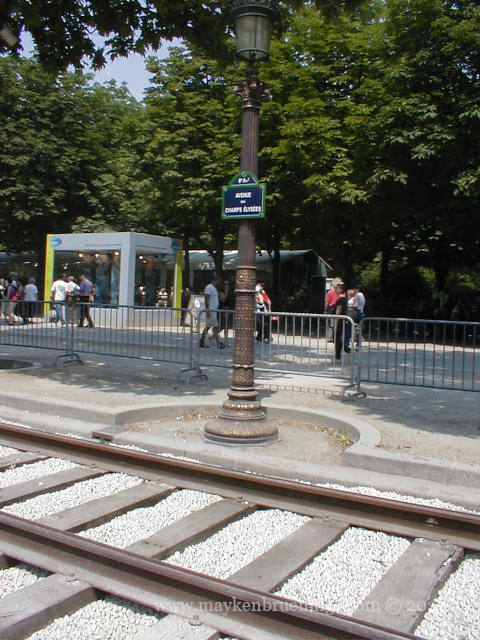
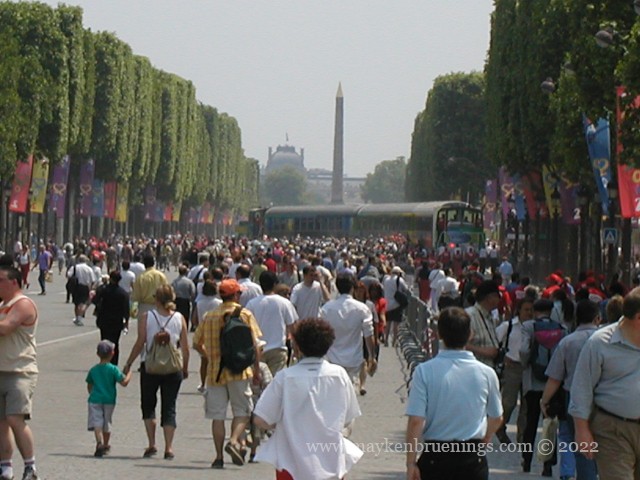
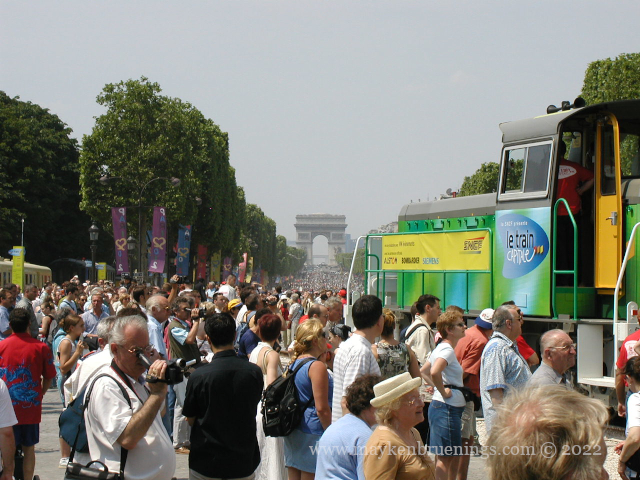
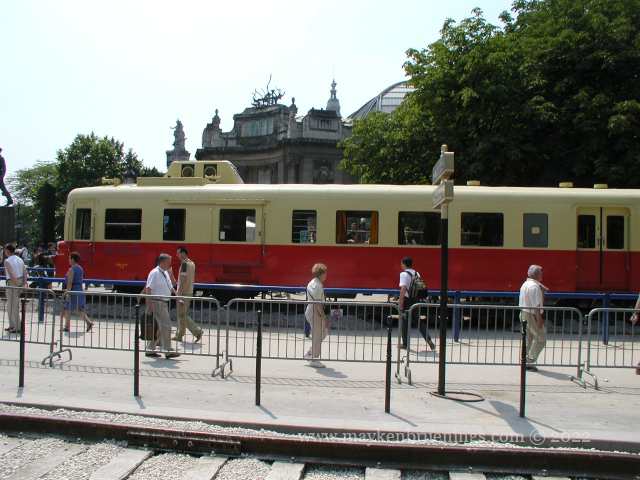
During Train Capitale from May 15 to June 17, 2003, historic and modern trains were exposed and temporary train tracks were laid so a train could run between place de la Concorde and Avenue Georges V.
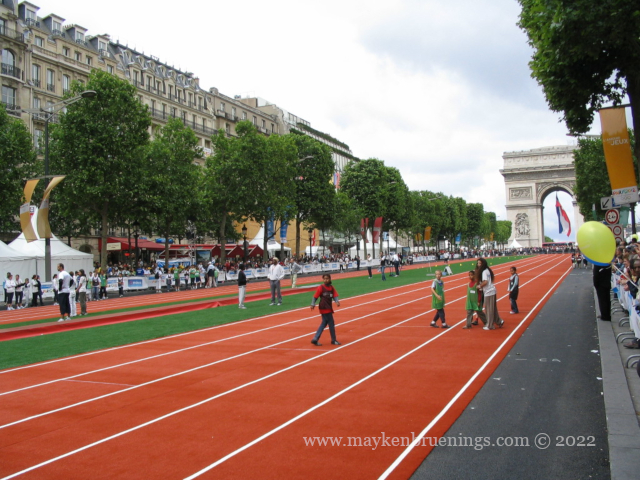
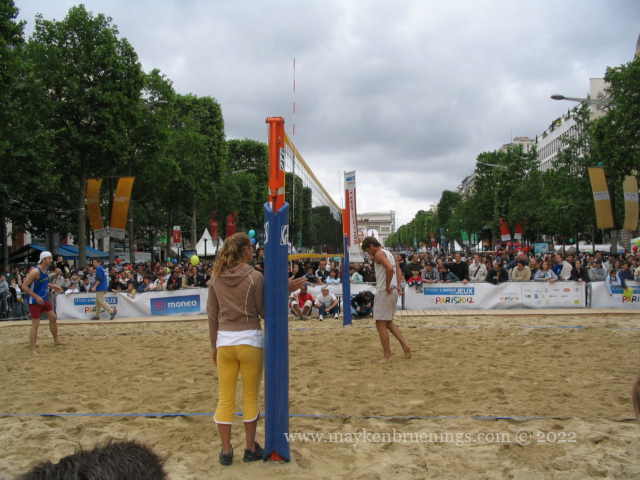
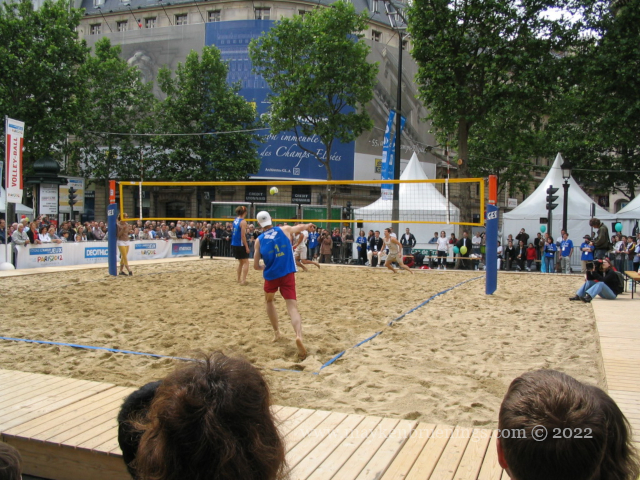
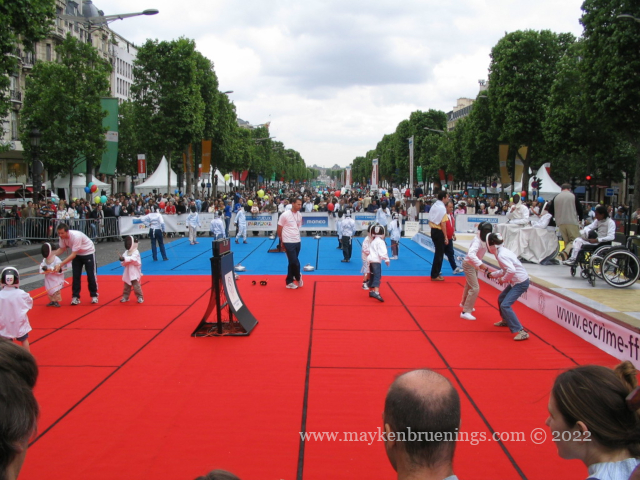
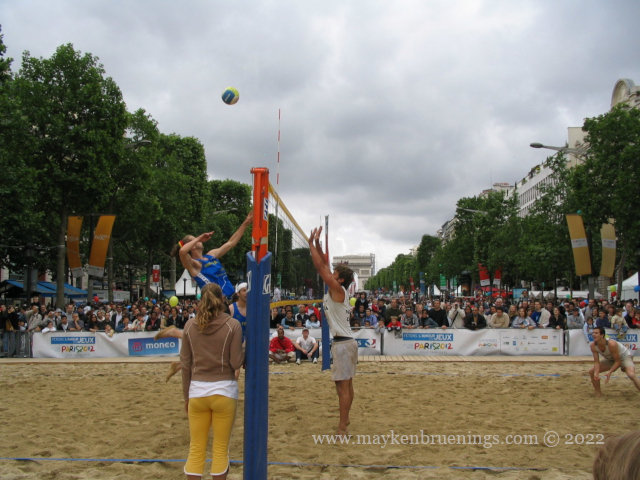
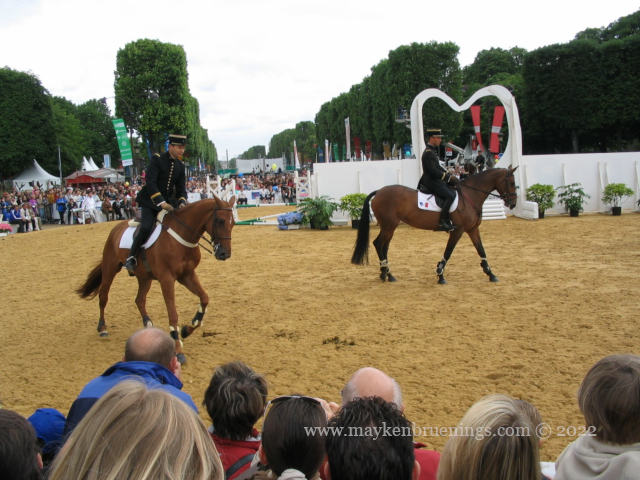
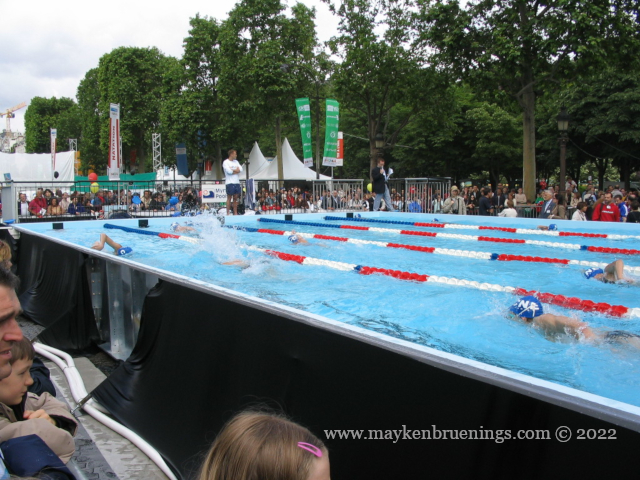
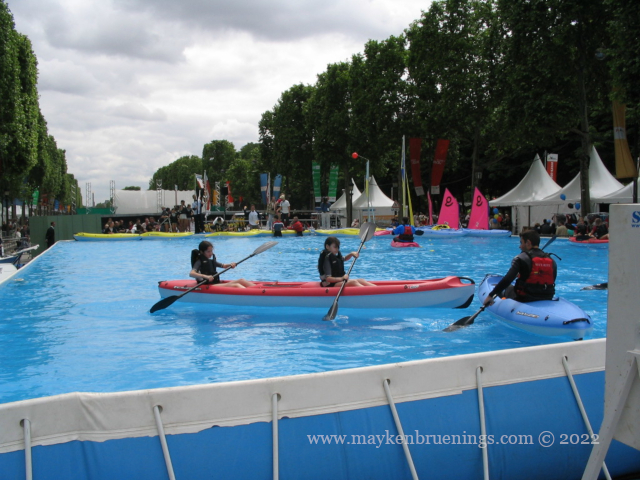
As part of the failed 2012 Olympic bid on June 05, 2005, the Champs became a huge sports terrain with athletics track, swimming pool and more.
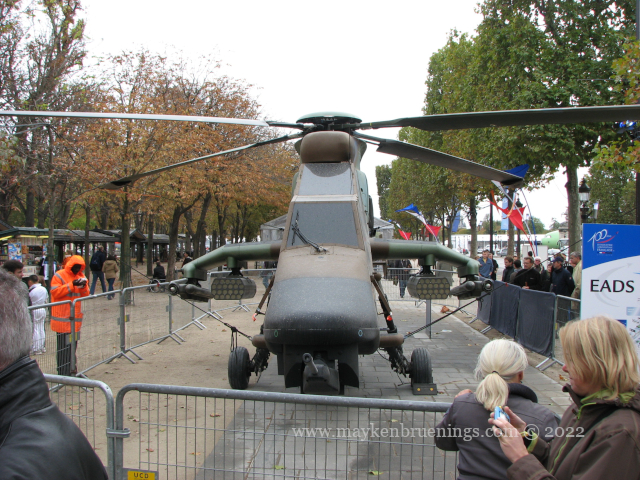
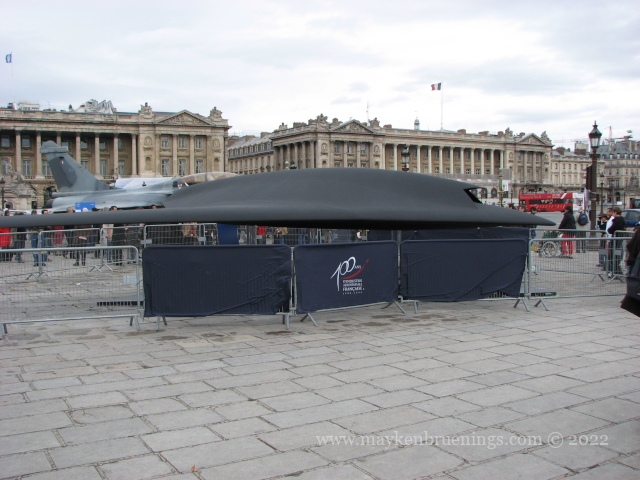
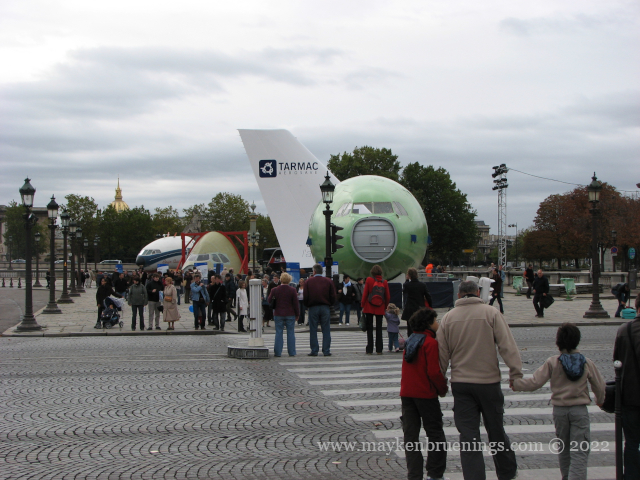
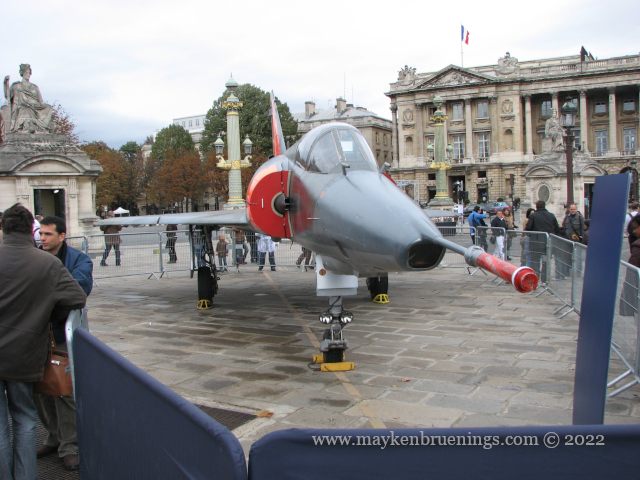
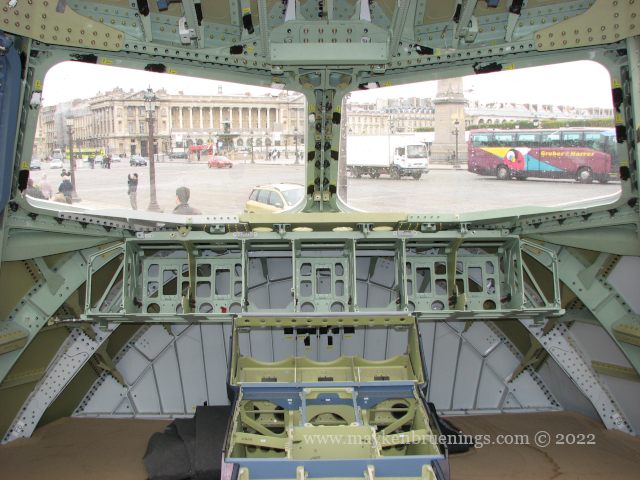
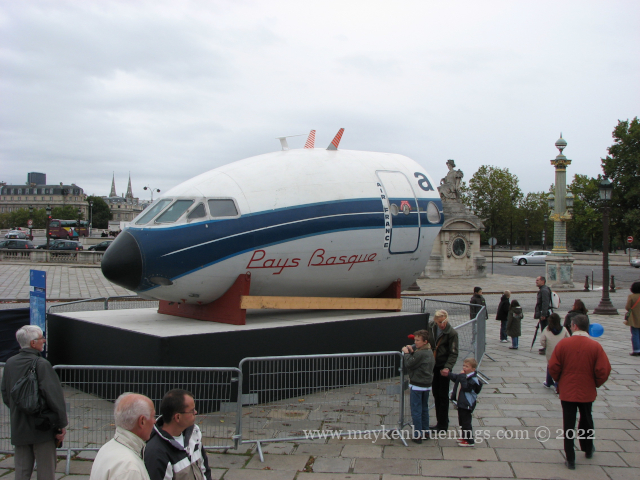
In October 2008, it hosted the 100 years of French aviation exhibition.
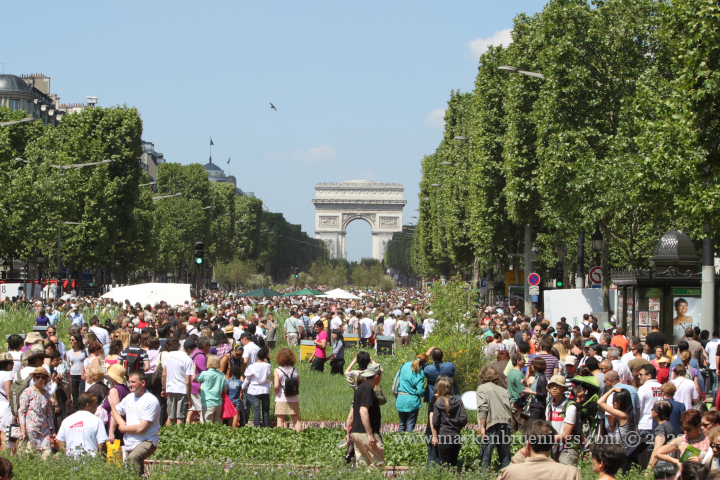
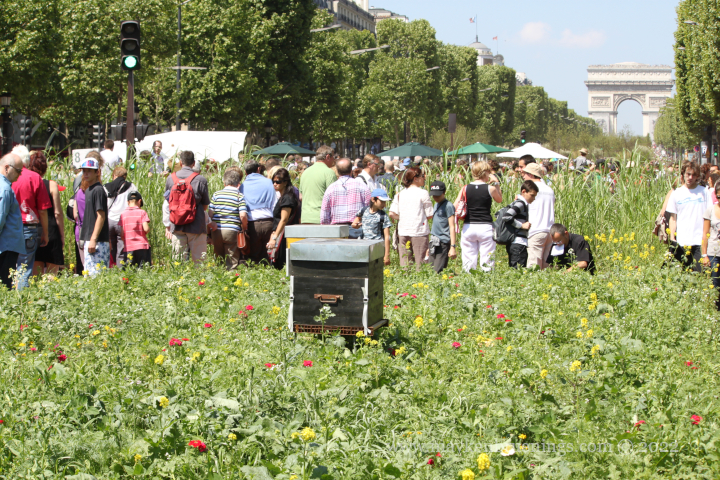
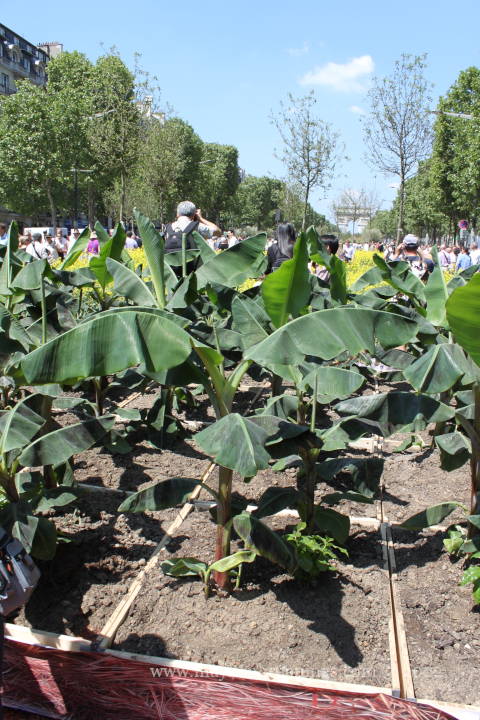
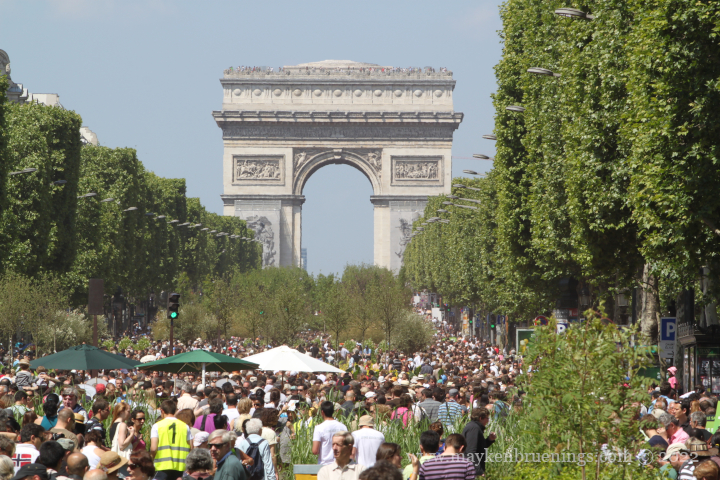
Nature Capitale on May 22-24, 2010, transformed the Champs into a giant garden.
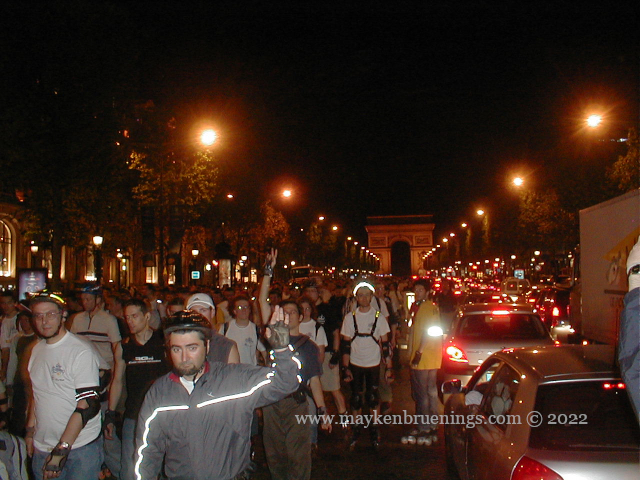
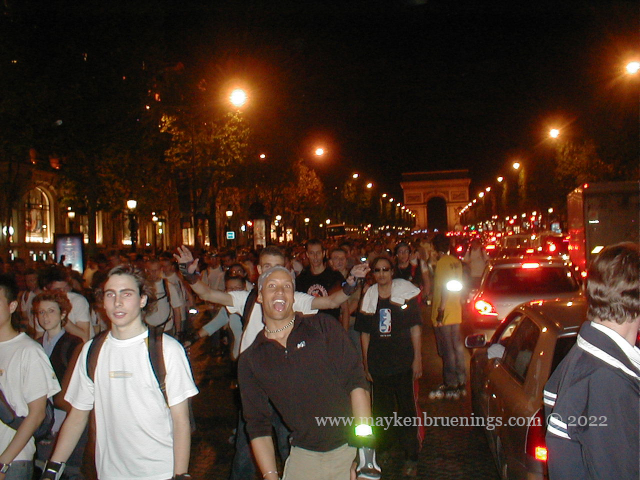
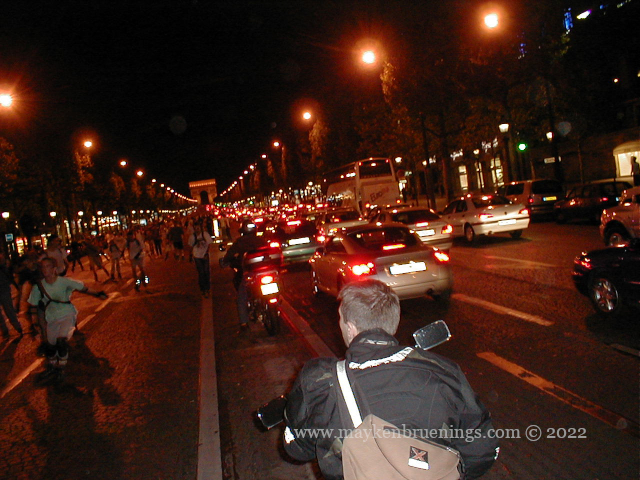
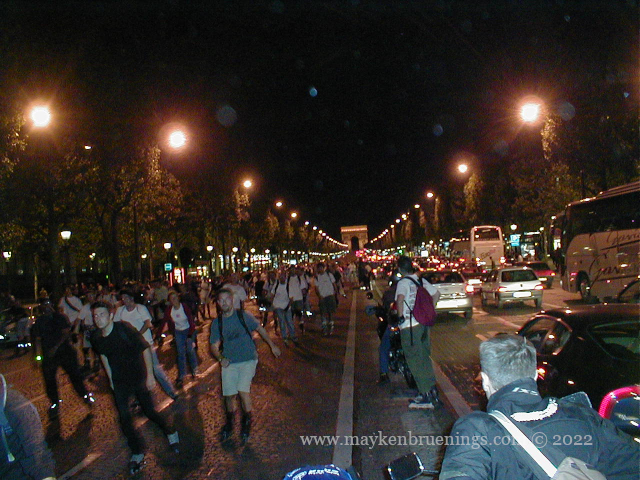
From time to time, the Paris Friday Night inline skate event will descend the avenue.
2 – Rents on the northern side of the avenue are higher than on the southern side because they receive more sunlight.
3 – The avenue had several names before taking the one that made it to fame in 1789: Grand-Cours, allée du Roule and avenue de Neuilly.
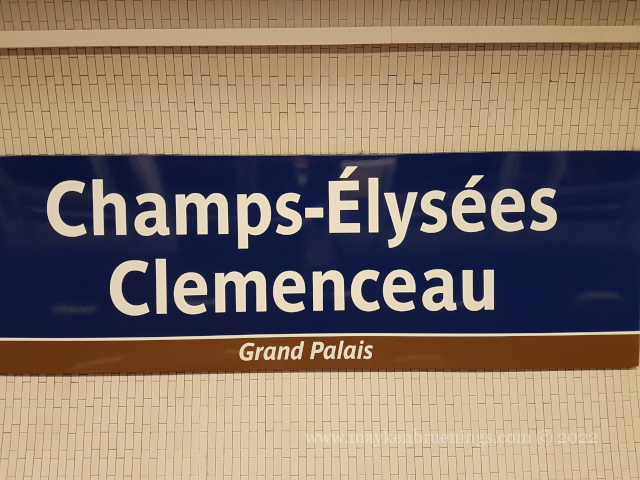
4 – You can reach its five different métro stations with 7 different métro lines and one RER train.
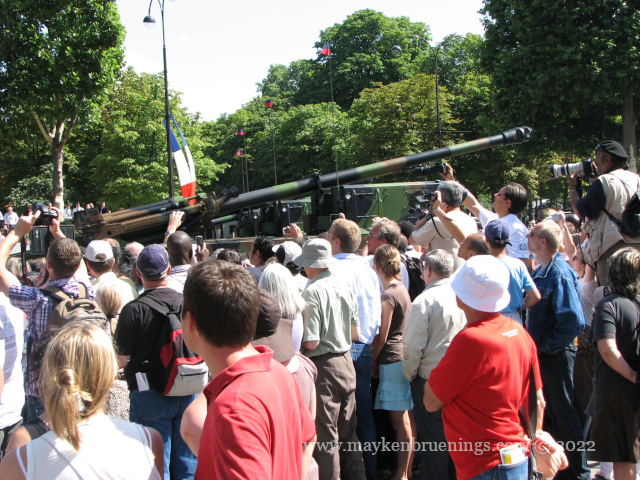
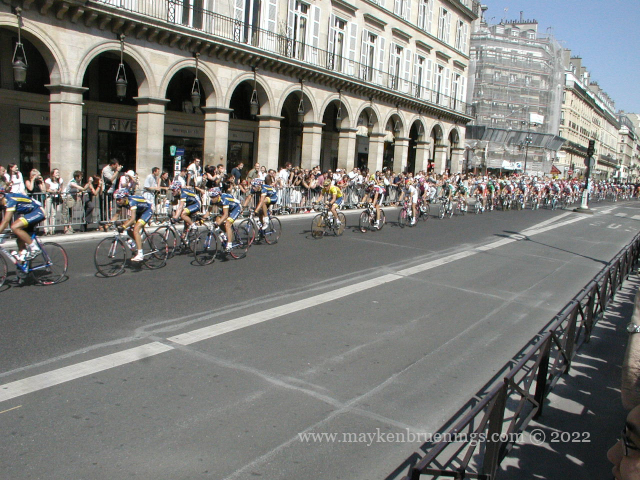
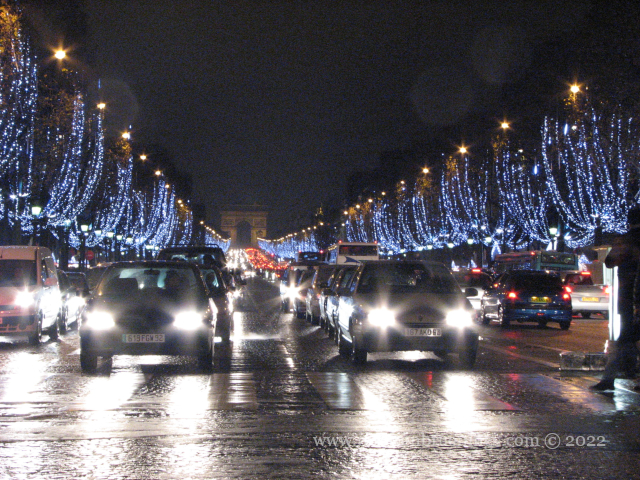
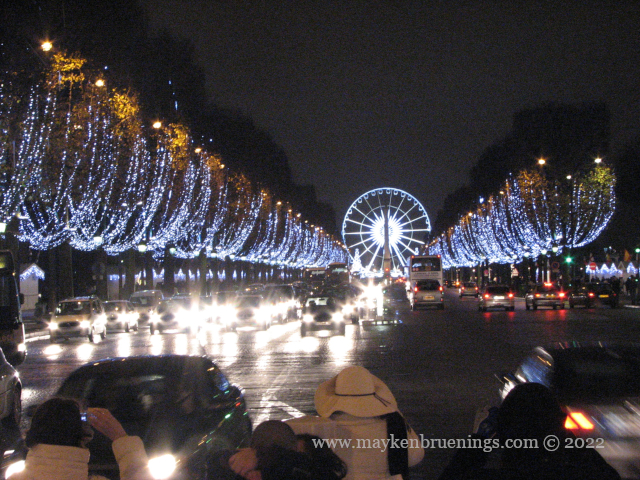
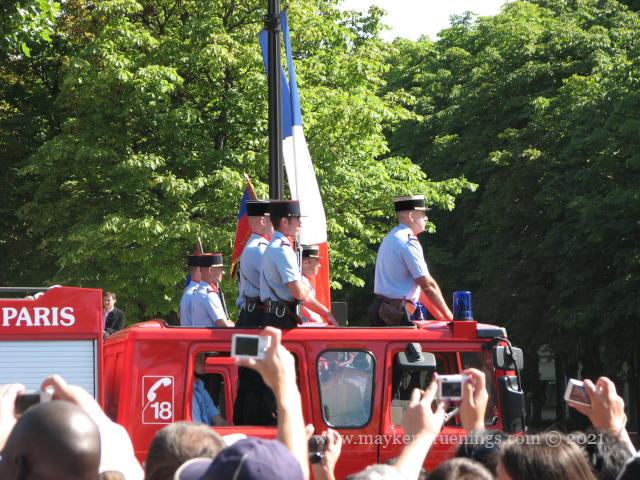
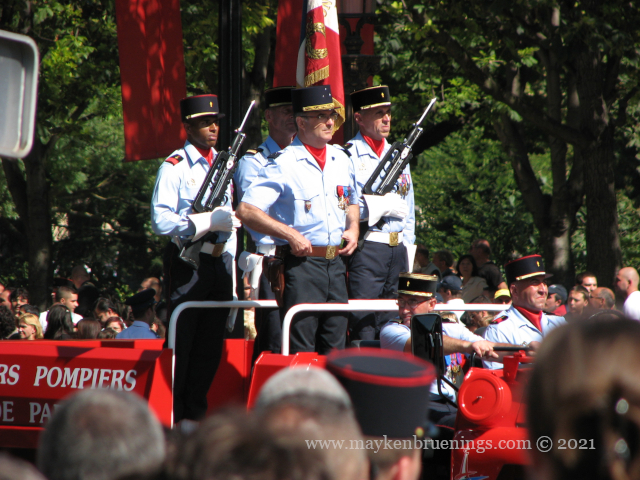
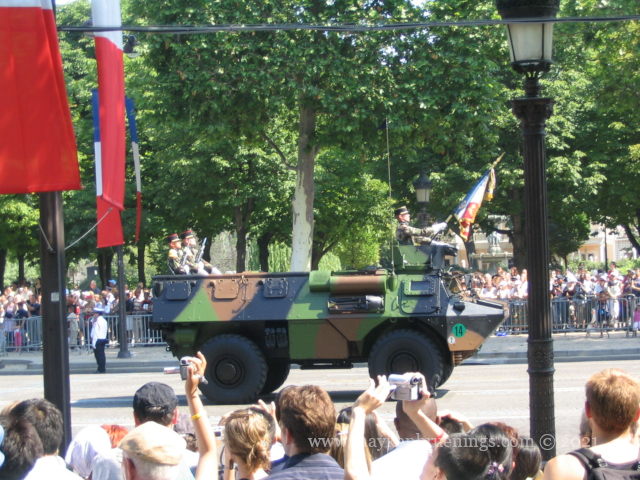
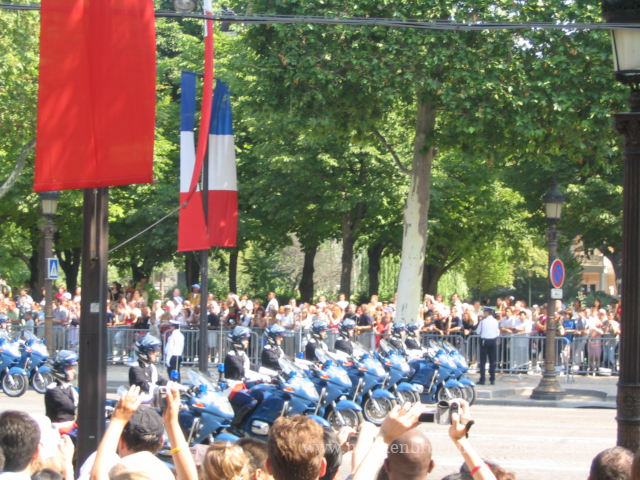
5 – Every year, it hosts the military parade of the French national holiday July 14 (Bastille Day), the arrival of the Tour de France, and Christmas illuminations.
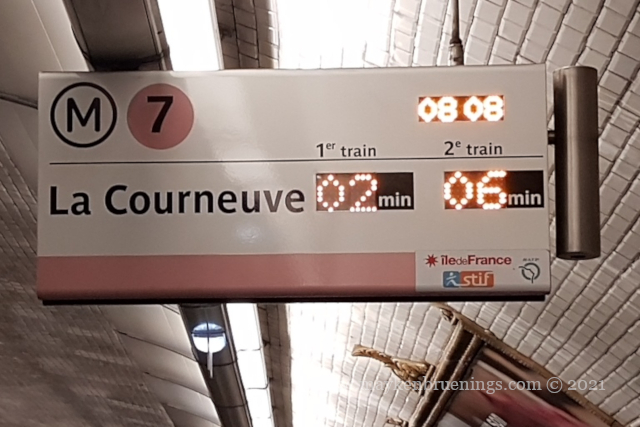
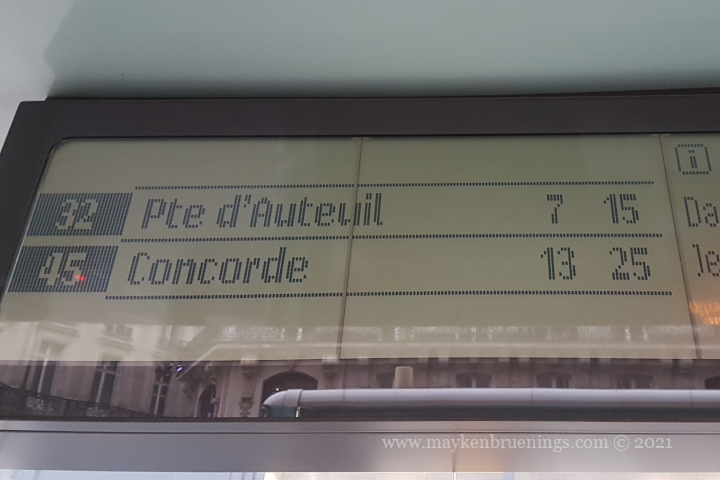
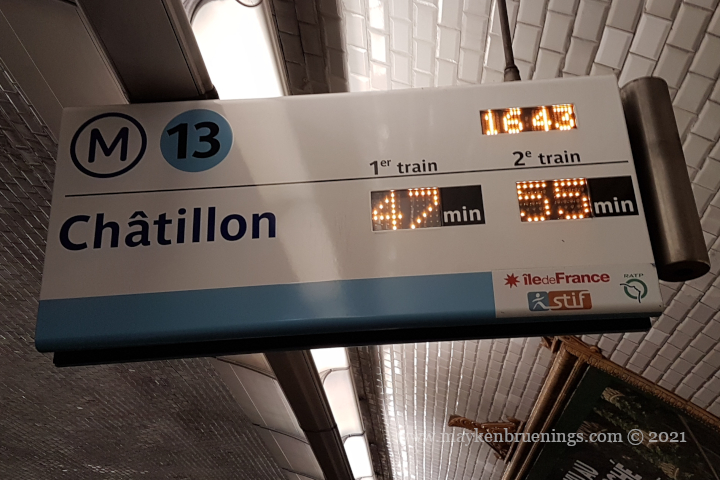
Every city’s transport company has its own system of timetables and of informing travelers when the next bus or train can be expected. In Paris, you raise your eyes to the sky to have the answer. (Unless you check the transport company’s app on your smartphone.)
SIEL on métro 7 northbound
Why the sky? It’s word play. The French word for sky (and heaven, by the way), is ciel. The information system on the Paris public transport is called Système d’information en ligne, acronym SIEL, which is pronounced almost the same as ciel.
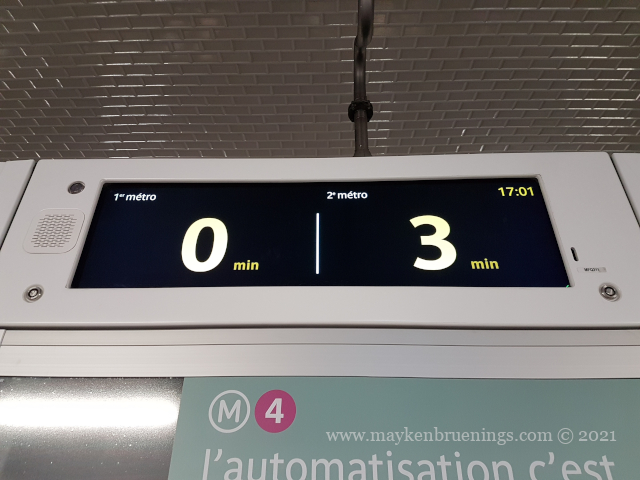
SIEL on recently modernized métro 4
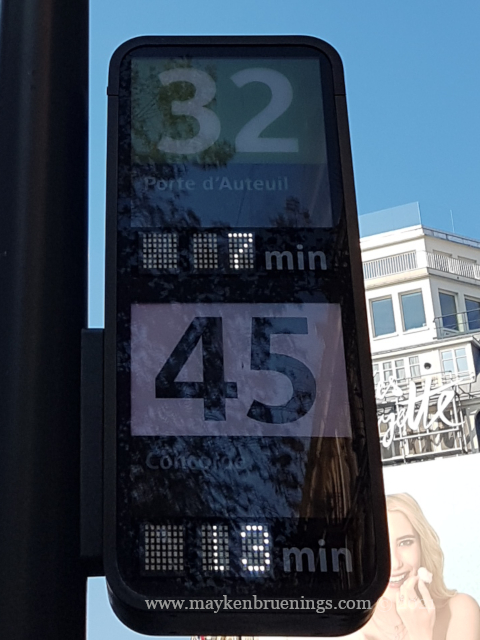
SIEL captures the next two métros or buses in real time, so next time you are at a Paris bus stop or metro station, raise your eyes to the SIEL, it will provide the answer.
SIEL at a bus stopSIEL in a bus shelter
For good measure, here’s one you really don’t want to see:
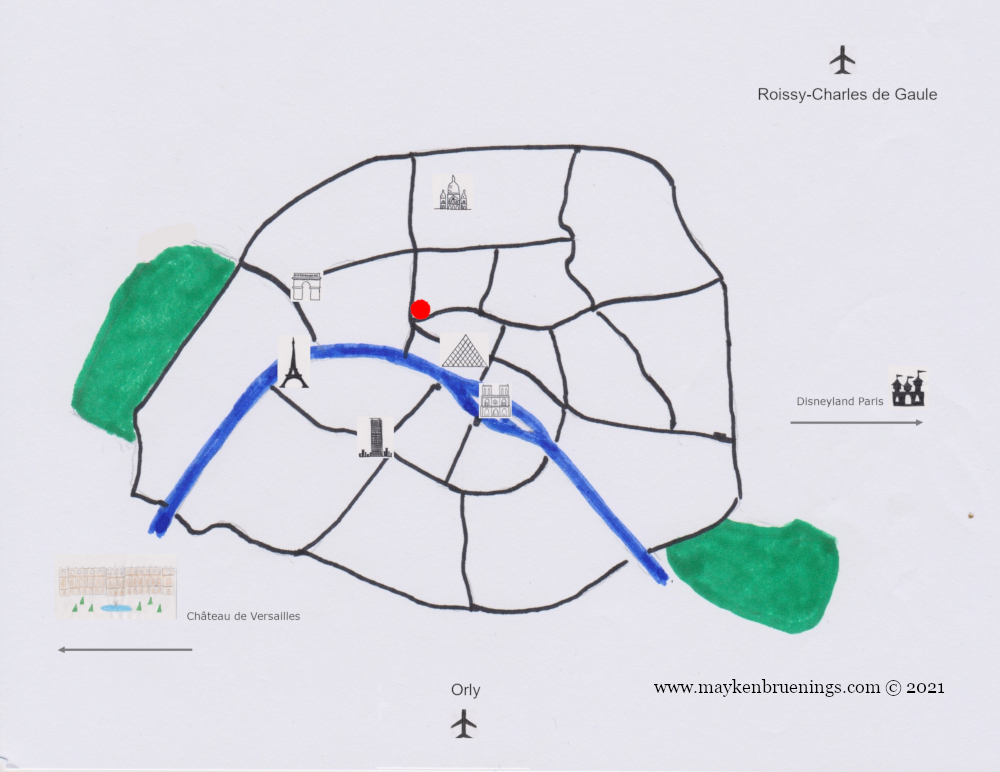
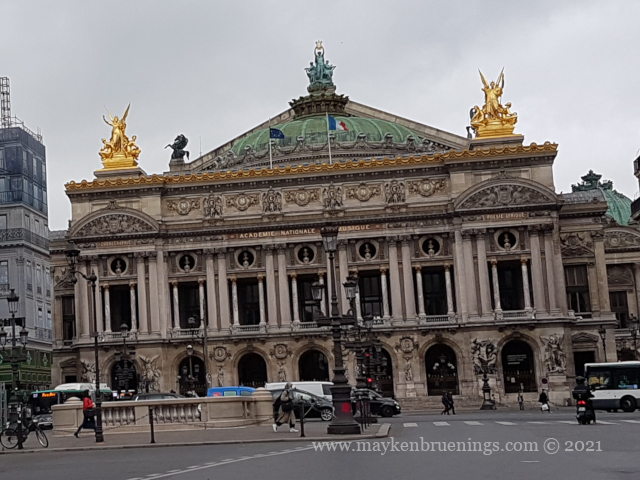
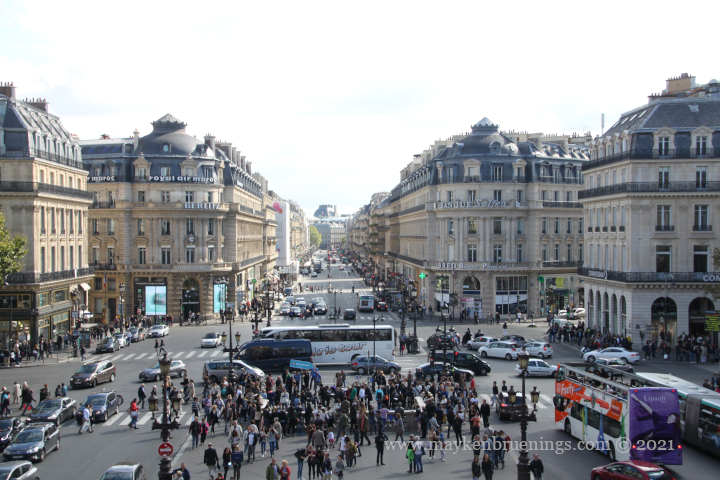
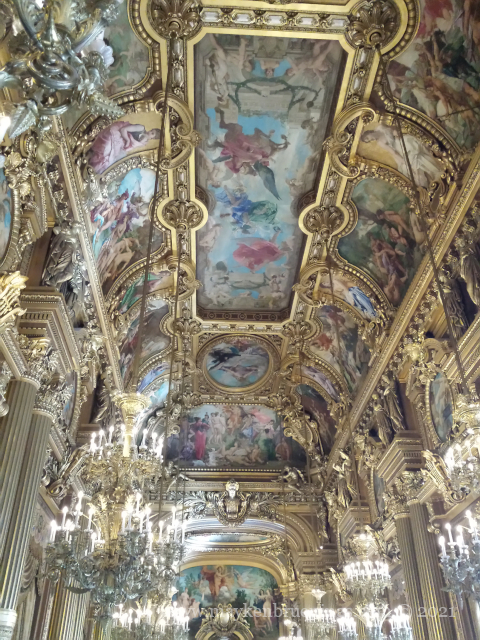
One Friday night when I was marshal at the Paris inline skate, I chatted with some tourists while guarding an intersection on the Avenue de l’Opéra. The tourists were from the U.S., and I told them that the opera building they could see at the end of the avenue was indeed the one with the phantom and the underground lake.
There are many tales about the phantom and how a real person might have inspired Gaston Laroux’ story (which became the basis for Andrew Llyod Webber’s musical), but the lake is real.
Remember the problem with the high groundwater level I mentioned in my previous post?
The building site was swampy, and water rising from below hampered the construction until finally, they encased the “lake” and used the weight of the water in the foundation of the building. The cistern remains accessible, but you can’t take a boat to row across it. However, the Paris fire-fighters use it for diving training.
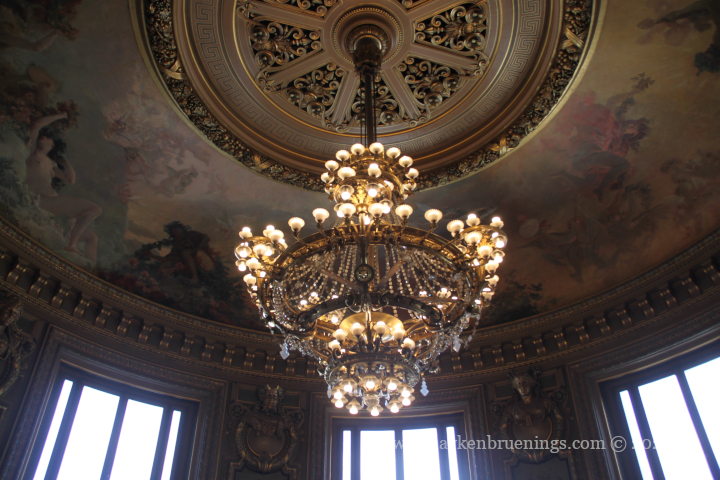
But the phantom? A combination of mysterious noises during the first shows, rumors about an underground lake and the never fully explained accident in 1896, when the counterweight of the chandelier fell down and killed the concierge.
Box number five is still reserved for the phantom, as the Opéra Garnier itself confirmed in a Museum Week tweet a few years ago:
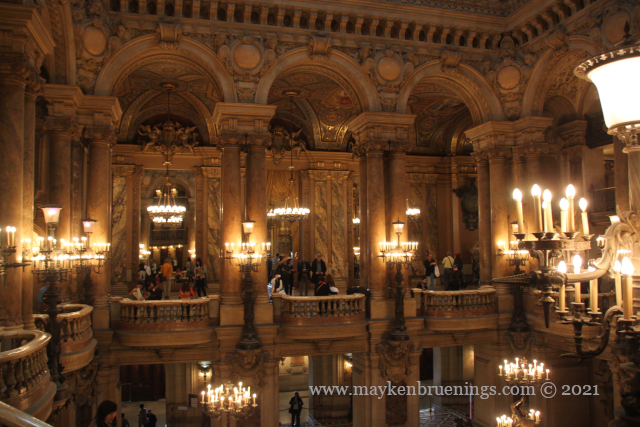
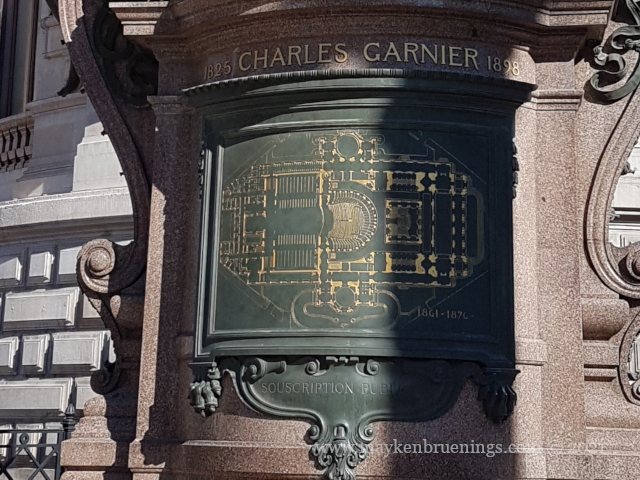
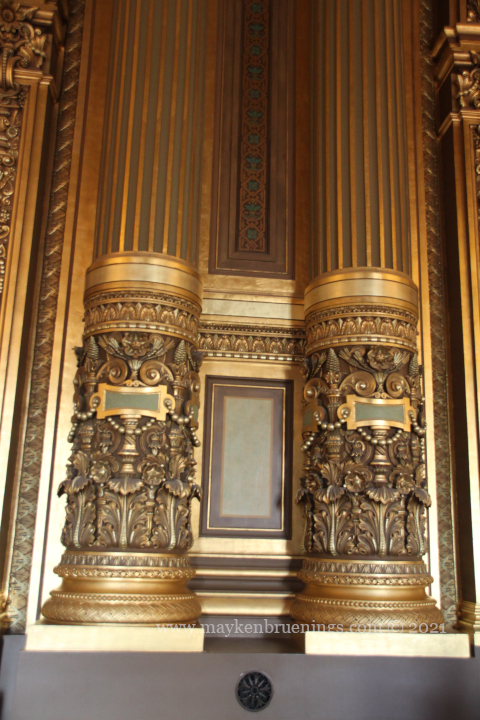
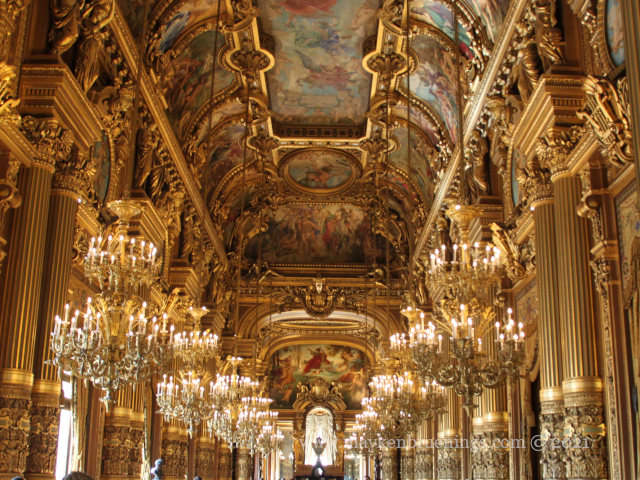
From its completion in 1875 until 1989, the Paris opera house on the Avenue de l’Opéra in the 9tharrondissement was simply known as “Opéra de Paris”. But with the completion of the Opéra Bastille on Place de la Bastille arose the need to distinguish between the two, and so the old opera house is now referred to by the name of its architect, the Opéra Garnier.
A failed assassination attempt on emperor Napoléon III when he visited the then-opera Le Peletier with his wife in January 1858 accelerated the project of a new opera house. The site was chosen by Baron Haussmann who planned it to surround it with the characteristic Immeubles de Rapport (Revenue Houses) that you’ll remember from a previous post.
The large Avenue de l’Opéra Haussmann planned would not only create a vast perspective and showcase the new opera house, it would also allow for a swift and unencumbered escape route for the emperor from the opera to the Louvre in the event of another attack.
Still today, the Avenue de l’Opéra has no trees so as not to obstruct the view.
The chosen site however turned out to be far from ideal to accommodate a palatial building such as the opera house. Despite sinking wells and having pumps operate non-stop, the groundwater level wouldn’t go down. In the end, Garnier designed a double foundation including an enormous cistern.
At the occasion of the World Fair in 1867, still under Napoléon III, the main façade was inaugurated. An anecdote from this inauguration goes like this. The empress, shocked at the sight of the opera building, asks “What kind of style is that? That’s no style! It’s neither Greek, nor Louis XV, not even Louis XVI!” The architect, Garnier replies: “No, the time of those styles are over. This is Napoléon III style!”
The Franco-Prussian War of 1870/71 not only slowed down the works but it also brought about the end of the Second Empire. The Third Republic that followed had financial difficulties and didn’t approve of everything the opera symbolized, and sent Garnier packing, but when the Le Peletier opera burned in 1873, he was called back to finish the works.
Poor Garnier – once the opera was finally completed in 1875, the Third Republic, cutting ties with the past, didn’t even invite him to the inauguration and he had to buy his own ticket!
Until 1989 and the Opéra Bastille, the Opéra Garnier was the biggest theater house in the world. Today, it mainly shows ballet by the Ballet de l’Opéra de Paris but also the occasional classic opera.
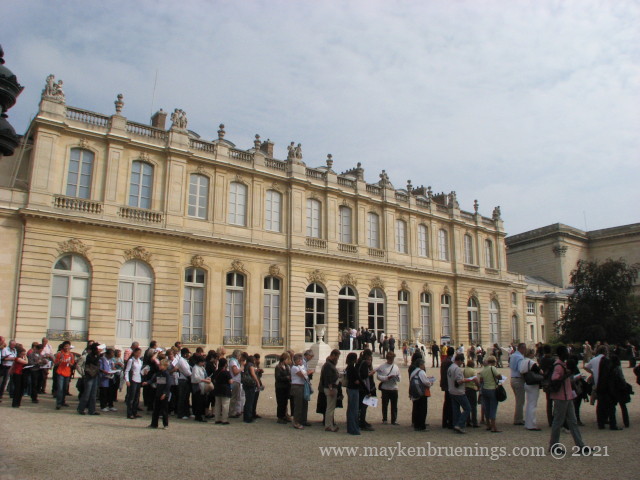
As I explained in my previous post, on Heritage Days in September, doors are opened to the public that remain closed the rest of the year. Very popular places to visit are the presidential palace (Palais de l’Élysée) and the various ministries, housed in hôtels or palaces in the center of Paris.
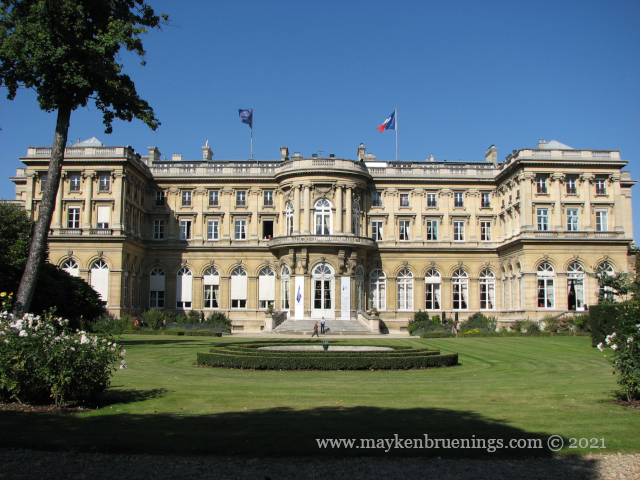
Several years ago, I visited the Ministry for Europe and Foreign Affairs in a building on the riverside road Quai d’Orsay, name which was transferred to the ministry by metonymy. “The Quay d’Orsay remained silent on this question”, a journalist might report.
King Henry II (son of François Ier) named the first minister of foreign affairs in 1547, Claude de l’Aubespine. The function was called Secretary of State, and Claude was in charge of the relations with Champagne, Burgundy, Bresse, Savoy, Germany and Switzerland. (He started small.)
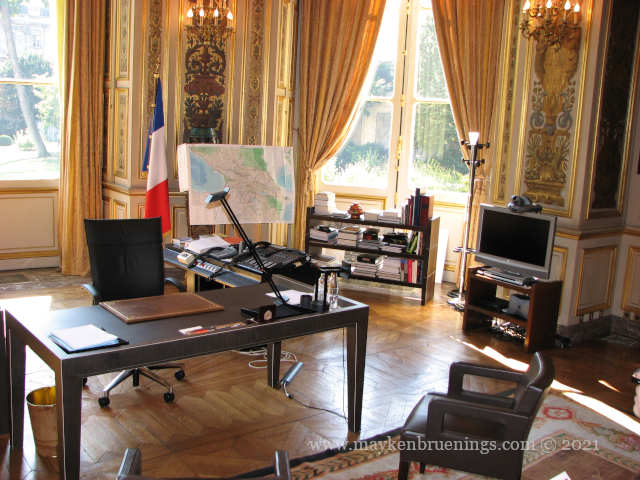
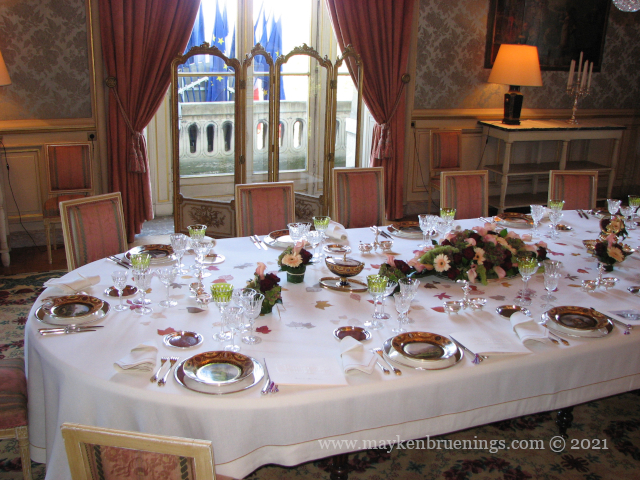
The minister’s office and dining room
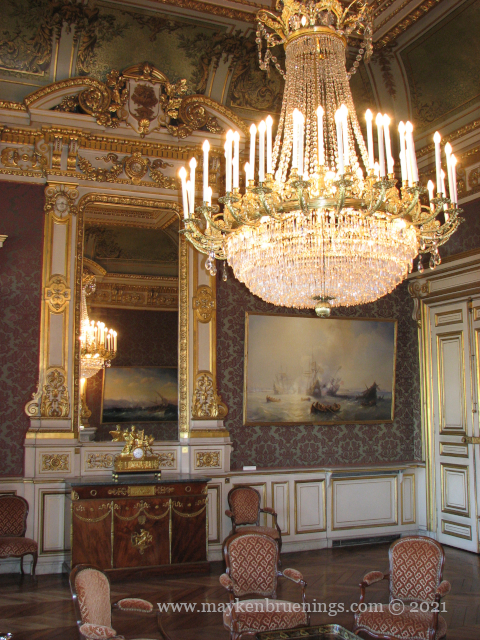
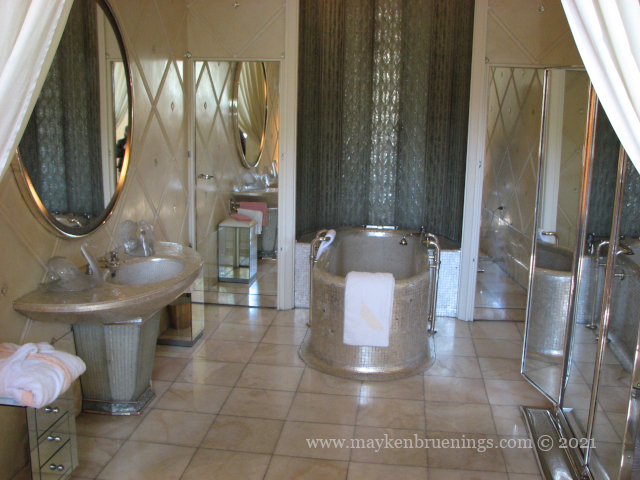
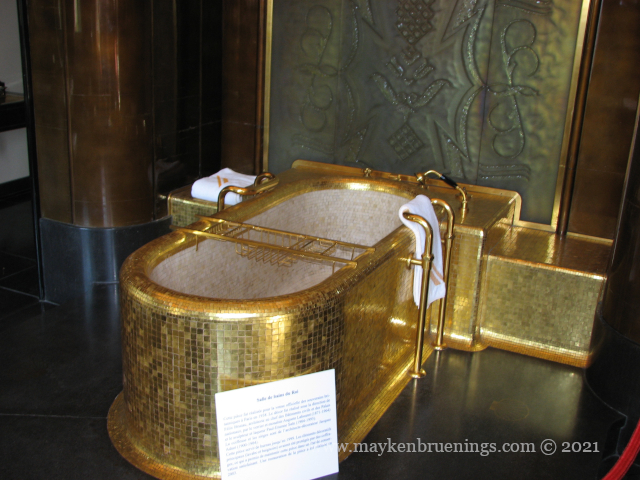
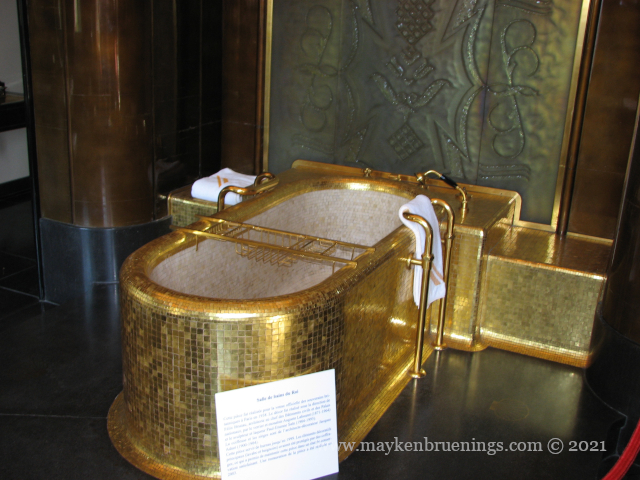
The Quay d’Orsay was built in 1844-55 specifically to house Foreign Affairs. The interior is in the style of Napoléon III, with the exception of the bathrooms set up in 1938 for the visit of King George VI and his wife Queen Elizabeth (parents and predecessors of Queen Elizabeth II).
Bathrooms of Queen Elizabeth (silver) and King George VI (gold)
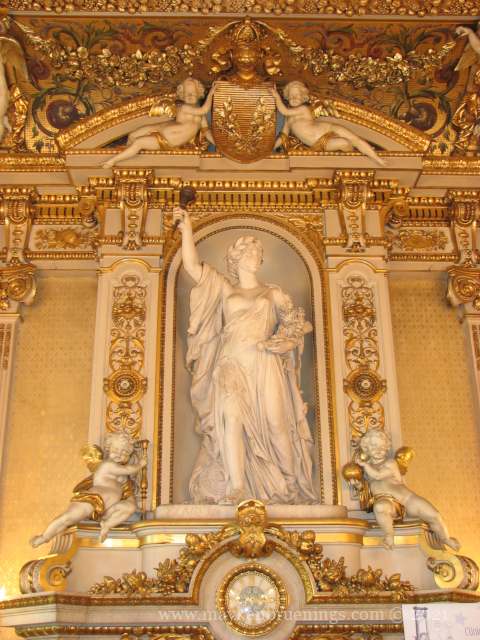
In the Salon de l’Horloge, then-Foreign Affairs minister Robert Schuman pronounced on May 9, 1950 the Schuman Declaration, which laid the foundation for the European integration process resulting in the European Union. This is why May 9 is Europe Day.
Back in 1984, the French minister for Culture created the “Historic Monuments Open Door Days” in France. The idea was picked up by the Council of Europe, which is not an institution of the European Union but an international organization that predates the European Union and has currently almost 50 member states.
King George V’s bathtub at the French Ministry of Foreign Affairs
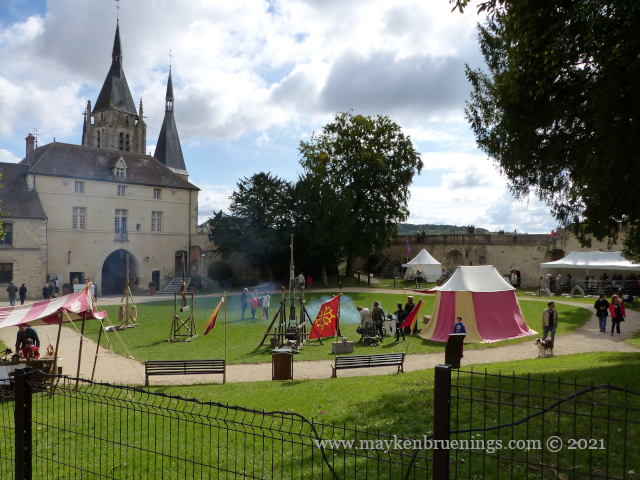
European Heritage Days (the name varies from one country to another) take place in September, and open doors to monuments that are usually closed to the public, or if open, grant free entry, or offer special events and activities, including for children and youth, such as workshops, guided tours, that are not available on a regular basis.
Some sites are more popular than others, such as the French National Assembly
In France, Heritage Days are called Les Journées Européennes du Patrimoine (JEP) and take place on the third weekend of September.
activities and workshops galore at the Château Dourdan south of Paris
In this new series, Opening Doors in Paris, I’ll share some of the open doors I’ve entered over the last fifteen years.
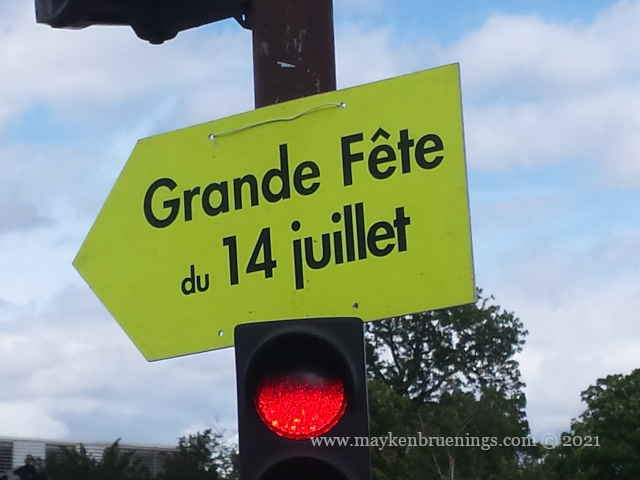
July 14 is the French national holiday, known in the English-speaking world as Bastille Day. The Bastille was a fort meant to defend the Porte Saint Antoine on the east side of the Charles V city wall, and it was stormed and taken by the people on July 14, 1789 and later demolished. The Storming of the Bastille is commemorated on July 14 since 1880.
In Paris, the celebrations of the 14-juillet, as it is called in French, start on the night before with the Bal des pompiers (the fire-fighters ball) held in the city’s various fire stations. In other French towns, it is either the Bal des pompiers, or the Bal Populaire (the people’s ball), often organized just outside the local town hall. Some towns have their fireworks on July 13, others on July 14.
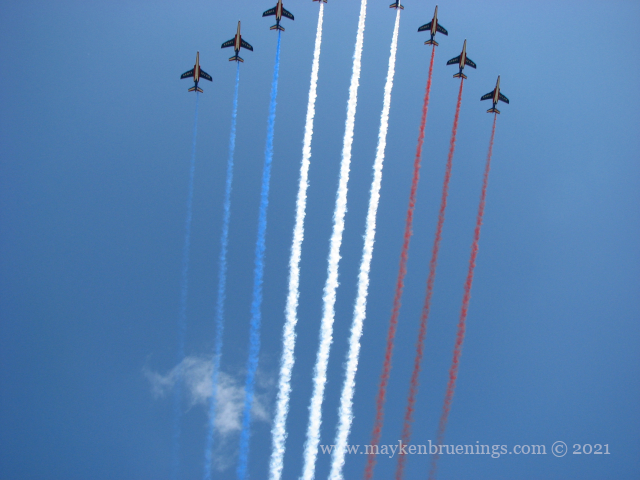
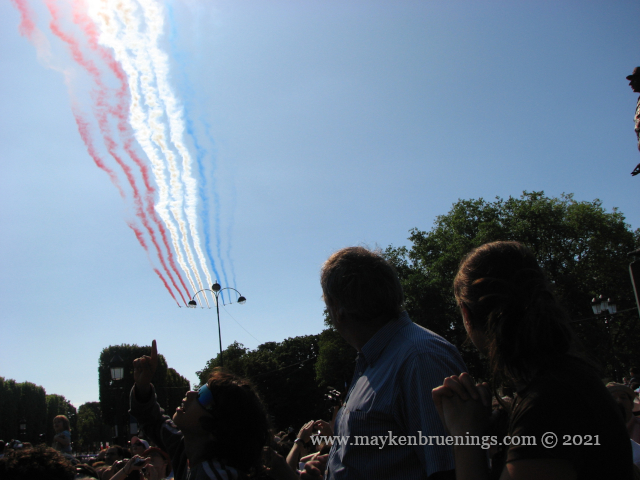
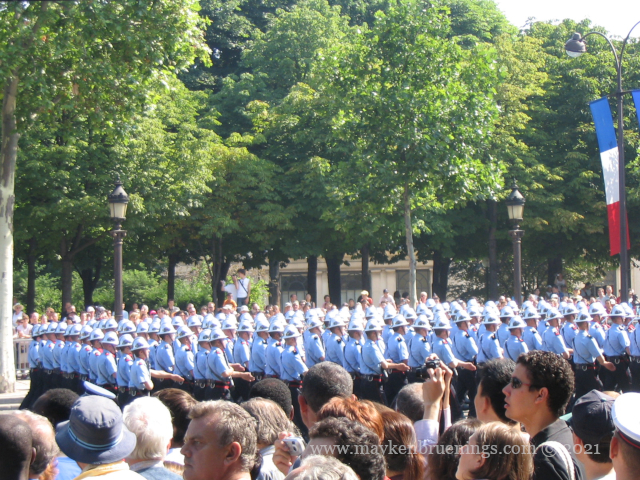
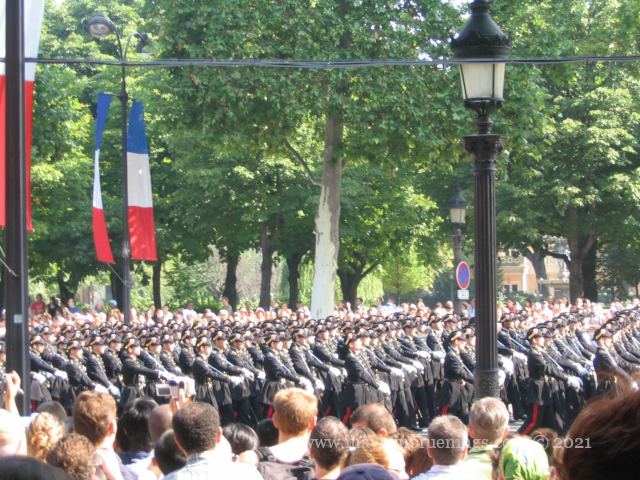
In Paris, the day begins with the famous parade on the Champs Élysées that is traditionally opened with a fly-over by the Patrouille de France in the national colors bleu-blanc-rouge.
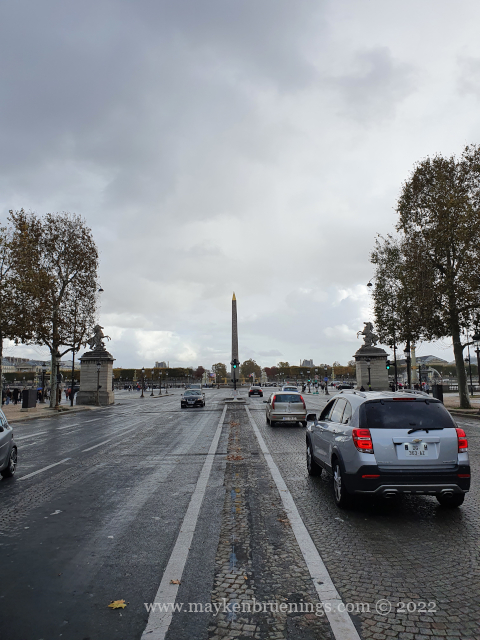
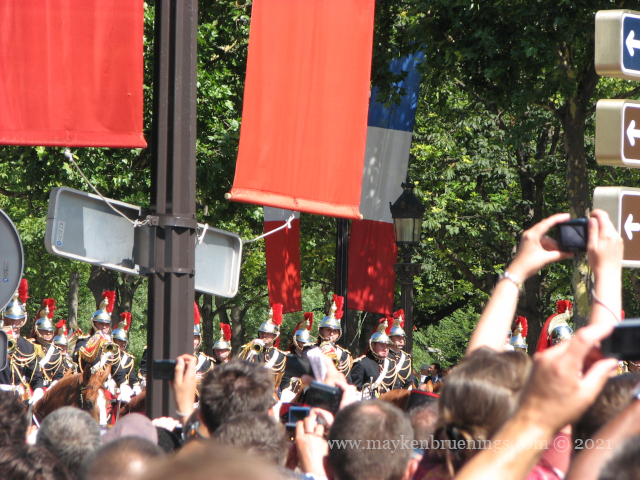
Then the president descends the avenue, accompanied by the Garde Républicaine, and takes place on the platform installed on the place de la Concorde, where he watches the parade with the government, members of the national assembly and the senate, assorted dignitaries and guests.
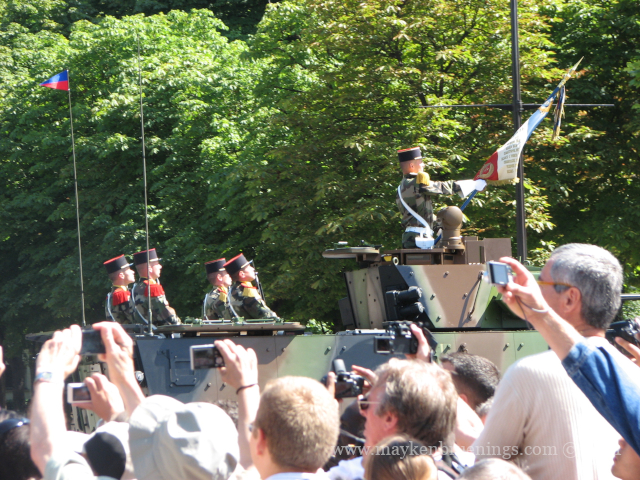
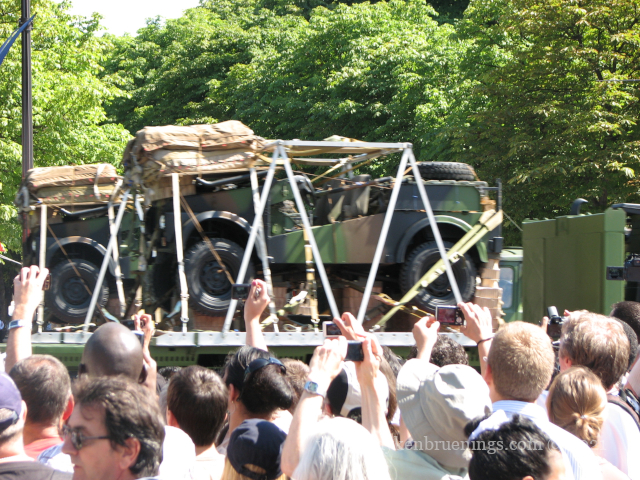
The parade descends from the Arc de Triomphe to the Place de la Concorde. It is composed of military units on foot, on various motorized vehicles, on horseback, and in the air. The Foreign Legion marches in last place because their step is slowest. The loudest applause from the spectators along the avenue is always for the firefighters who close the parade with all their different vehicles, for the Paris firefighters are part of the military. (They were founded by Napoléon Bonaparte after a fire broke out during a reception at the Austrian Embassy in 1810 during which around a hundred people died.)
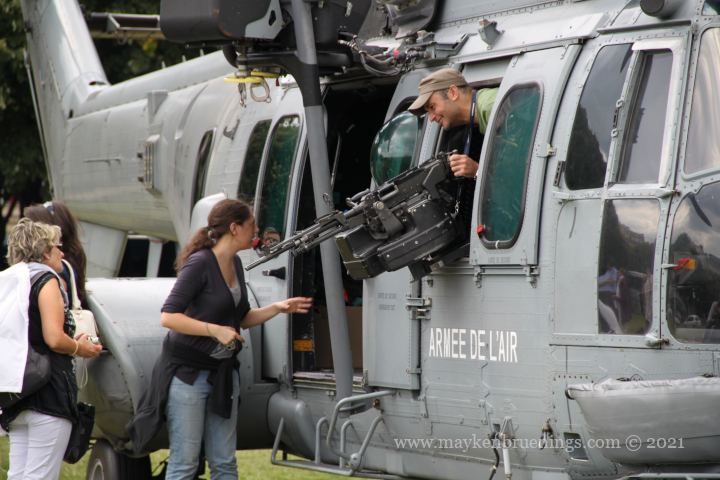
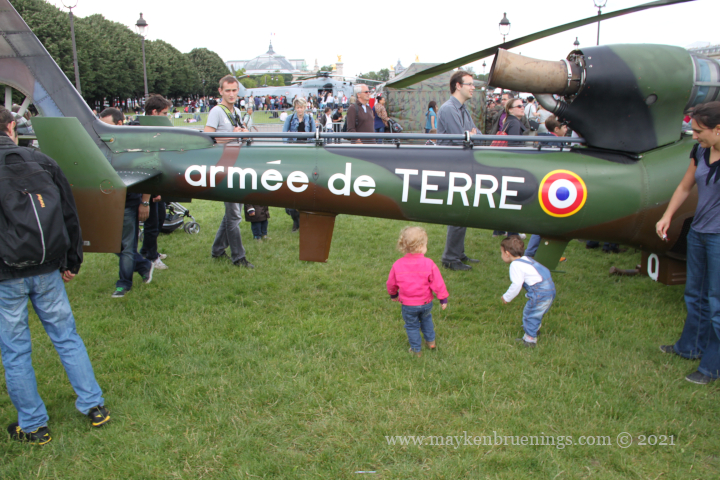
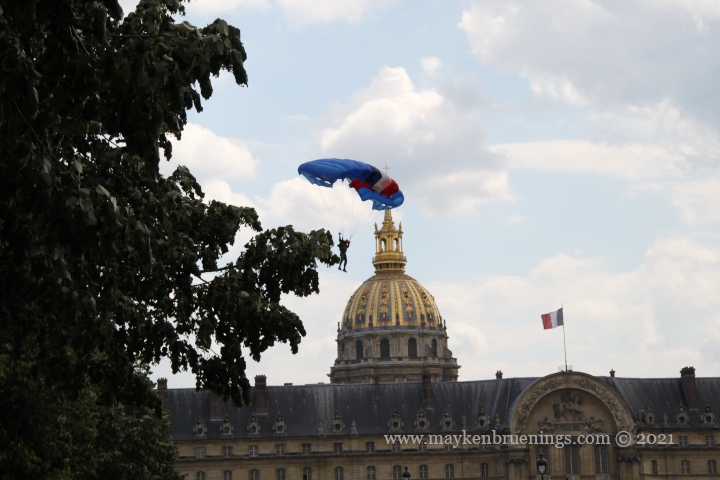
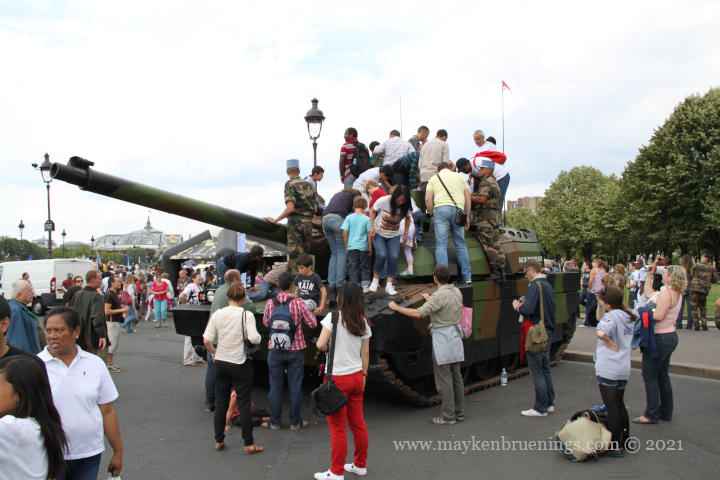
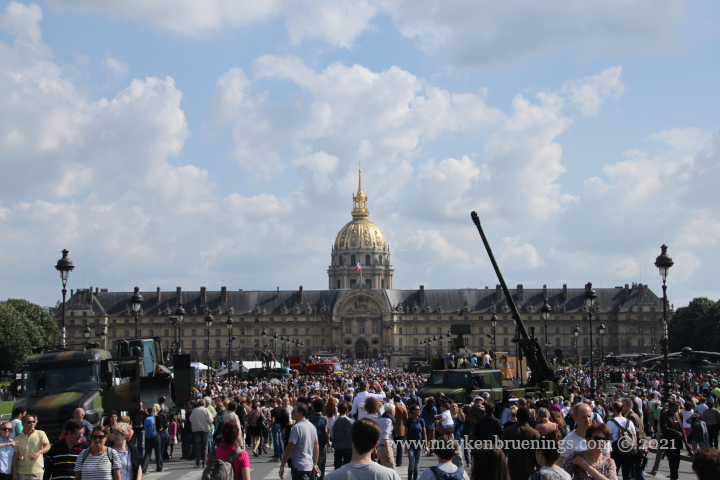
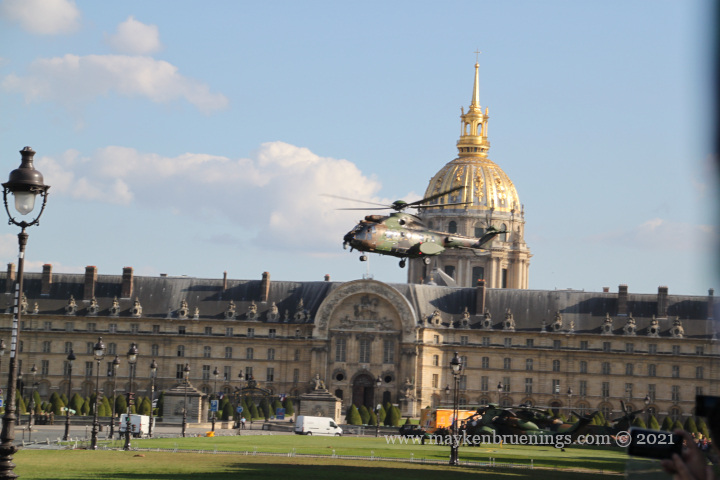
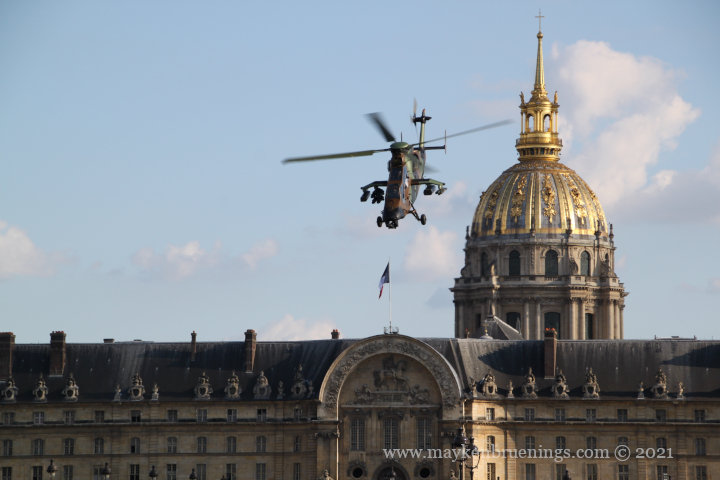
During the day, the public has the occasion to meet the military, notably on the Esplanade des Invalides between the Dome des Invalides and the Seine river, where l’Armée de Terre (the army), l’Armée de l’air (the air force) and la Marine (the navy) are represented.
Show events include visiting tanks and helicopters, parachutists jumping from helicopters in the sky, and more.
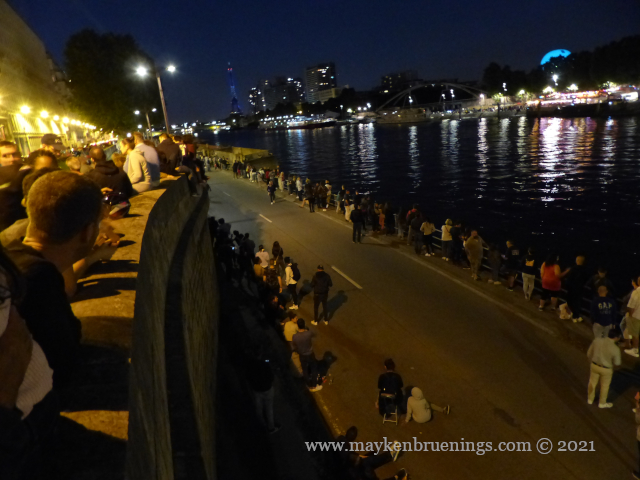
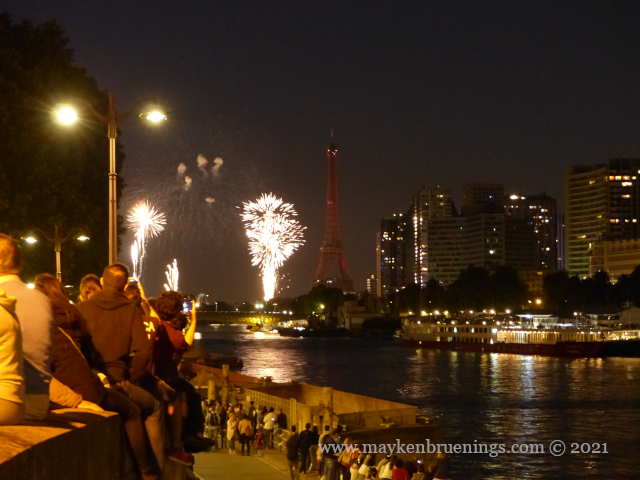
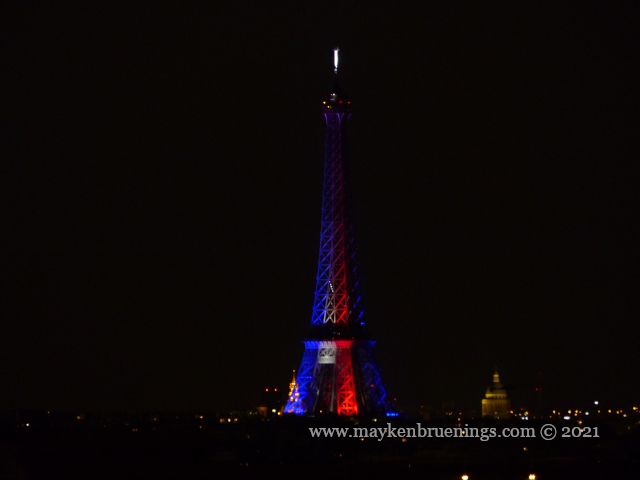
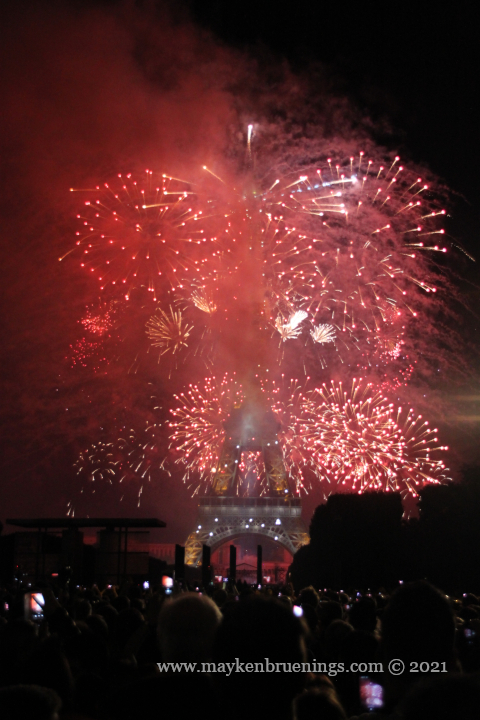
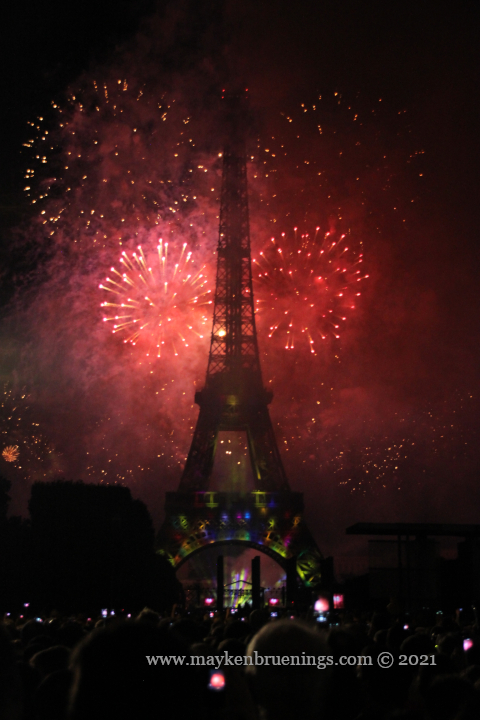
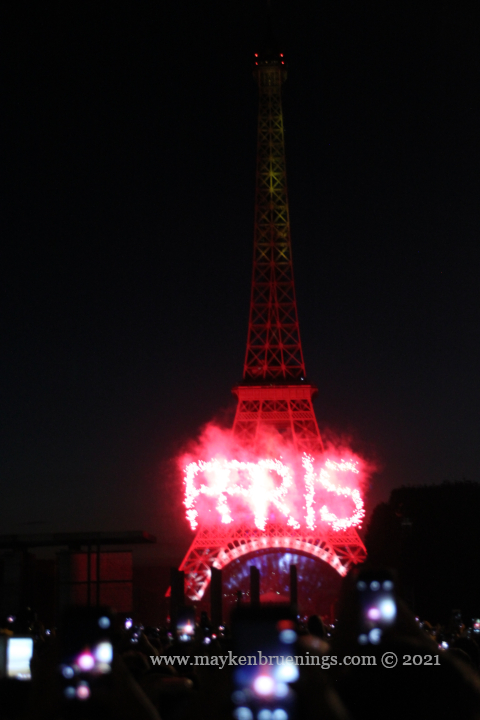
The day concludes with a concert on the Champ de Mars that is transmitted live on television and the famous fireworks at the Eiffel Tower.
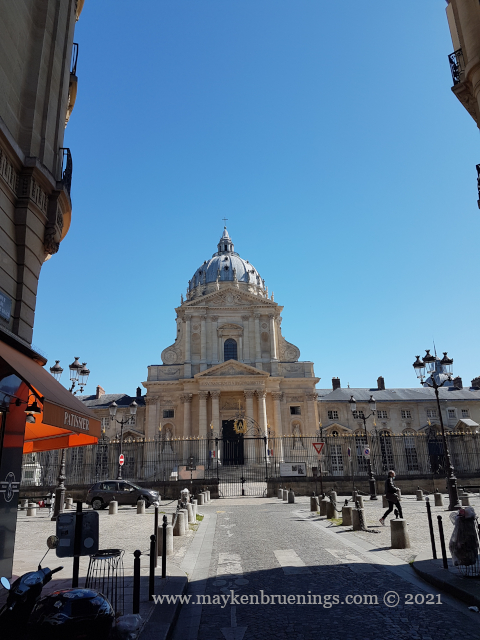
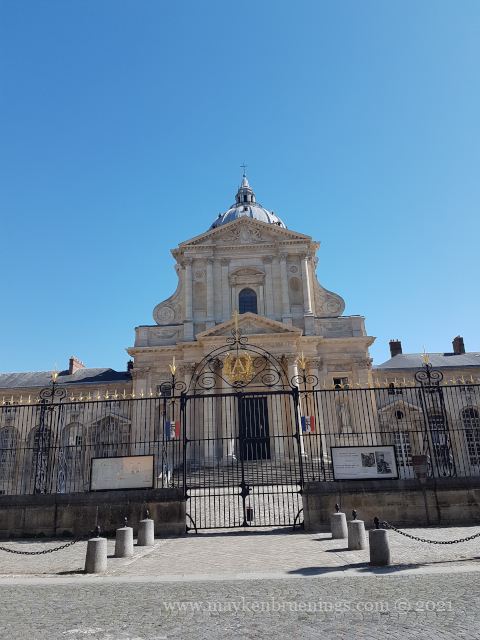
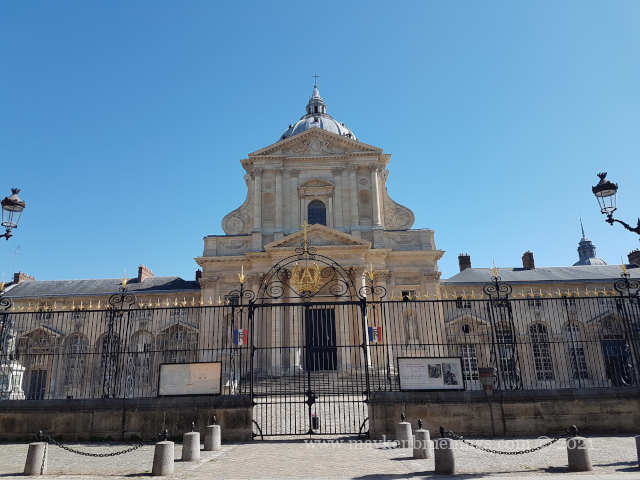
In 1645, seven-year-old Sun King Louis XIV, and his mother, Anne of Austria, laid the first stone of the Val de Grâce church. The queen mother this fulfilled an oath she had made earlier, to thank God for giving her a son.
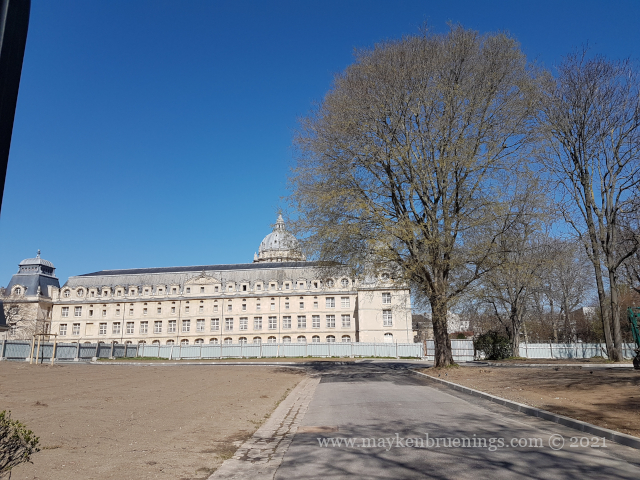
Up until the French Revolution, the ^Val de Grâce was the church of the Royal Val de Grâce Abbey. It is located on the grounds of the Val de Grâce hospital. Thanks to the Benedictine nuns providing medical care to injured revolutionaries, the church was spared much of the desecration and vandalism churches such as Notre Dame and Saint Eustace suffered during the French Revolution. Still, it became a military teaching hospital in 1796.
It remained a military hospital until 2016 and treated normal patients as well as the French presidents Jacques Chirac and Nicolas Sarkozy during their respective mandates.
Today, only the training, research and museum activities remain on site. In 2020, the French president Emmanuel Macron announced it would house three new research institutes, a campus to be completed by 2028.